In a time of crisis, New York City cultivated a new generation of creativity and celebration.
In a time of crisis, New York City cultivated a new generation of creativity and celebration.
1st floor, Robert H. and Clarice Smith South Gallery
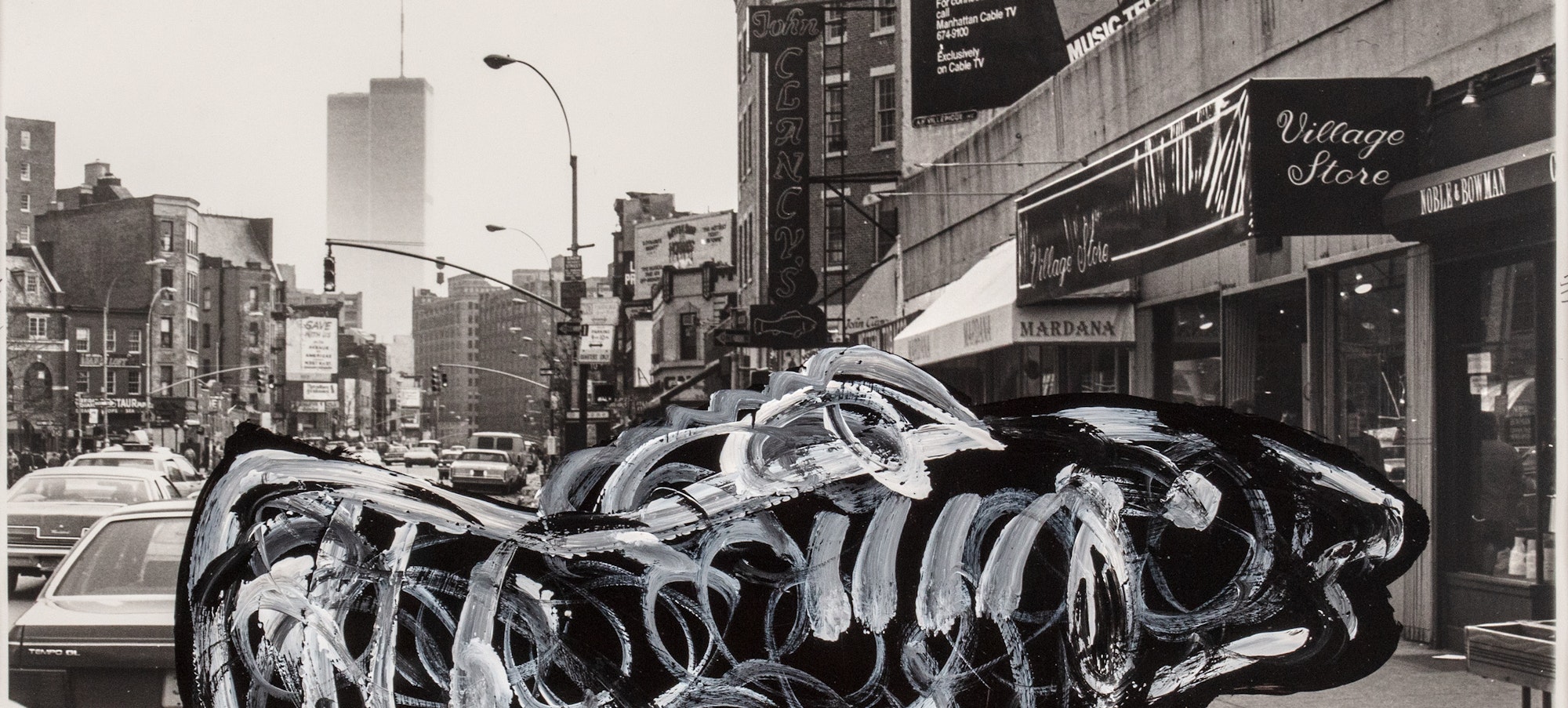
You Should Be Dancing: New York, 1976 and Beyond takes visitors back to a decade when the new music genres of punk, disco, and hip hop sprang up in New York City and then exploded across the world. The exhibition explores how, in a time of financial crisis, New York City cultivated a new generation of creativity and celebration. Featuring musical instruments, performance gear, fashion items, period photographs, albums, flyers, and performance clips presented within spaces reminiscent of the clubs, bars, and gathering places of the time, You Should Be Dancing illustrates the lasting impact this era has had on American culture at large.
The exhibition begins in 1970s New York City. Celebrations were underway for the nation’s Bicentennial with the “Grand Parade of Sailing Ships” in New York Harbor and the Democratic National Convention at Madison Square Garden, while the city was still reeling from the legendary New York Daily News headline: “Ford to City: Drop Dead.” At the same time, bands such as the Ramones and Blondie led a punk renaissance at CBGB in downtown Manhattan, new disco clubs popped up around the boroughs, especially in Queens and Brooklyn, and the expansive street culture of hip hop materialized in the Bronx and upper Manhattan, led by DJs discovering brilliant ways of re-hearing music.
Highlights on view include: an original awning from CBGB's; guitars from the Ramones, the Stooges, Blondie, and Talking Heads; an invitation to the Studio 54 premiere party; handwritten lyrics by Patti Smith, Richard Hell, and Kurtis Blow; clothes Robert De Niro wore in Taxi Driver; an early Saturday Night Fever screenplay; a Gloria Gaynor outfit; one of Kool Herc's disco balls hung at 1520 Sedgwick Avenue; and the original turntables on which Grandmaster Flash developed the Quik Mix Theory. The exhibition is curated by Ted Widmer and is coordinated by Allison Robinson, associate curator of exhibitions, with Cristian Panaite as consulting curator.
This project is supported in part by the National Endowment for the Arts. To find out more about how National Endowment for the Arts grants impact individuals and communities, visit www.arts.gov. Additional Support is provided by the Estate of Terry Siegel.
Exhibitions at The New York Historical are made possible by the Saunders Trust for American History, the Evelyn & Seymour Neuman Fund, the New York City Department of Cultural Affairs in partnership with the City Council, and the New York State Council on the Arts with the support of the Office of the Governor and the New York State Legislature. WNET is the media sponsor.



Media sponsor: