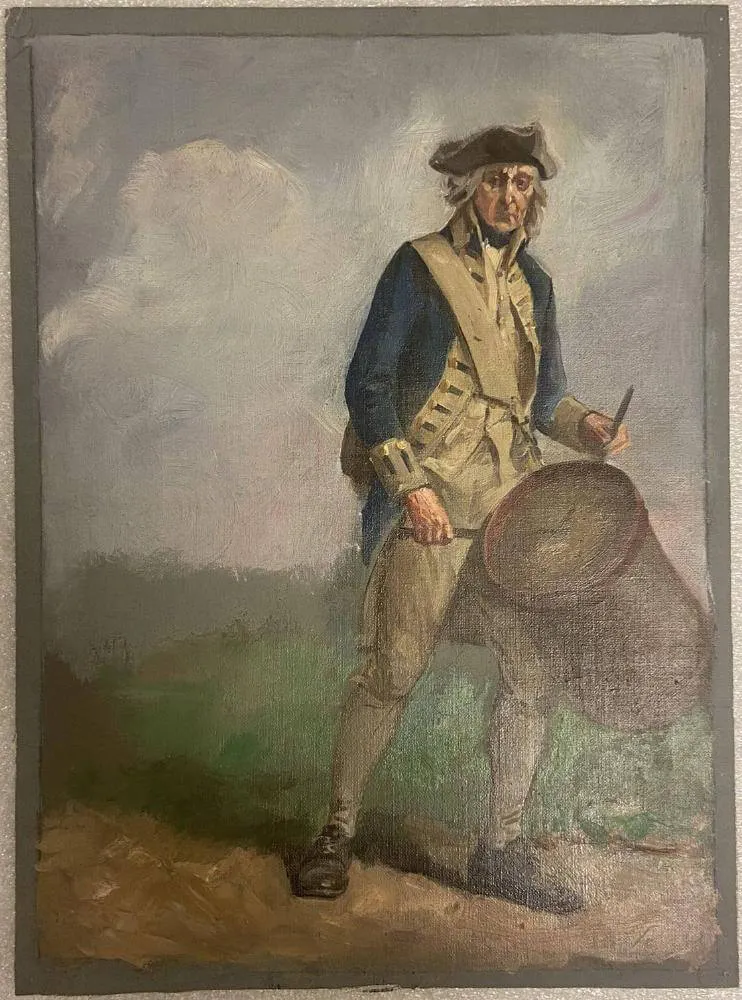
Oil on canvas, John Ward Dunsmore. "Revolutionary War Drummer." Gift of John Ward Dunsmore. 1937.1733. The New York Historical.
A remarkable tunebook drafted by a field musician during the earliest years of the American Revolution offers a record of more than three dozen songs familiar to the rebel forces. This manuscript, begun in 1776 and finished the following year, preserves the marches and quick steps known to the revolutionaries, and the rhythms that buoyed them in their pursuit of independence from the British.
Little is known about William Morris except that he was a fifer and served in the First Regiment, Hunterdon County in New Jersey. In 1776, the First Regiment included soldiers who invaded Canada, troops recruited to join General Washington in New York, and still others who prevailed in the key battles of Trenton and Princeton. Morris may have been part of one of these operations, or none of them. A muster roll at the New Jersey state archives lists a “William Morris” as a member of Captain William Tucker’s company, while a second muster roll lists another man by the same name in Colonel Isaac Smith’s company, involved in the Trenton campaign. In either scenario, our music transcriber was most likely in New Jersey when he composed this manuscript.
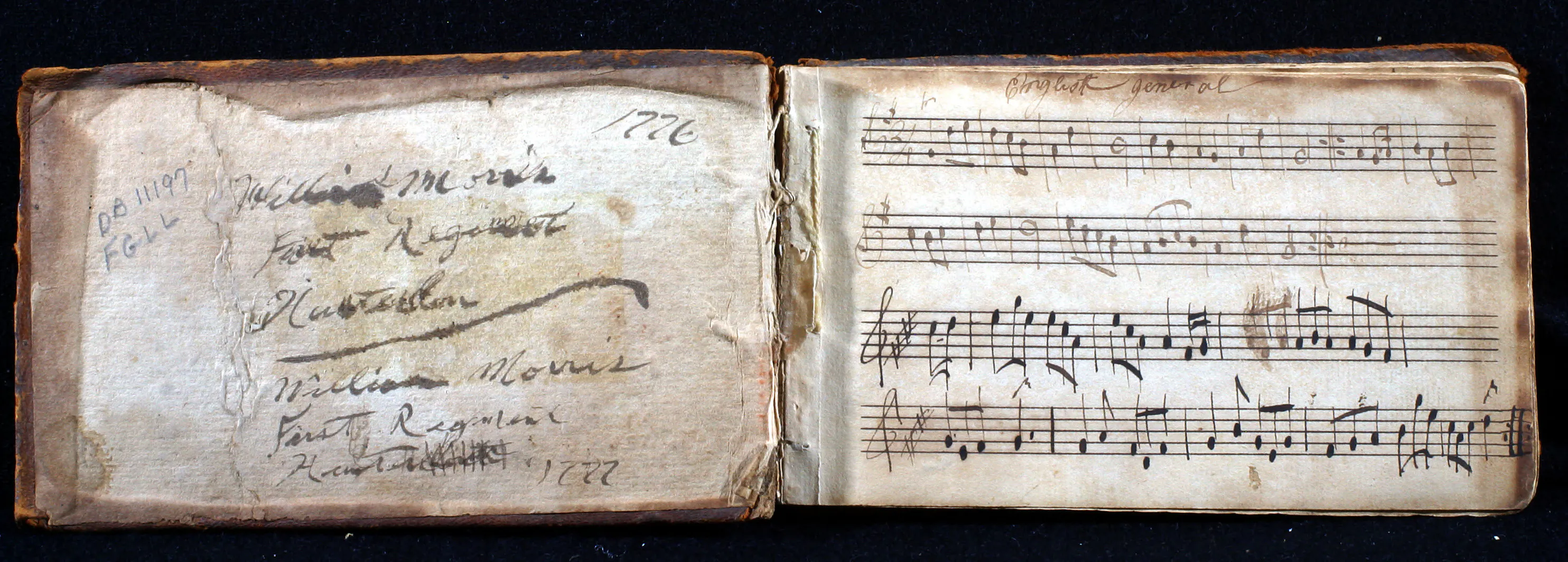
Paste-down with identifying inscription and the musical notation for "English General." William Morris tunebook, 1776-1777. Patricia D. Klingenstein Library, The New York Historical Society.
In this first year of the Continental Army, supplies were short, drills were irregular, and enlistments were short. Morris likely served along farmers and tradesmen who did not have much, if any, military experience. The Americans relied on small militia units for protection. These units, while less well-sourced than their Loyalist counterparts, nevertheless followed the British practice of employing a drummer and fifer to maintain marching cadences and give signals, communicating routines and commands.
The fifes used in the Revolutionary War were one-piece woodwind instruments, with six-finger holes, usually pitched in the key of D. The fifer, sometimes as young as nine or ten, supplied melodic variety for the drummer’s steady beat (the percussionists, on snare or side drums, normally marched just behind the advancing line.) Field musicians also carried rifles and cared for injured soldiers when needed.
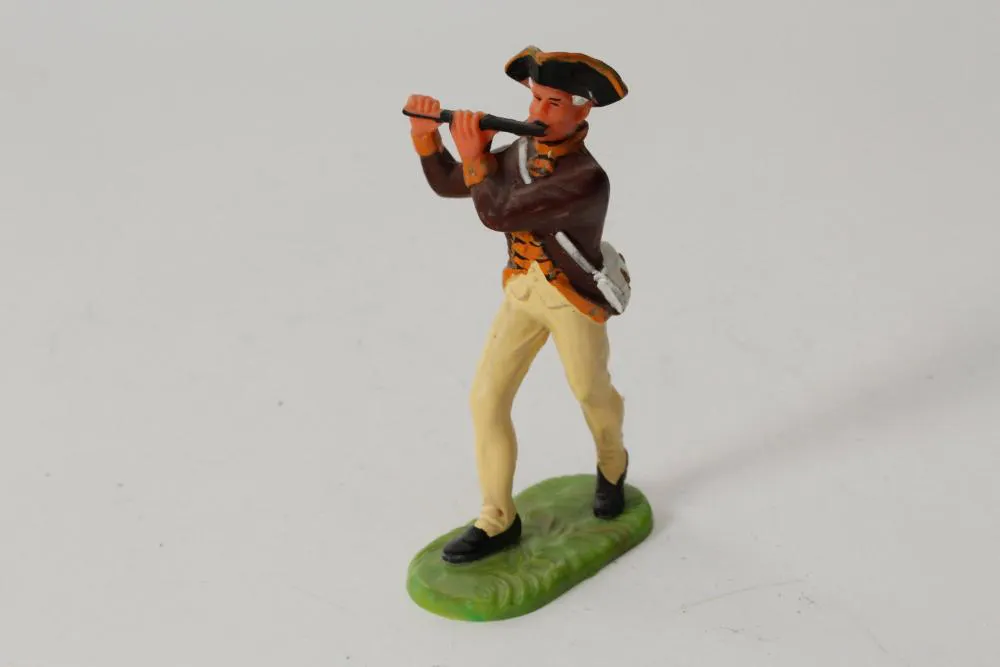
Revolutionary War fife player, made by the German company O. & M. Hausser from plastic, ca. 1960-1970. 2014.31.4429.6 The New York Historical.
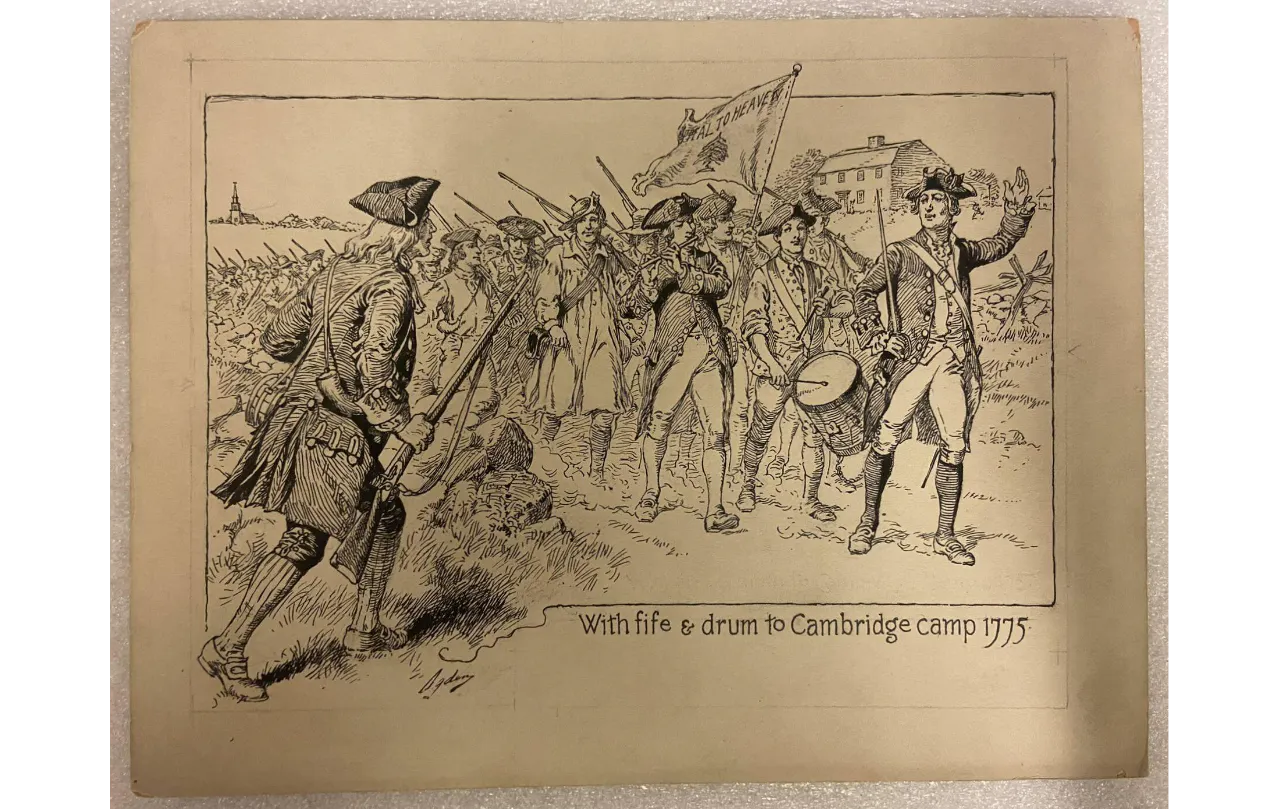
Black ink and graphite drawing on board, "With Fife & Drum to Cambridge Camp, 1775," by Henry Alexander Ogden (1856-1936). Gift of the Estate of Harry A. Ogden, 1936.815. The New York Historical.
Some of the songs in Morris’s book record tunes from British folk traditions. Morris likely encountered British prisoners and soldiers from distant colonies in his tours with the First Regiment and may have collected music from these travelers. Another possibility is that Morris copied these tunes from available tutorials, but tracing them is complicated by their rarity. The earliest-known American fife manual, A Compleat Tutor for the Fife, was printed in 1776 and does not survive; we do not know if Morris drew on it for his selections.
Morris includes traditional English folk songs, such as the seventeenth-century “Lots a Lasses” and “High ho Dobin.” There are also songs of Irish and Scottish origin. The jig “Jacksons Morning Brush,” named after the popular County Limerick musician Walker “Piper” Jackson, appears in other late eighteenth-century tunebooks. The tune, first imagined as a country dance in 6/8 time, was easily repurposed as a military quick step.
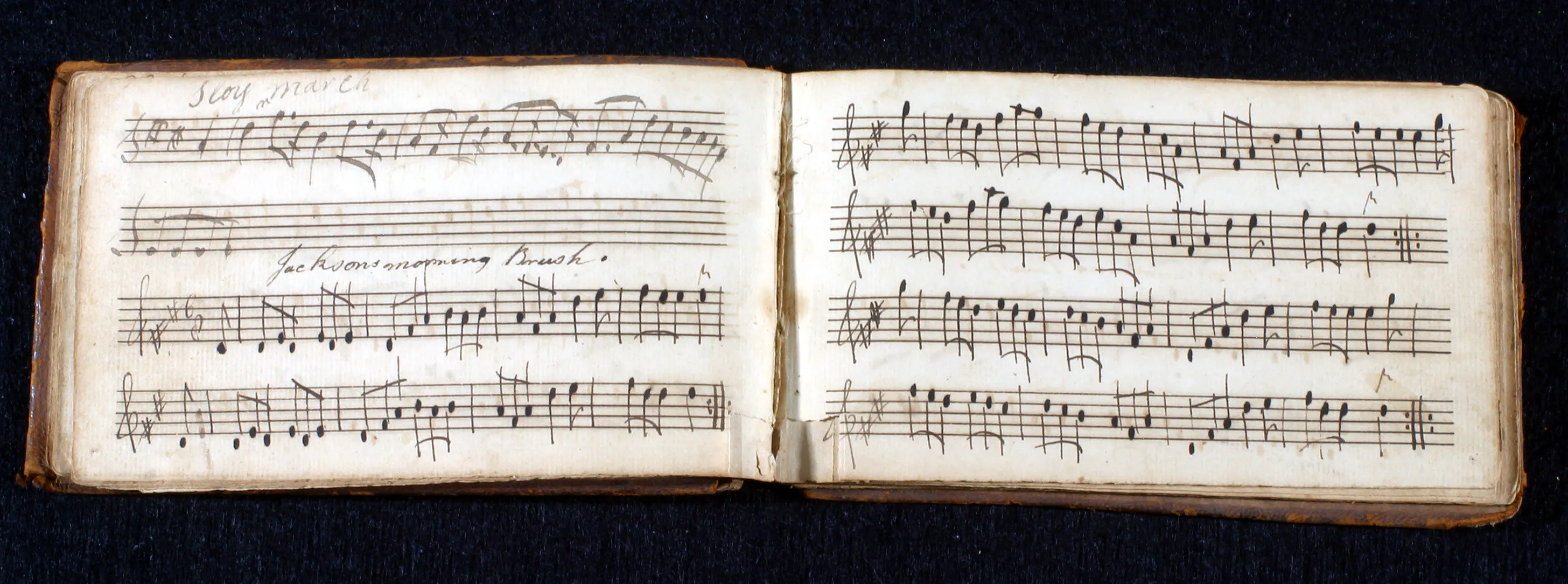
Handwritten musical notation for "Scots march" and "Jacksons morning brush." William Morris tunebook, 1776-1777. Patricia D. Klingenstein Library, The New York Historical Society.
In military practice, marches were used to keep a steady, moderate cadence. They were often played if troops were moving across a large open space. Morris includes several marches in his tunebook, including “The Grenadiers' March,” “Scots March,” and the “Highlanders March.” In addition to these marches, meant to ensure symmetry and cohesion within the company, Morris included “The Rogue’s March,” a melody that signaled exile. Intended to shame rather than inspire and deployed by both Patriot and British troops in the late eighteenth-century, a fifer queued the “Rogue’s March,” to accompany a dishonored soldier’s very public walk out of camp. Morris’s adaptation is in 2/4 time and differs slightly from a British version printed in 1756 with a 6/8 signature.
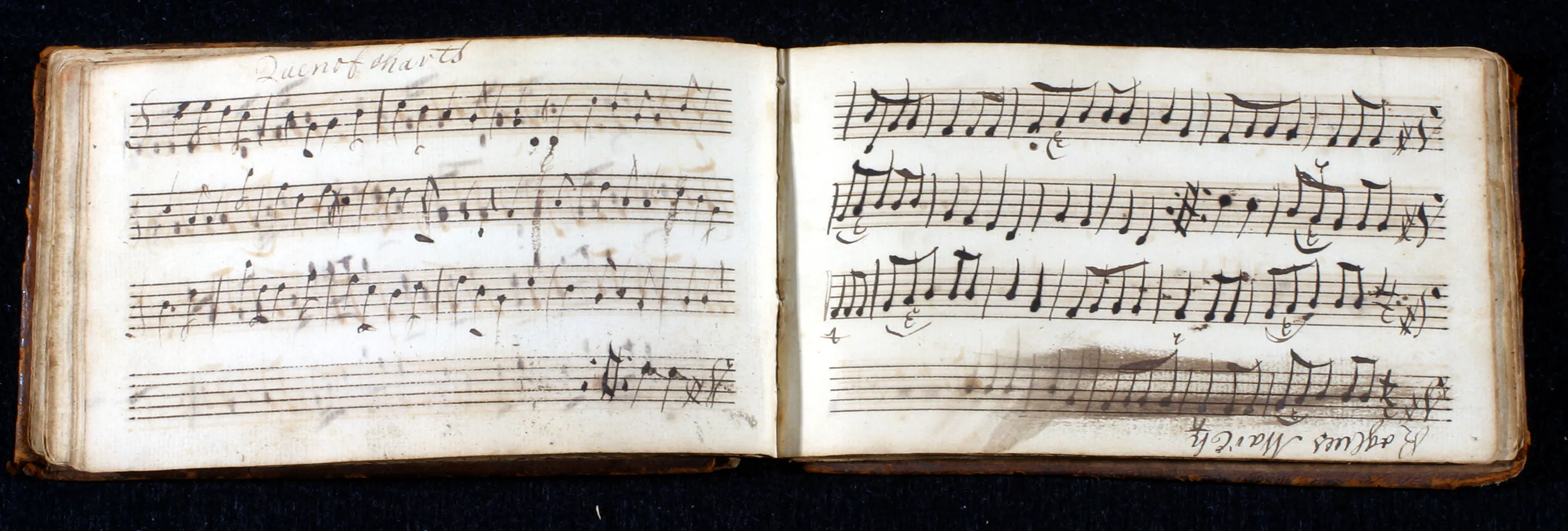
Handwritten musical notation for "Queen of Harts" and "Rogues March." William Morris tunebook, 1776-1777. Patricia D. Klingenstein Library, The New York Historical Society.
Morris includes the music for marches he titles “Dickson’s March,” and “Dickson’s March quick step.” Depending on which tune was queued, the arrangements indicated a slower or brisker pace. Quick steps were faster and more propulsive than marches. William Windham’s widely-used Plan of Discipline, a practical handbook for the British military published in 1760, explained that a common march should assume a 24-inch step at the rate of 60 steps per minute, while the quick step doubled that pace. Music historian Raoul Camus has written that the quick step was usually called for sparingly in the eighteenth-century to save soldiers from fatigue. It was also routinely employed for turning movements.
Morris copied “Quick Step Bunkers Hill” in his tunebook just months after the Battle of Bunker Hill. His tune is not the quick step recorded for fife in the Woburn fife manuscript, dating to the early 1800s, though it too, is a fast-paced march in 2 /4 time.
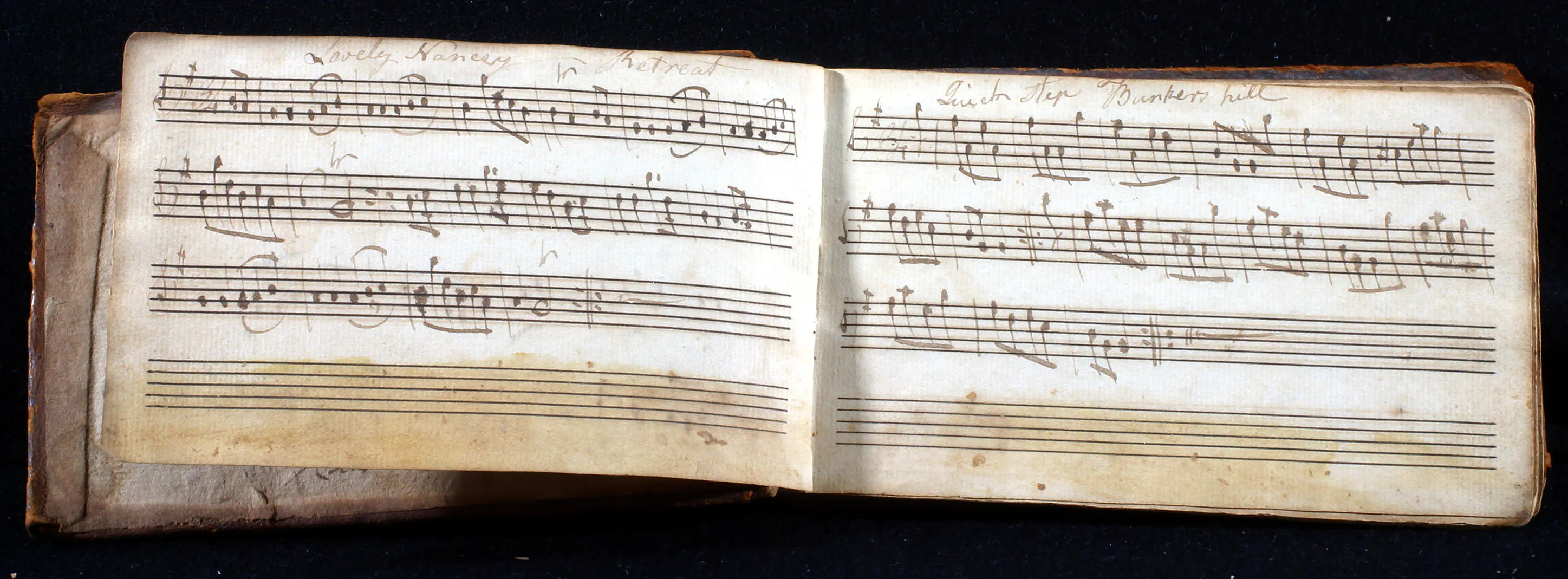
Handwritten musical notation for "Lovely Nancey in retreat," and "Quick step Bunkers Hill." William Morris tunebook, 1776-1777. Patricia D. Klingenstein Library, The New York Historical Society.
Morris also records a tune he calls “Chester, a quick step for Sunday.” The caption title suggests the tunebook’s utility. Assigning this melody a day of the week shows that Morris actively used the tunebook as a reference, adding the musical notations for songs he needed on a particular Sunday (or perhaps on repeated Sundays, as the occasion called for it).
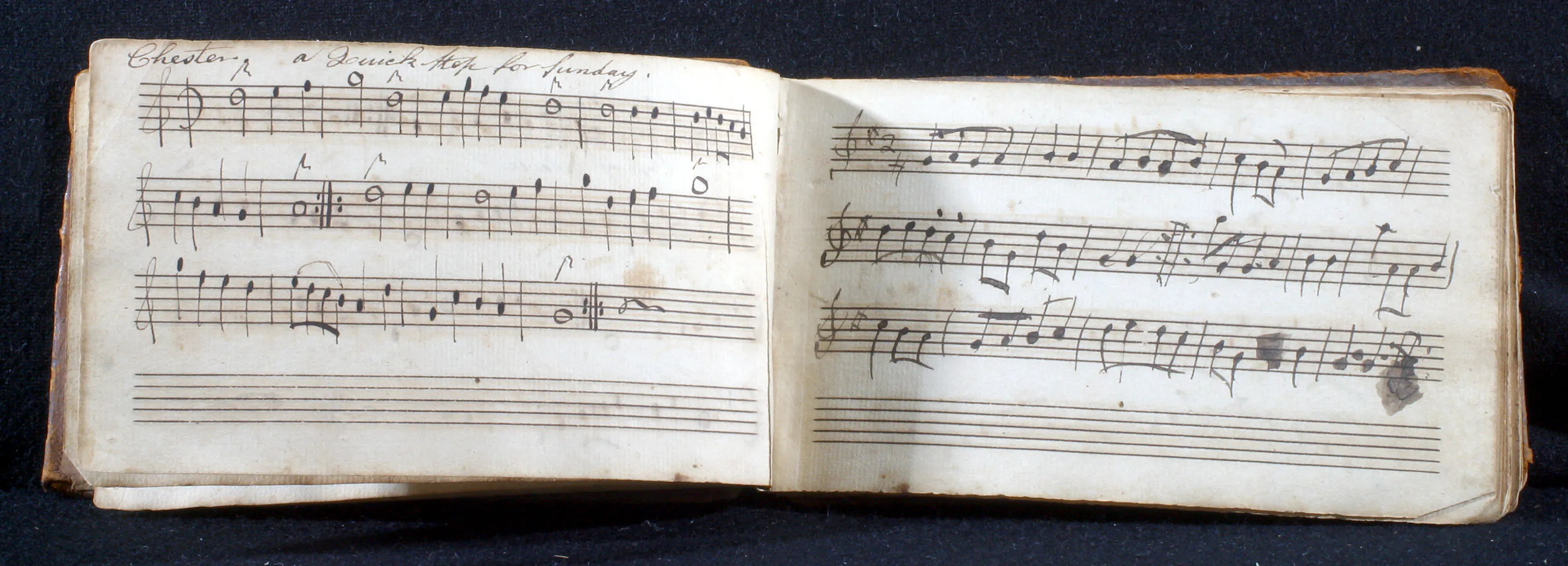
Handwritten musical notation for "Chester a quick step for Sunday" and an untitled song. Patricia D. Klingenstein Library, The New York Historical Society.
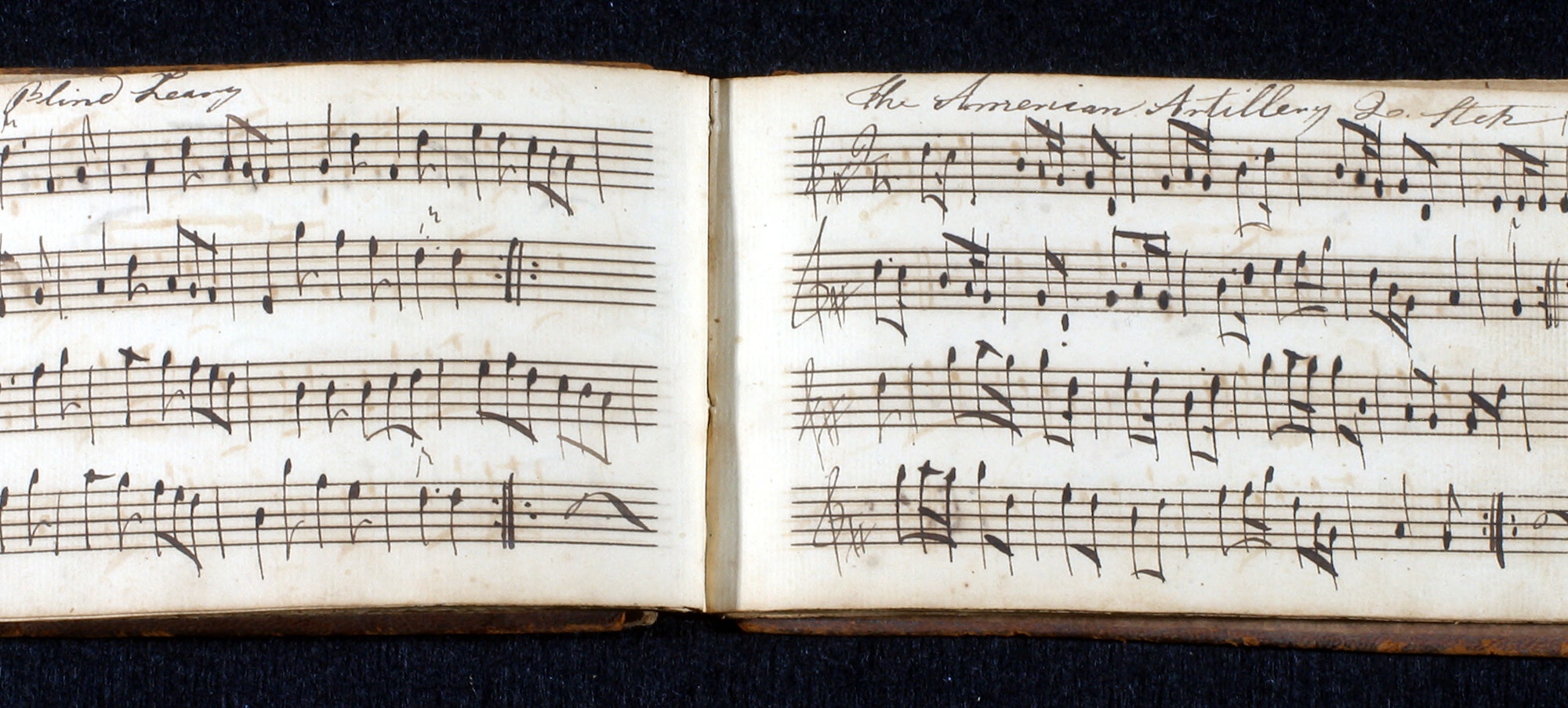
Another quick step offers an intriguing early usage of the adjective “American.” Pictured below is the music for Morris’s “American Artillery q[uick] step.”
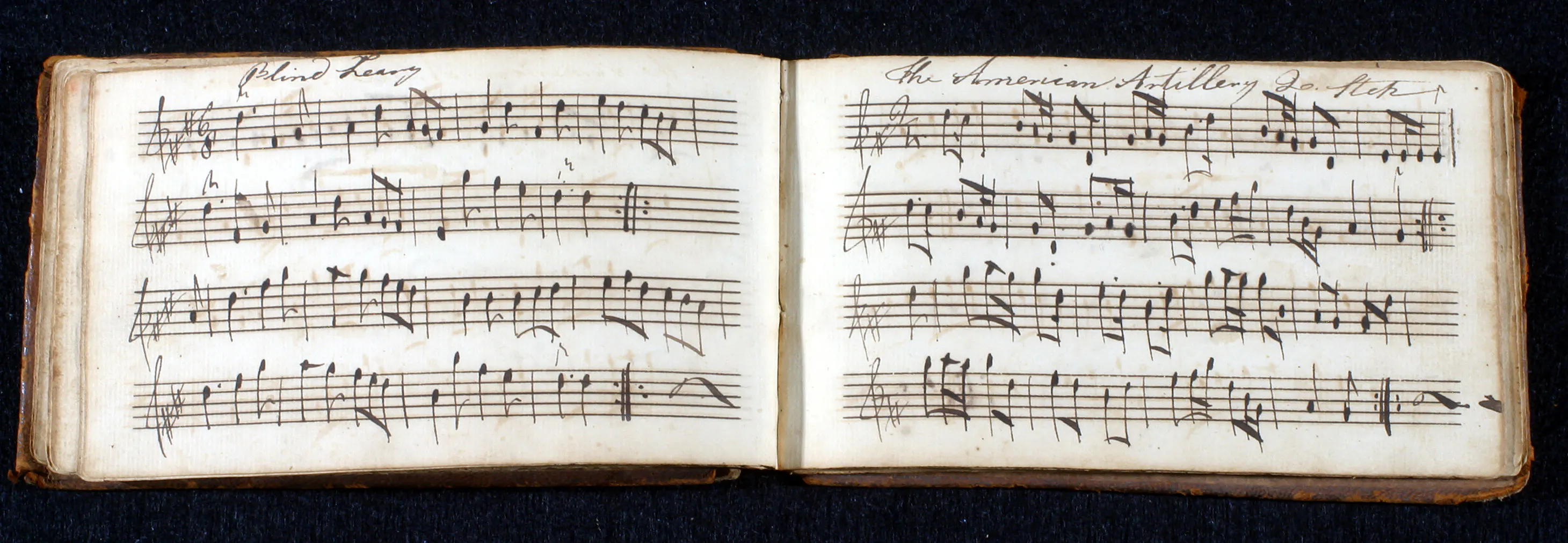
Handwritten musical notation for "American Artillery Quick Step" and "Blind Leary." William Morris tune-book, 1776-1777. The Patricia D. Klingenstein Library, The New York Historical.
I could find little written on this song. Had "America" or "American" ever been recorded earlier in a music manuscript? An early manuscript at Columbia University known as the Whittier-Perkins manuscript and dating to approximately 1778–1788 collects over two hundred Revolutionary War–era tunes for fife, including "The Free Born Americans,” but it also dates later than Morris’s tunebook and his “American Artillery Quick Step.”
At least two other tunes recorded in print refer to "America" and "Americans" earlier than Morris. The words of “Free America,” a march with words set to the music of “The British Grenadiers” (also in Morris’s tunebook), have been attributed to Joseph Warren, a physician who died at Bunker Hill in 1775. Published in the Massachusetts Spy as "Massachusetts Liberty Song" in 1774, Warren closes each stanza with the words "brave America."
Founding Father John Dickinson’s rewrite of the British royal navy’s tune “Heart of Oak,” known throughout the colonies by 1768 as “Liberty Song” also predates the “American Artillery Quick Step.” Dickinson’s words invite its listeners to “come join, hand in hand, brave Americans, all.” Morris also includes this “Liberty Song,” here, though he doesn’t include lyrics to any of his tunes.
While Washington acknowledged the music of the army “in general to be very bad,” he encouraged his officers to employ skilled musicians in their regiments and to pay them more than private soldiers. Morris’s tunebook shows us that what those American fifers and drummers created on the field was a music played by and known to early Americans, that was, in fact, “American music.” Morris’s little book offers vital documentation of what “American” might have meant to the soldiers who fought in earnest to assume that identity.
Further reading:
Bechtold, Rebecca. "Revolutionary Soundscape: Musical Reform and the Science of Sound in Early America, 1760-1840." Journal of the Early Republic, 35 no. 3 (Fall 2015): 419-450. https://www.jstor.org/stable/24487144
Camus, Raoul. Military Music of the American Revolution. Chapel Hill: University of North Carolina Press, 1976.
Montagu, Jeremy, Armin Suppan, Wolfgang Suppan, D.J.S. Murray, and Raoul F. Camus. "Military music." Grove Music Online. 2001. https://doi-org.i.ezproxy.nypl.org/10.1093/gmo/9781561592630.article.44139
Morris's tunebook can be found fully-digitized in our Shelby White and Leon Levy Digital Library here.
Keep Reading
- From the StacksAugust 28, 2026
"The Patriots in the Dumps": A British Cartoon Takes on the Battle of Long Island
250 years ago this month, Americans were embroiled in a crucial end-of-summer Revolutionary War clash: the Battle of Long Island. - From the StacksAugust 13, 2026
"Oh Eliza, I'm undone": Part II, Conservation
The second installation of this blog series, following a manuscript from storage to exhibition, highlights treatment in the conservation lab. - From the StacksJuly 20, 2026
"Oh Eliza, I'm Undone": A Journey from Storage to Display
Explore the conservator's role in this three-part blog series through the lens of a Revolutionary War-era love poem as it moves from storage to the conservation studio and finally to an exhibition. - From the StacksJune 29, 2026
The Patriotick Barber Gets a New Look
An 18th-century satirical print depicting the interior of a barber shop speaks volumes about style and politics in New York City.