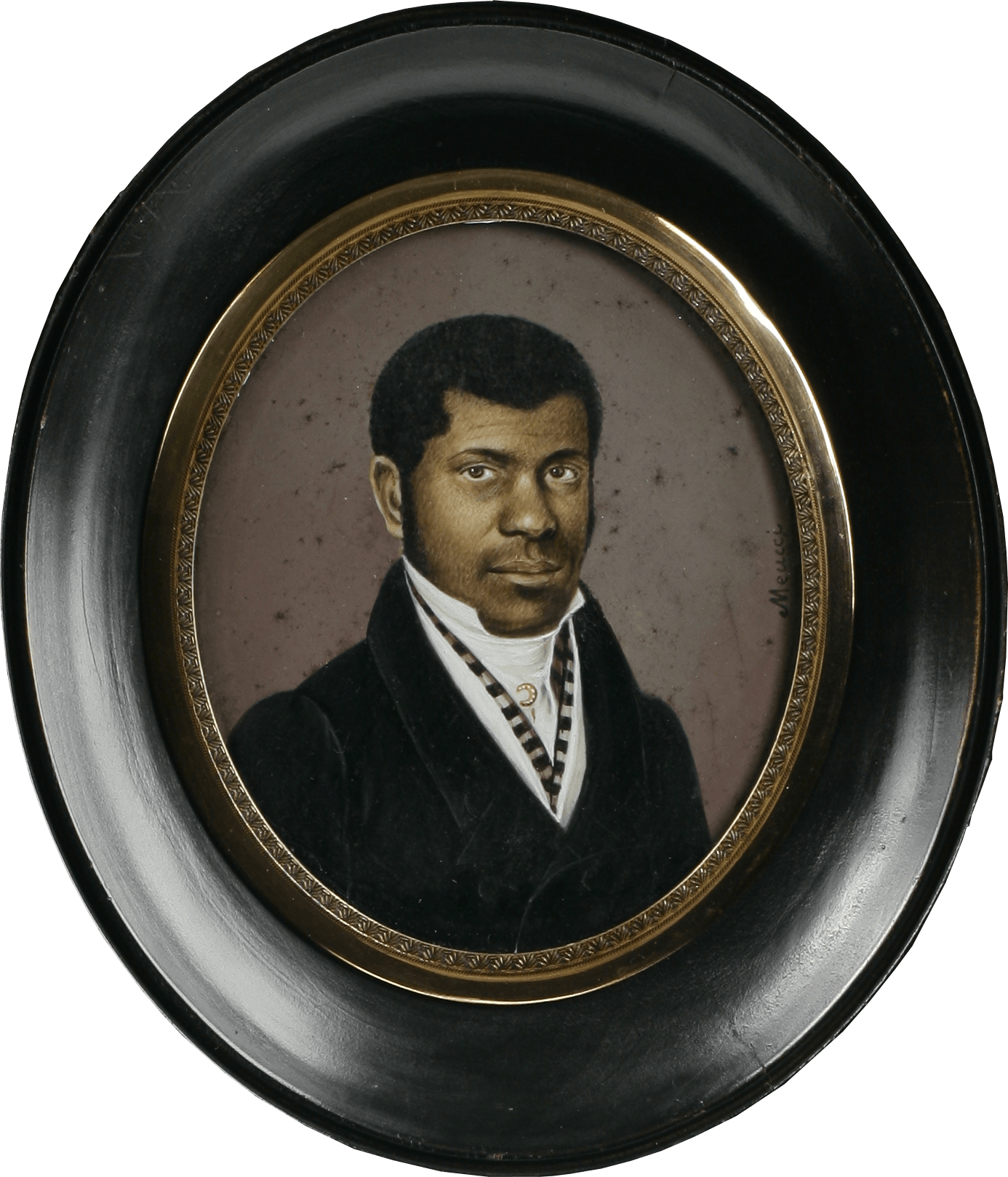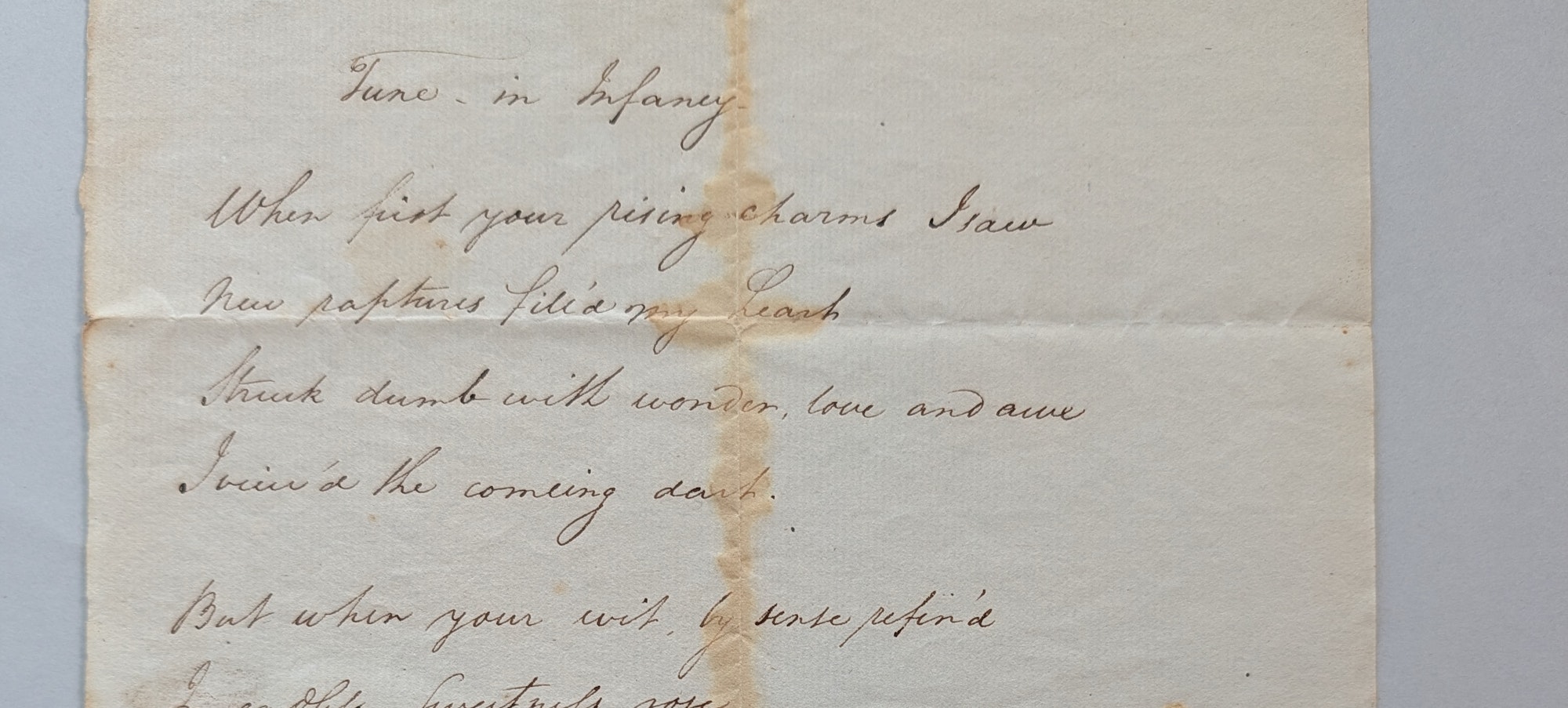
The curator's favorite line of a love poem currently on view in The New York Historical's Revolutionary Women exhibition takes on a new meaning when applied to the physical object—ink and paper.
But how exactly do historical documents come "undone," and what, if anything, can be done to support them? In this blog series, we will explore how the library collections are stored, conserved, and made ready for exhibition.
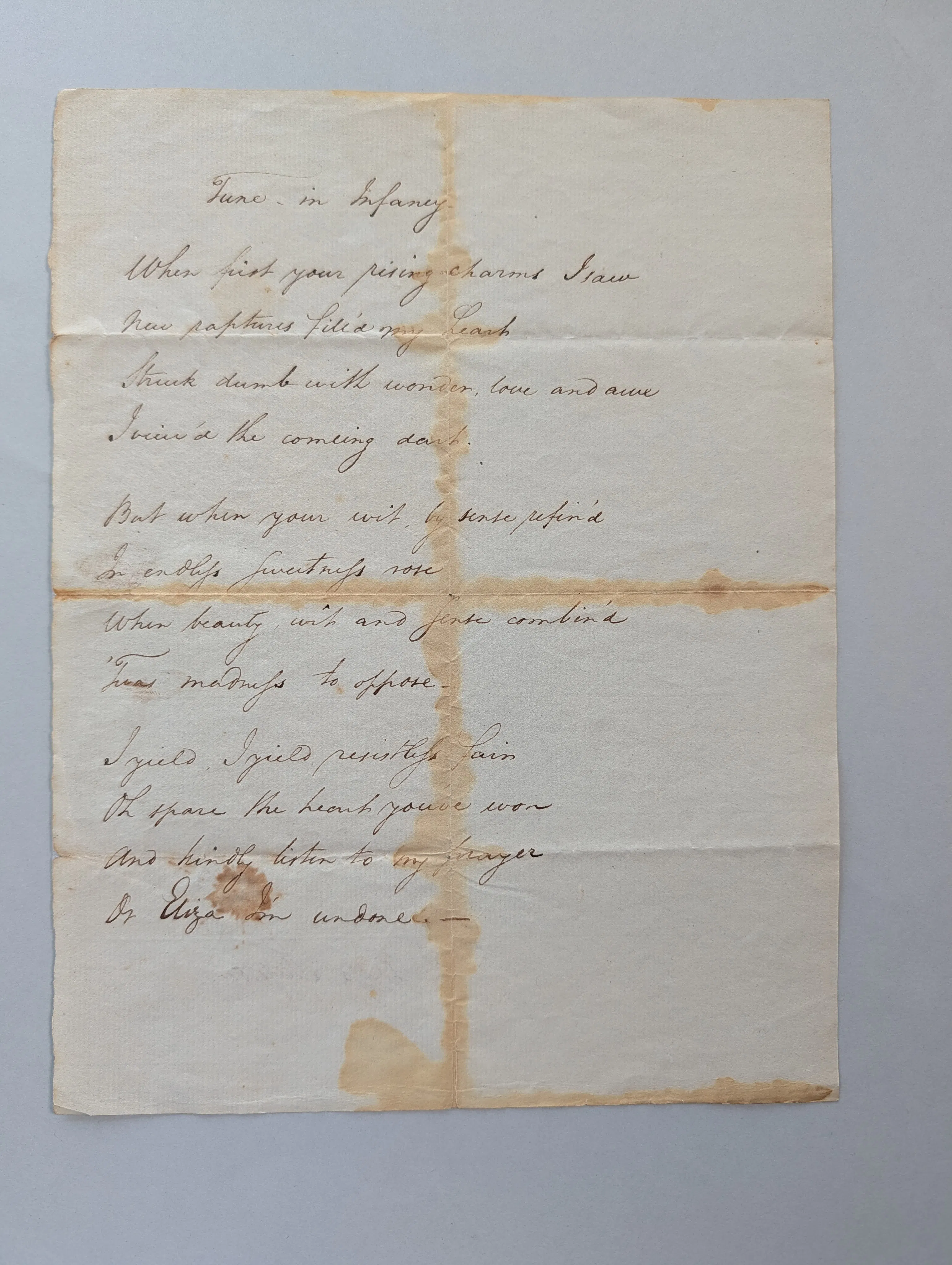
Manuscript draft of a poem by Aquila Giles (1757–1822) written for Elizabeth Shipton, 1778–80. Giles Family Papers, MS248. Patricia D. Klingenstein Library, The New York Historical.
The line is from a letter written by Major Aquila Giles to Elizabeth Shipton during the Revolutionary War. The two met while he was a prisoner of war during in Flat Bush (Brooklyn). Eliza’s uncle, the Loyalist colonel William Axtell, tried but failed to separate the lovestruck couple. To find out more about their story, look for a blog post on our Women at the Center Blog.
Part One: Storage
Historical documents are best preserved in a dark, cool room—an unfriendly habitat for humans. Preservation of these materials is a constant evaluation, balance, and compromise between access and restrictions. Because paper is made of cellulose fibers, arranged in long chemical chains resembling a zigzag, it easily breaks down in the presence of adversaries. Water in the humid air, pollutants and acids, light and heat—all try to pull our documents apart by breaking the bonds formed by chemical attraction of the cellulose molecules. Just as William Axell, Eliza's uncle, caused problems for the couple, the paper's close relation, the ink, similarly complicates things. It contains iron, which releases free radicals that catalyze the chemical breakdown of the paper fibers.

Skeletal diagram of cellulose, where every corner (vertex) and the end of each line represent a carbon atom. Hydrogen atoms are assumed to fill in the rest of the bonds.
An elopement solidified our heroes' bond, but in the case of their written love poem, a simpler solution secures its attachment. The poem is part of the Giles Family Papers which are stored in archival document boxes and sorted in archival folders. Archival storage materials are made with inert components and often contain buffering agents—these are the allies that help divert obstacles (pollutants) away from what we aim to preserve (a love connection, or cellulose bonds). The boxes and their contents are described by archivists in finding aids that provide intellectual control and access to specific documents, without having to look through the entire collection contents. The collection storage space is monitored using Wi-Fi dataloggers that send alerts directly to the conservation team if the temperature or humidity reaches above or below the preservation parameters.
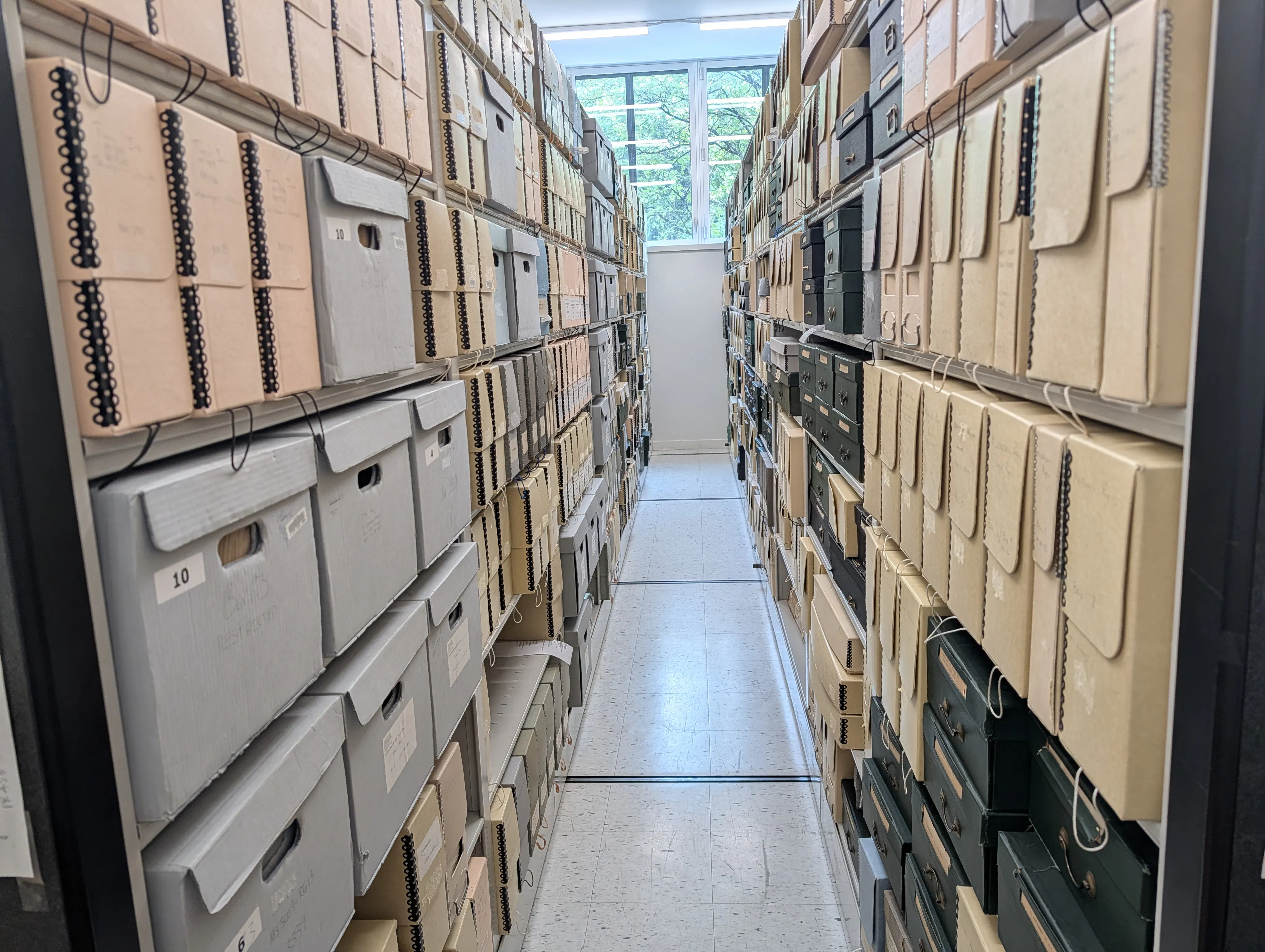
Library collections storage at The New York Historical, with materials housed in archival boxes.
The manuscript collections thus preserved will outlive us all – but what is the use of having and protecting documents if they are never read, studied, and shared? The role of the conservator is to make such use possible by ensuring the object itself experiences little stress during research and exhibition.
In part two, we will venture into the Leni and Peter May Conservation Studio, to see how archival documents are conserved and made ready for exhibition.
You can visit Giles' poem written for Elizabeth Shipton in Revolutionary Women, on view at The New York Historical until October 25.
Keep Reading
- From the StacksAugust 28, 2026
"The Patriots in the Dumps": A British Cartoon Takes on the Battle of Long Island
250 years ago this month, Americans were embroiled in a crucial end-of-summer Revolutionary War clash: the Battle of Long Island. - From the StacksAugust 13, 2026
"Oh Eliza, I'm undone": Part II, Conservation
The second installation of this blog series, following a manuscript from storage to exhibition, highlights treatment in the conservation lab. - From the StacksAugust 5, 2026
A Revolutionary Tunebook
An American tunebook kept in 1776 captures the soundtrack of revolution. - From the StacksJune 29, 2026
The Patriotick Barber Gets a New Look
An 18th-century satirical print depicting the interior of a barber shop speaks volumes about style and politics in New York City.