Though the disease now known as AIDS (Acquired Immune Deficiency Syndrome) was identified by researchers as early as the summer of 1981, and was officially named in September 1982, the government and health establishments were slow to respond to the growing crisis. By July 1983, when Congress approved the first dedicated funding for AIDS, about 44% of the 1,450 people diagnosed with HIV/AIDS lived in New York City, nearly half of them men between the ages of 30 and 39. Five hundred and fifty-eight had already died before the front page of The New York Times declared AIDS had “become ‘the No. 1 priority’ of the United States Public Health Service.” The hesitancy of the government, and its failure to quickly address the spread of HIV/AIDS, motivated many activists to form grassroots organizations to fill in the funding and response gaps. Yet the disease’s association with gay men—at a time when being openly gay was considered career suicide—made it harder for activists to raise money and rally high profile celebrities to the cause. The stigma associated with HIV/AIDS prevented even industries that were devastated by the spread of AIDS, such as the film and fashion industries, from officially getting behind the cause. The American fashion industry was particularly slow to respond, although it was smack at the epicenter of the disease.
A watershed moment came in 1986. The number of new patients was becoming impossible to ignore, and several famous people had succumbed to the disease, drawing national and international attention (including the actor Rock Hudson). On May 8, 1986, the front-row audience at Perry Ellis's fashion show were shocked by the appearance of the 46-year-old designer, who was so frail he had to be assisted on and off the stage. Several hours later Ellis was rushed to New York Hospital in critical condition and died shortly afterwards, on May 30. There was so much uncertainty and fear about how HIV/AIDS was transmitted that some consumers hesitated to purchase clothes with the Perry Ellis label; his company denied vehemently that he had contracted the virus. But Ellis’s obvious illness shocked the industry so deeply that it pushed individuals to begin mobilizing independently to fundraise for research and support for people with HIV/AIDS, even if big brand names and retailers were not willing to do so.
Many of the people working in New York’s fashion industry didn’t have experience in political activism. Picketing and demonstrating didn’t come naturally to them. But they did know how to organize parties and high-profile events to draw out the monied people of New York City. Instead of waiting around for big brands to put their money and name on the cause, some individuals decided to rally the industry from within. One event, though relatively modest in scope and resources, caught the attention of the media and people around the country. In particular, widely-disseminated photographs of one celebrity whose star was just starting to rise helped the cause reach even those who had yet to be affected by the disease directly. Her name was Madonna.
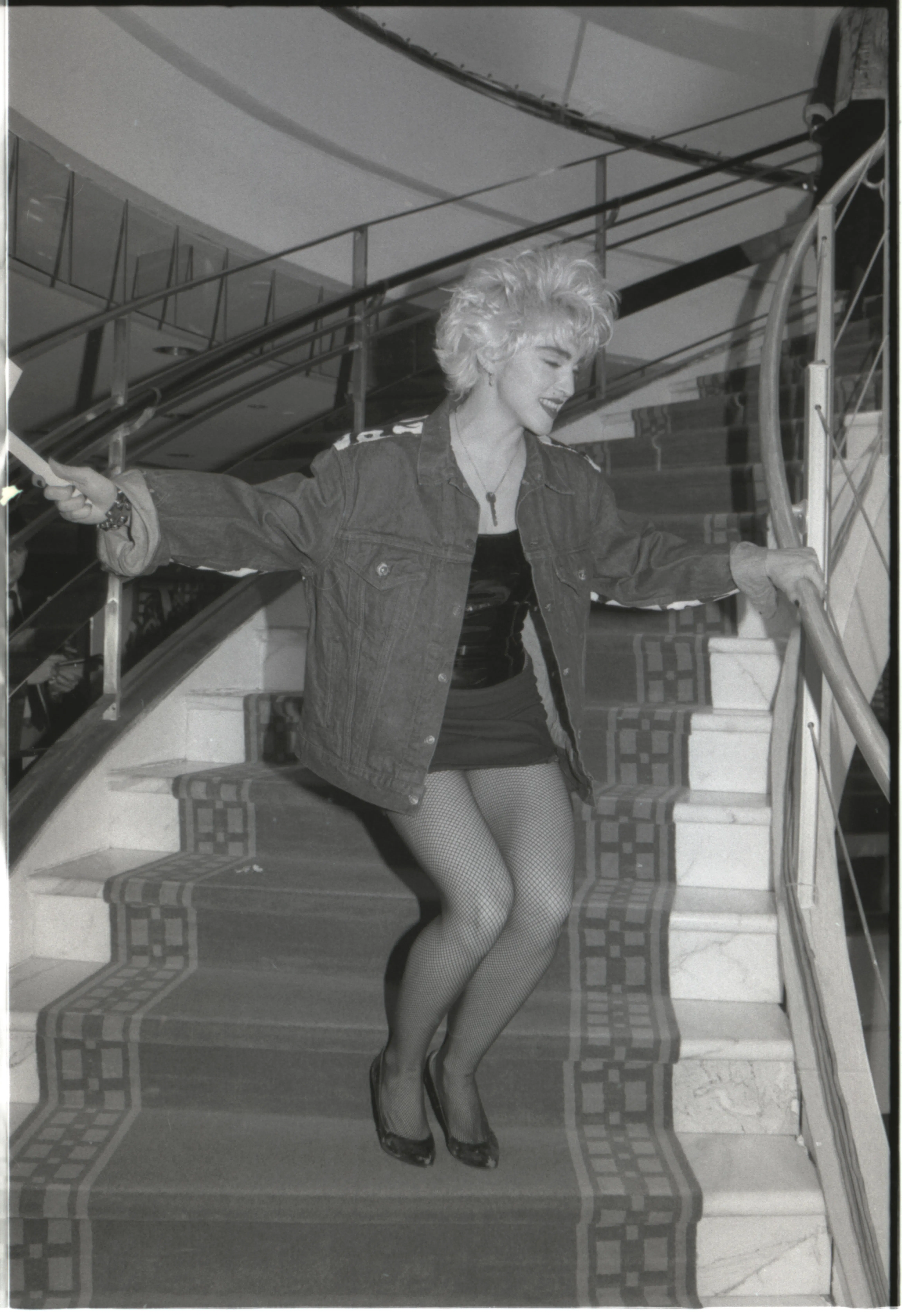
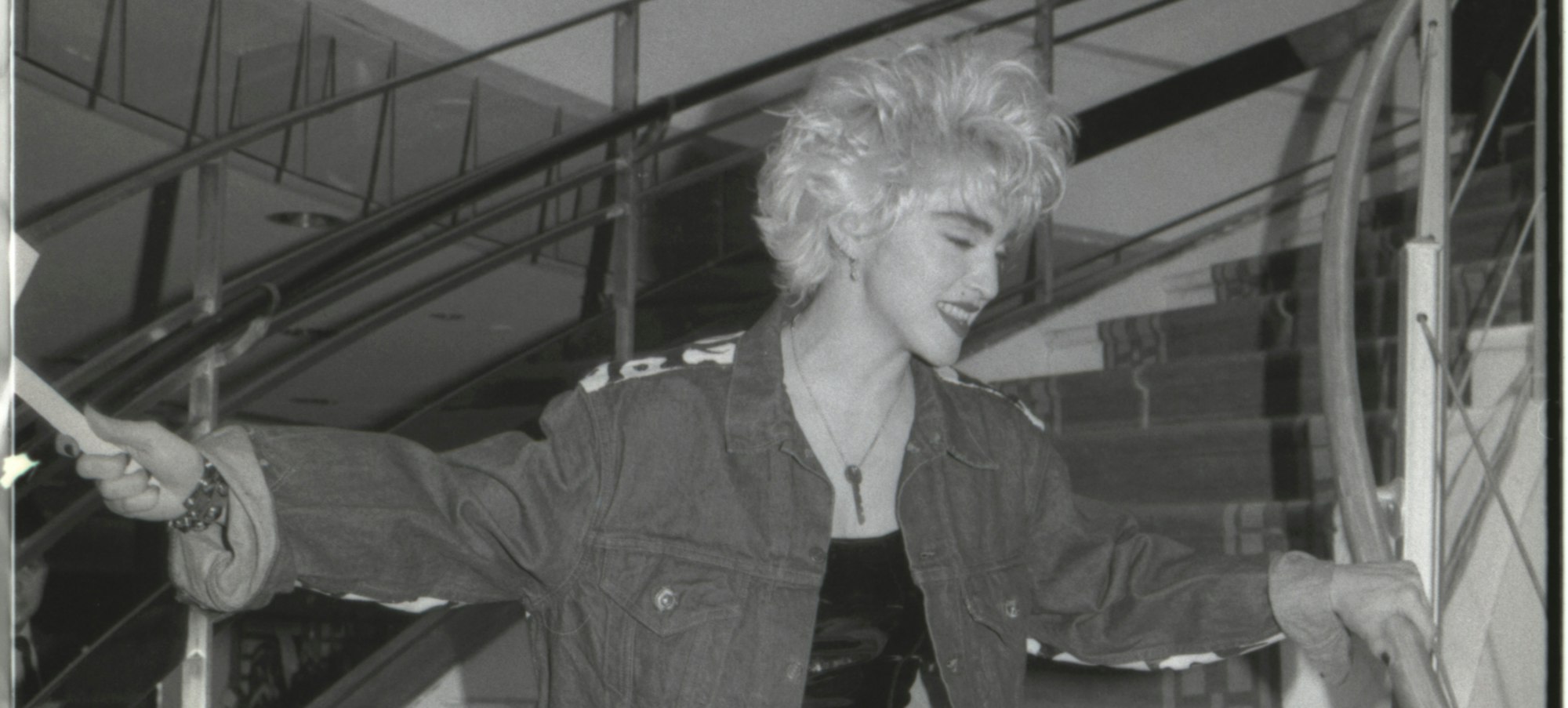
Bill Cunningham (1929–2016), photographer. Madonna at Barneys AIDS Benefit, November 10, 1986. ©The New York Historical / Bill Cunningham Collection
The event took place at Barneys. In 1986, the downtown department store—known for its unique and fashion-forward selection of menswear—opened a new women’s branch on West 17th street. One of the most notable features of the store was a spiral staircase designed by the French interior designer Andrée Putman. This staircase became the runway for a slew of celebrities who had volunteered to model Levi’s denim jackets embellished and decorated by well-known artists and designers. These jackets were then auctioned to benefit the Supportive Care Program for AIDS Patients at St. Vincent’s Hospital and the Medical Center of New York. St. Vincent’s, located in the heart of New York’s Greenwich Village, treated the largest population of AIDS patients and in 1984 opened the first dedicated AIDS ward in New York.
The auction was the brainchild of Simon Doonan, who was then the manager of the store’s display department. Barneys was known for hiring highly creative individuals with quirky taste and giving them complete freedom to express themselves. At the time Doonan was dating Avram Finklestein, an art director at the upscale New York department store Henri Bendel. Finkelstein was also an early AIDS activist and a member of the Gran Fury art collective who designed the famous SILENCE=DEATH slogan, with its striking pink triangle. The slogan would later be adopted by ACT UP when the organization was established in 1987. Finkelstein used a fuchsia pink shade for the triangle against a deep black background, a color combination that was fashionable in East Village’s nightclubs at the time. Doonan was inspired by Finkelstein’s ability to harness the zeitgeist for a strikingly definitive political message.
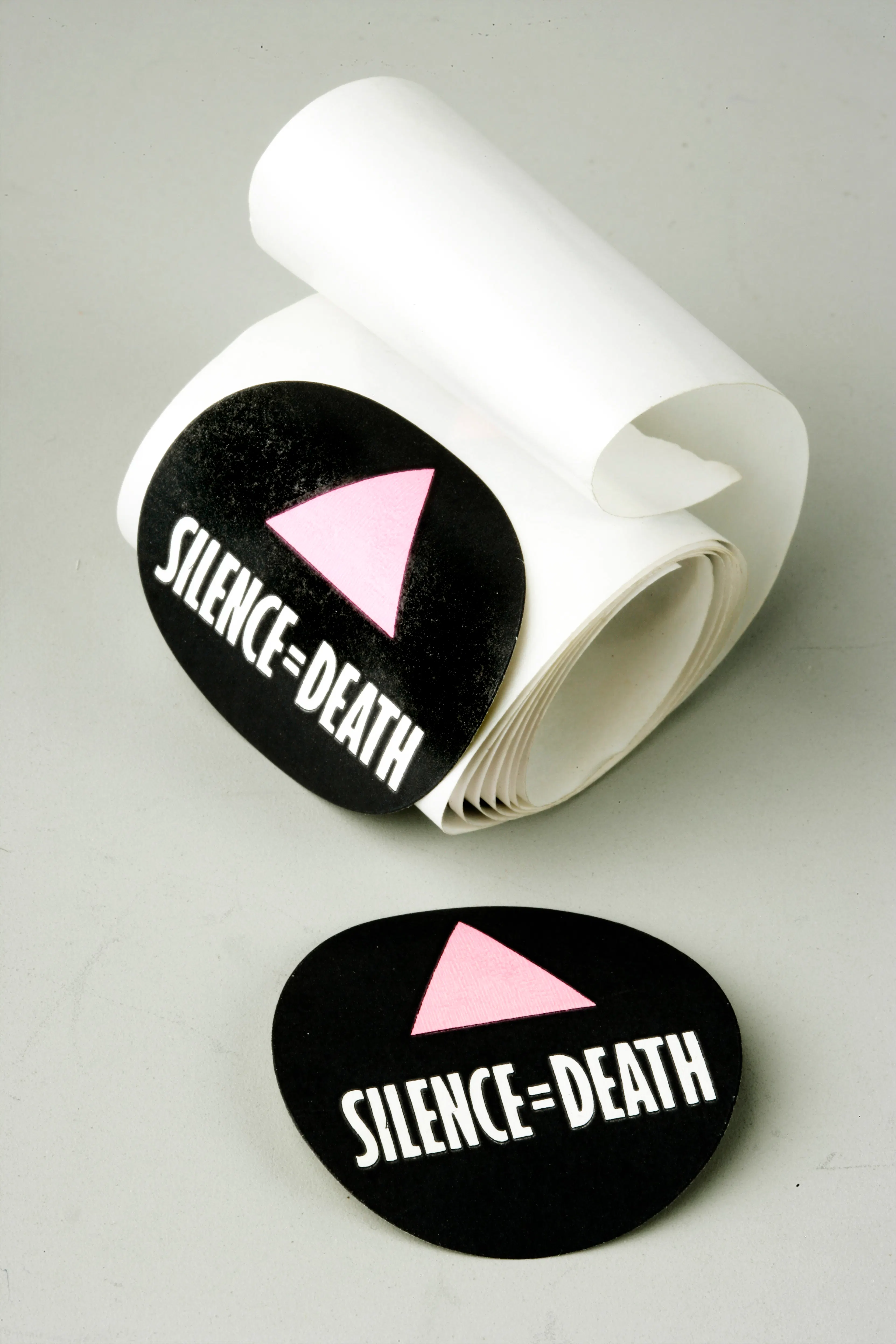
Silence=Death Collective (founded 1986), designers. ACT UP stickers, ca. 1987–2000. The New York Historical, Bella C. Landauer Collection, 2002.1.1547
Doonan approached Gene Pressman, his boss and the grandson of Barney Pressman, the store's founder, with the idea for the auction. Pressman picked up the phone and called members of the Haas family, the owners of Levi’s. They agreed to donate denim jackets that could be auctioned off. The loose-fitting, unisex garment was the perfect item to sell at an auction: it could be worn by men and women, old and young. Doonan and his colleague Mallory Andrews, alongside art world insider Anne Livet, started reaching out to designers and artists and asking them to customize the jackets. Among the people who agreed were artists Andy Warhol, Keith Haring, Jean-Michel Basquiat, Kenny Scharf, and Robert Rauschenberg, and designers including Karl Lagerfeld, Jean Paul Gaultier, and Yves Saint Laurent. Next, they called in favors from friends and colleagues who could recruit celebrities as models. Nearly a hundred agreed, including supermodels Iman and Paulina Porizkova, comedian Fran Lebowitz, and singers Madonna, Debbie Harry, and Kate Pierson from the B-52’s. They all volunteered their time and fame to raise money for the cause.
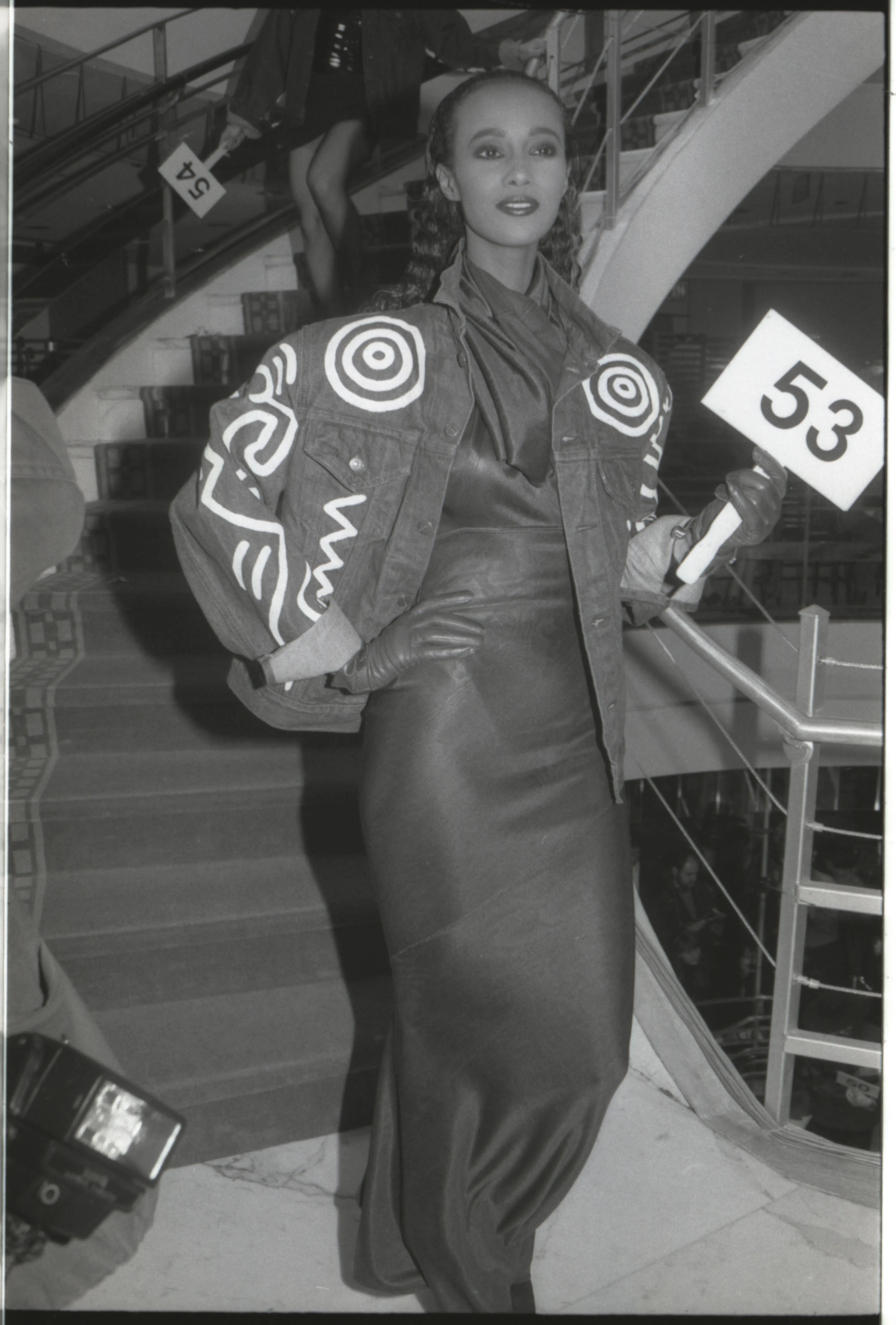
Bill Cunningham (1929–2016), photographer. Iman at Barneys AIDS Benefit, November 10, 1986. ©The New York Historical / Bill Cunningham Collection
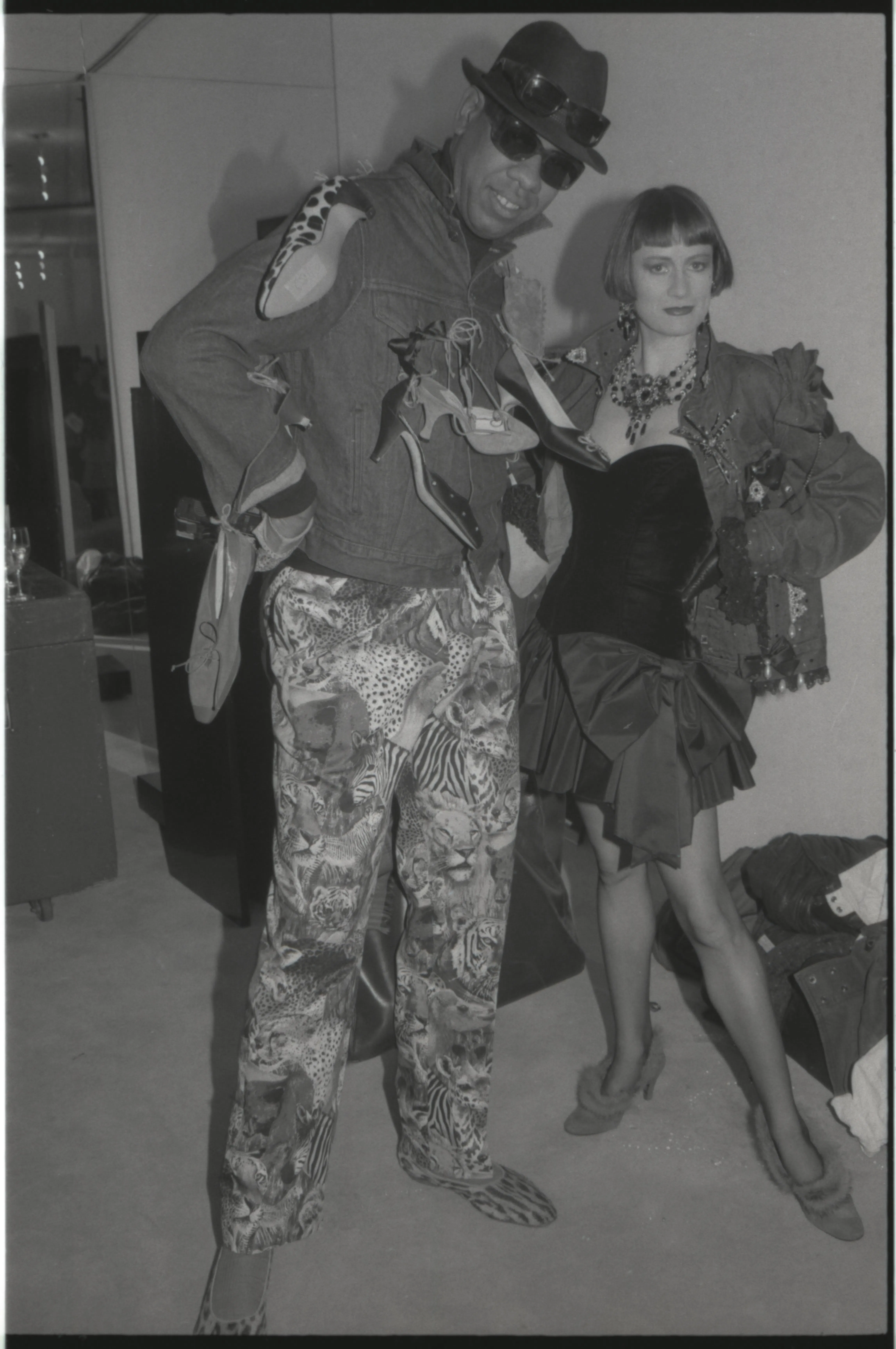
Bill Cunningham (1929–2016), photographer. André Leon Talley at Barneys AIDS Benefit, November 10, 1986. ©The New York Historical / Bill Cunningham Collection
The crowd was equally glamorous, bringing together jewelry designer Paloma Picasso, fashion designers Carolina Herrera and Bill Blass, and other industry insiders, all of whom paid $100 to attend. Unlike a regular fashion show, where rows of chairs line up along a runway, the guests at Barneys stood by and watched as the models descended the now-iconic spiral stairs. Among the guests was New York Times photographer Bill Cunningham. His photos, now at the Patricia D. Klingenstein Library at The New York Historical, captured Madonna dancing down the stairs in a jacket designed by Martin Burgoyne, her former roommate and close friend who would die of AIDS less than a month later. She wore the jacket over a skin-tight rubberized top and a miniskirt, accessorized with a key on a black string hanging from her neck. Another model wore a micro-mini dress and a cropped jacket constructed out of one Levi’s jacket by the Japanese-born designer Kenzo Takada, who decorated it with large bold flower appliqués, sequins, and rhinestones. Iman wore a jacket painted by Haring with his signature graffiti-style linework; Kate Pierson, with an exaggerated bouffant, wore a jacket decorated with three-dimensional roses and leaves over a matching lamé dress; and Debbie Harry wore a glittery skirt and jacket ensemble.
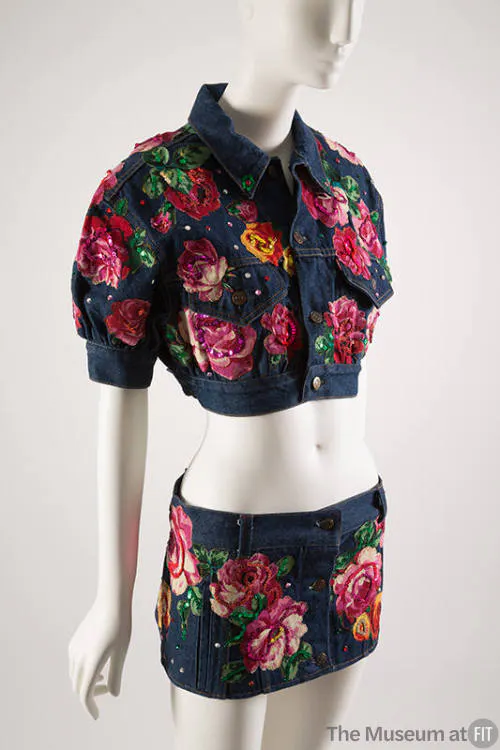
Kenzo Takada (1939-2000), designer. Jacket and skirt fashioned out of a Levi’s denim jacket, auctioned at Barneys, 1986. The Museum at FIT, Gift of Mr. & Mrs. Peter Bernstein, 86.151.1
“Madonna literally put that event on the map—those pictures went around the country,” mused James Scully, a casting director at the time, who frequented downtown clubs like the Pyramid and saw many of his club friends getting sick. “People would have done anything just to be at that event,“ he added, “and that fashion show was held on a staircase.” Like Finkelstein, who understood the visual cues of the moment, Doonan knew how to create an event that was greater than the sum of its parts. In the years to come, Doonan made Barneys an important location for publicizing and supporting myriad AIDS initiatives, but it was the November 1986 event that started to move the needle.
The benefit at Barneys reverberated across the country. In 1988, Donna Faircloth, a designer in Dallas, was asked to donate an evening dress for a fundraiser held by the Dallas chapter of DIFFA (Design Industries Foundation Fighting AIDS), but was disappointed by the event's poor results. The following year, when she was asked to participate again, she had a better idea. Instead of fancy dresses, she suggested the organization auction off jean jackets. Inspired by an article that she remembered reading about Barneys’ event, she cold-called Levi’s and asked them to donate jackets to their cause. The first fashion show and auction Faircloth organized on January 9, 1989, under the banner of Dallas Collection, featured jean jackets decorated by designers as well as Dallas celebrities such as the chef Stephen Pyles and the socialite Mary Kehoe, as well as a dress fashioned out of a jacket by designer Donna Karan, a jacket covered in 25 pounds of liquid silver by designer Kevin Emard, and a jacket with glistening buttons by Oscar de la Renta. It also included designs by Bill Blass, Gianni Versace, Christian Lacroix, and Patrick Kelly. A jacket by Claude Montana, then one of the hottest names in fashion, received a “$2,000 bid sight-unseen.” Like the Barneys event, the Dallas Collection event went directly to HIV/AIDS service programs in Dallas itself. The fundraiser continued to grow every year and by 1991 DIFFA had taken it on an eight-city tour with over 800 jackets customized by notables such as Elizabeth Taylor, Donna Karan, and Whoopi Goldberg, generating close to $2 million. As with every event organized by DIFFA, the money raised went directly to support local communities struggling with HIV/AIDS.
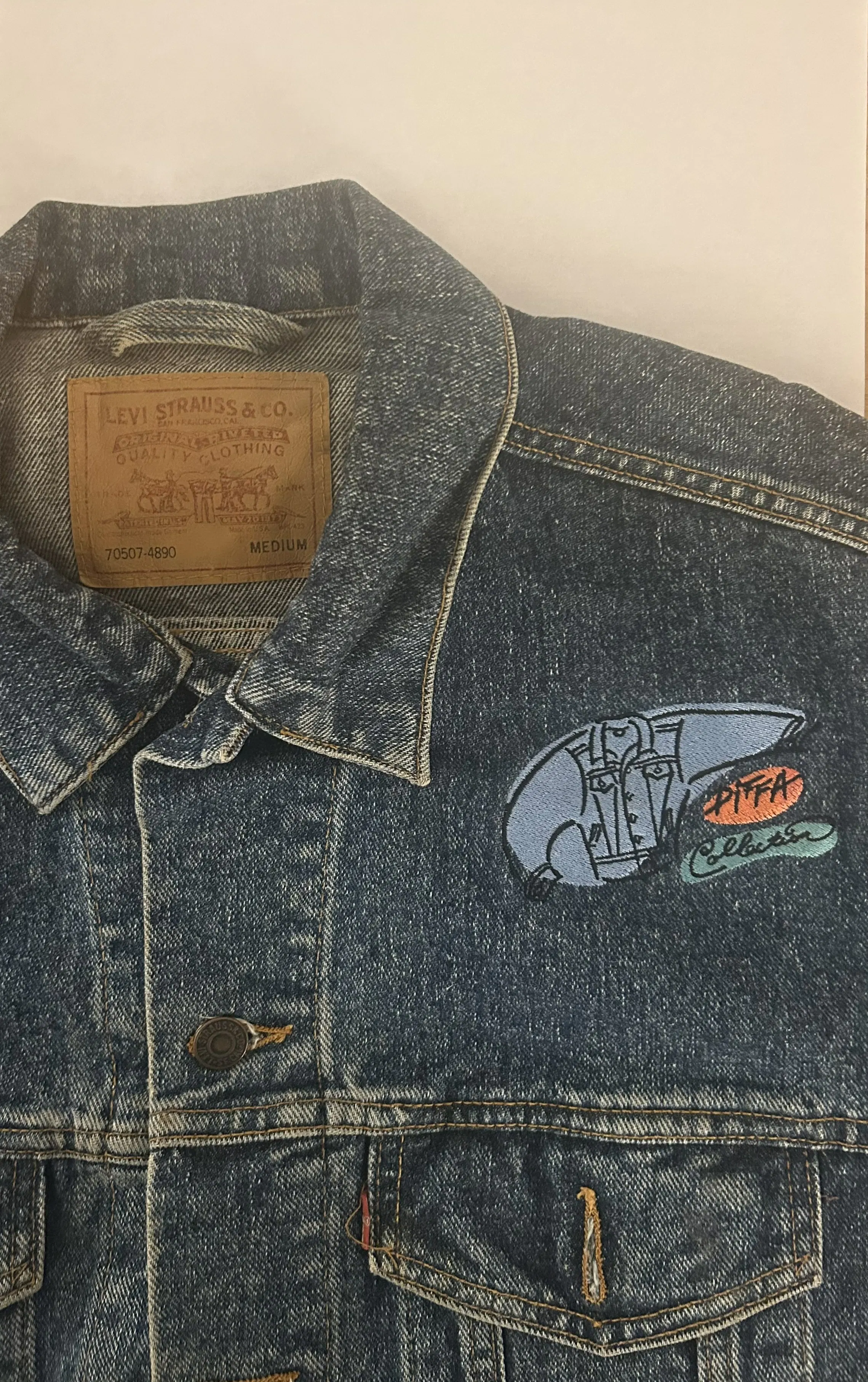
Levi’s denim jacket, ca. 1991. Private collection of Keren Ben-Horin.
This jacket was worn by DIFFA volunteers during a DIFFA collection tour in which Levi’s jean jackets were decorated by designers and auctioned to benefit local AIDS service programs in Dallas, Boston, Houston, Phoenix, Detroit, Atlanta, Los Angeles, and Seattle. The DIFFA collection, like most other of the organization’s initiatives, began as a grassroots initiative in Dallas.
Like the memorable Barneys event documented by Bill Cunningham, DIFFA (whose New York chapter archive is now housed at the Patricia D. Klingenstein Library) did more than just draw attention to how critical it was to fund HIV/AIDS programs and support local communities. It also created a space of true joy and camaraderie for the people who organized and participated in it. At a time of great despair and hopelessness, the individuals that organized these fashion shows saw a unique opportunity to “do something about it,” and they seized it.
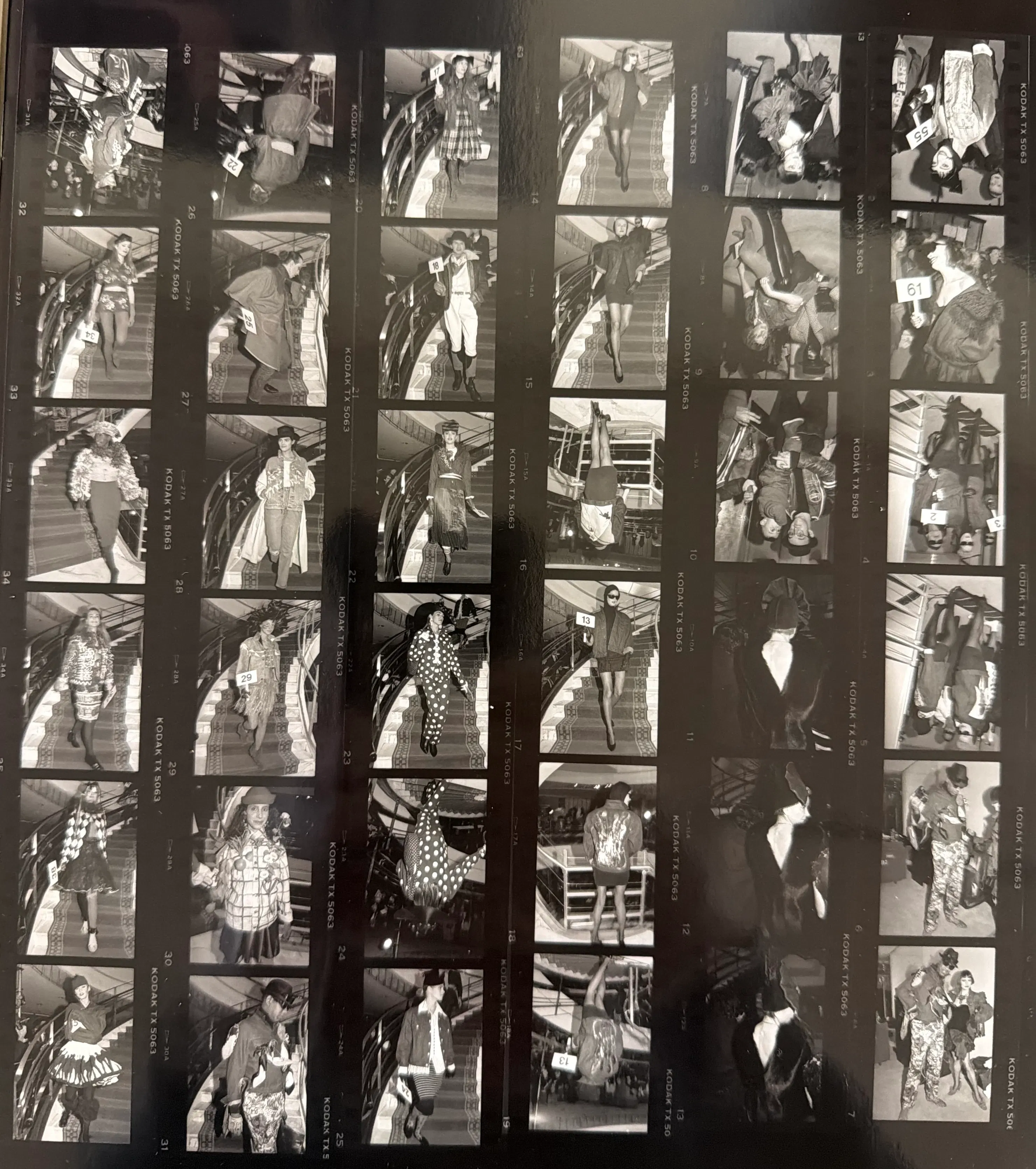
Bill Cunningham (1929–2016), photographer. Contact sheet, Barneys AIDS Benefit, November 10, 1986. ©The New York Historical / Bill Cunningham Collection
You can see Bill Cunningham's photos of the Barneys event on display in our fourth floor installation, Queer Joy / Gay Power, on view until June 20, 2027.
Keren Ben-Horin is an associate curator of public history at The New York Historical
Keep Reading
- Women at the CenterNovember 17, 2026
Yuppies: A Conversation with Author Dylan Gottlieb
How did young urban professionals transform New York City in the 1980s? - Women at the CenterNovember 1, 2026
Konwatsi’tsiaienni (Molly Brant), Haudenosaunee Women’s Diplomacy, and the American Revolution
Historian Maeve Kane discusses Konwatsi’tsiaienni (Molly Brant)'s Revolutionary War diplomacy and the challenges of recovering Native women's histories from surviving sources. - Women at the CenterOctober 31, 2026
“More Than Witches Would Fly That Night”: Queer and Trans Femme Histories of Halloween
Years before the 1969 Stonewall Uprising, Halloween celebrations empowered and inspired queer and trans femme people, giving them the freedom to dress as they chose. - Women at the CenterOctober 9, 2026
Empire of Skulls: Reassessing Phrenology with Author Paul Stob
Is there anything we can learn from 19th-century phrenologists? Author Paul Stob argues that the phrenologists' legacy is still very much with us today.