On Halloween in 1969, the year of the Stonewall Uprising, Lee Brewster founded an organization first known as Queens, later renamed the Queens Liberation Front (QLF). Halloween held great significance for Brewster, a self-identified drag queen and activist, so in honor of this holiday, and our installation Queer Joy/Gay Power, the Jean Margo Reid Center for Women's History is exploring why Halloween holds such importance for queer and trans femme individuals.
Two years prior, Brewster had organized a Halloween drag ball for the Mattachine Society’s New York chapter. Established in the 1950s, the homophile organization campaigned for gay civil rights. Brewster’s fundraiser successfully saved the organization from significant financial issues. However, Brewster felt that the group’s leadership dismissed drag as “merely camp” and were “more than willing to sacrifice the drag in the interest of appeasing the straight.”
At the time of Brewster’s initial 1967 ball, the “three-article” rule, enforced by police, required individuals to wear three articles of clothing that conformed to their sex assigned at birth. However, the carnivalesque nature of Halloween and its mainstream acceptance within American society effectively turned these rules and social norms upside down. As a result, trans feminine and queer individuals could usually move more freely around Halloween, especially when attending a ball.
It is difficult to pinpoint the earliest Halloween drag balls. However, Alfred Finnie, a gay Black man from Chicago famed for holding the annual Finnie’s ball, started his as early as 1935. Each year a contest was held to crown the Queen and King of the Ball, and by 1976 the top prize was $200. Coverage of Finnie’s diverse events in postwar African American magazines such as Jet and Ebony lasted into the 1970s, with one journalist proclaiming “Halloween in Chicago means the Finnie Club’s Halloween ball.” Jet reported that Finnie’s wasn’t the only event of this kind—similar Halloween balls could be found across the country including in New York, Los Angeles, Houston, Texas, and St. Louis.
Famed female impersonation showgirl Marlow Monique from Chicago’s Bronzeville neighborhood relocated to New York City in the early 1960s. Here she met drag queen Crystal LaBeija, who introduced her to the ball scene, and Flawless Sabrina, founder of the Miss All-America Camp Beauty Contest in 1958. Monique eventually starred alongside LaBeija and Sabrina in the 1968 documentary The Queen, which follows emcee Sabrina and contestants as they prepare for the 1967 pageant in Manhattan. Reflecting on her everyday life in Chicago and New York City, Monique noted “If you were caught out there, other than on Halloween, you would be arrested for female attire, that's what they would do. The police would come [...] If it was Halloween, no one said nothing, because you were allowed on Halloween to go dress as you want. But if you dress with any feminine attire on other days, you were considered to be breaking the law.” From Chicago to New Jersey, renowned Black trans women activists Miss Major and Marsha P. Johnson have also described their formative experiences of attending Halloween drag balls in the late 1950s and 1960s.
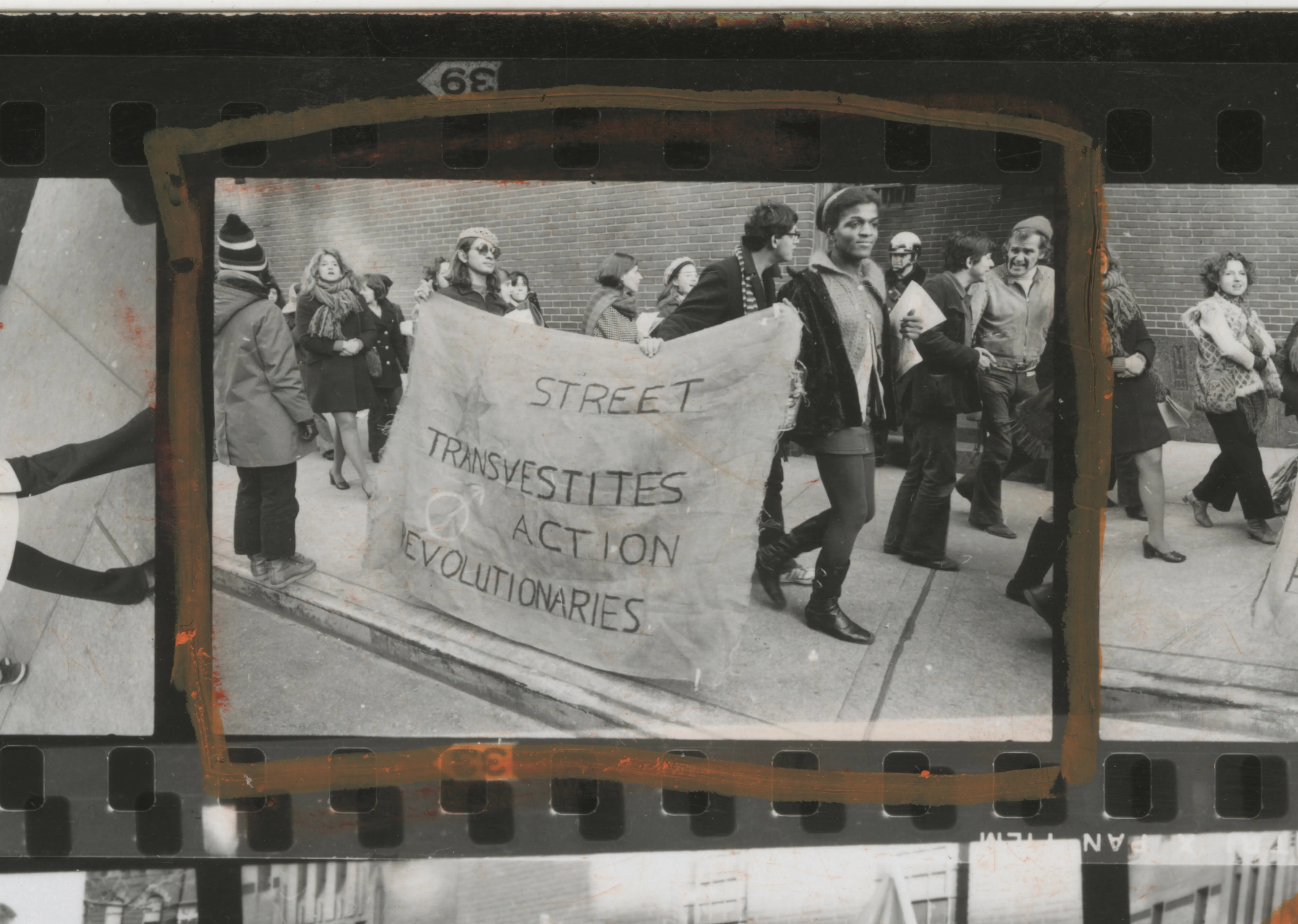
Untitled (Marsha P. Johnson and Sylvia Rivera of STAR at Protest Outside Women’s House of Detention), New York City, December 20, 1970 © The New York Historical / Fred W. McDarrah Collection, Gift of the Goldman Sonnenfeldt Family
Halloween night in 1963 held a particularly special place in Sylvia Rivera’s heart, as it was the moment she felt magnetically drawn to Marsha P. Johnson and compelled to pursue a friendship with her. While their paths had frequently crossed in the Times Square area, Rivera remembered seeing 18-year-old Johnson “walk down the street radiating confidence, as Halloween was one of the few nights [that] gender lines became more permeable and policing was more lax.” Johnson’s glowing joy that night (captured by Tourmaline in Marsha) inspired and empowered Rivera, who described how in these early years Johnson “plugged in the light” for her. By 1970, together they formed Street Transvestite Action Revolutionaries (STAR) which fought for trans inclusion and gender liberation within the larger gay liberation movement. Although STAR ended a few years later, co-founders Rivera and Johnson formed a lasting bond. Rivera felt disheartened by the marginalization she experienced within the gay liberation movement and took a step back from her more formal activism. In the mid-1970s, she relocated from the city to Tarrytown, where she lived with her longtime partner, and occasionally returned to the city to visit Marsha P. Johnson and participate in later pride marches that honored these two key activists.
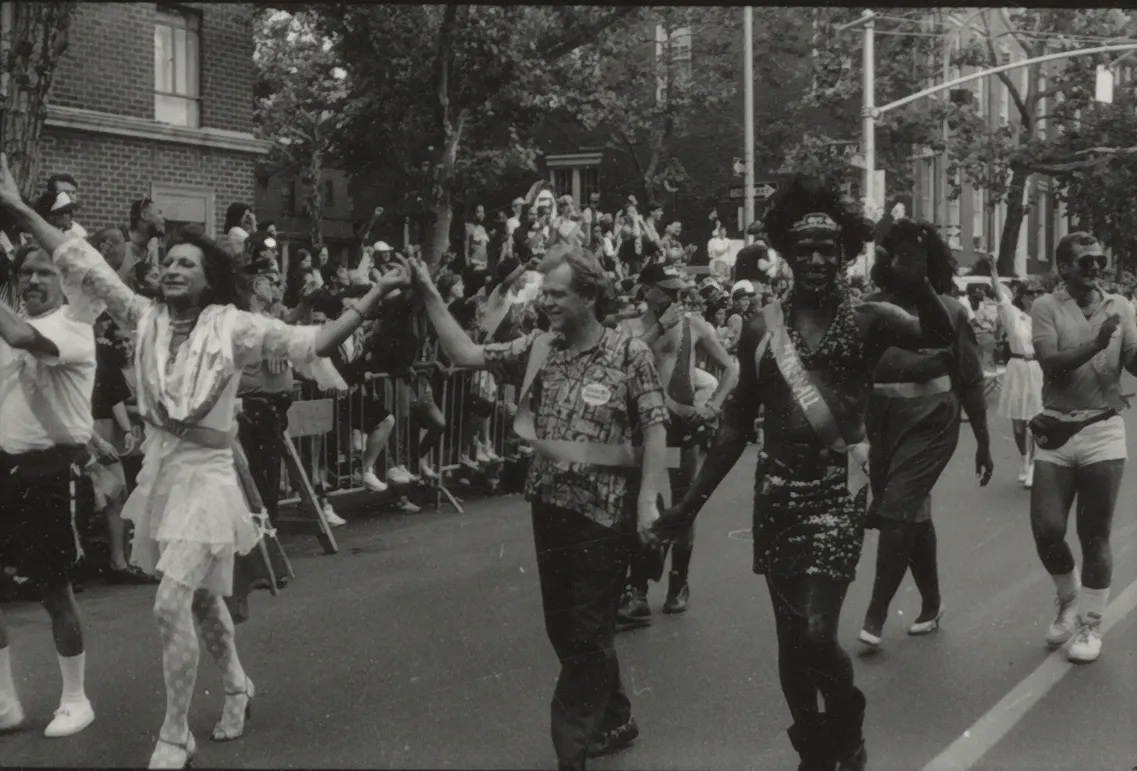
Fred W. McDarrah (1926–2007), photographer. Untitled (Sylvia Rivera, Jim Fouratt, and Marsha P. Johnson at Gay Pride March), New York City, June 30, 1991 © The New York Historical / Fred W. McDarrah Collection, Gift of the Goldman Sonnenfeldt Family
A writer for Lee Brewster’s Drag magazine reflected on the significance of Halloween for queer and trans feminine individuals. “What occasion was more legendary, more meaningful, and more fun to the Drag than Halloween, our National Holiday for partying? Hell, in the most uptight of communities you could get away with being yourself on Halloween. The police would even escort you to your party! And wish you good evening! More than witches would fly that night.”
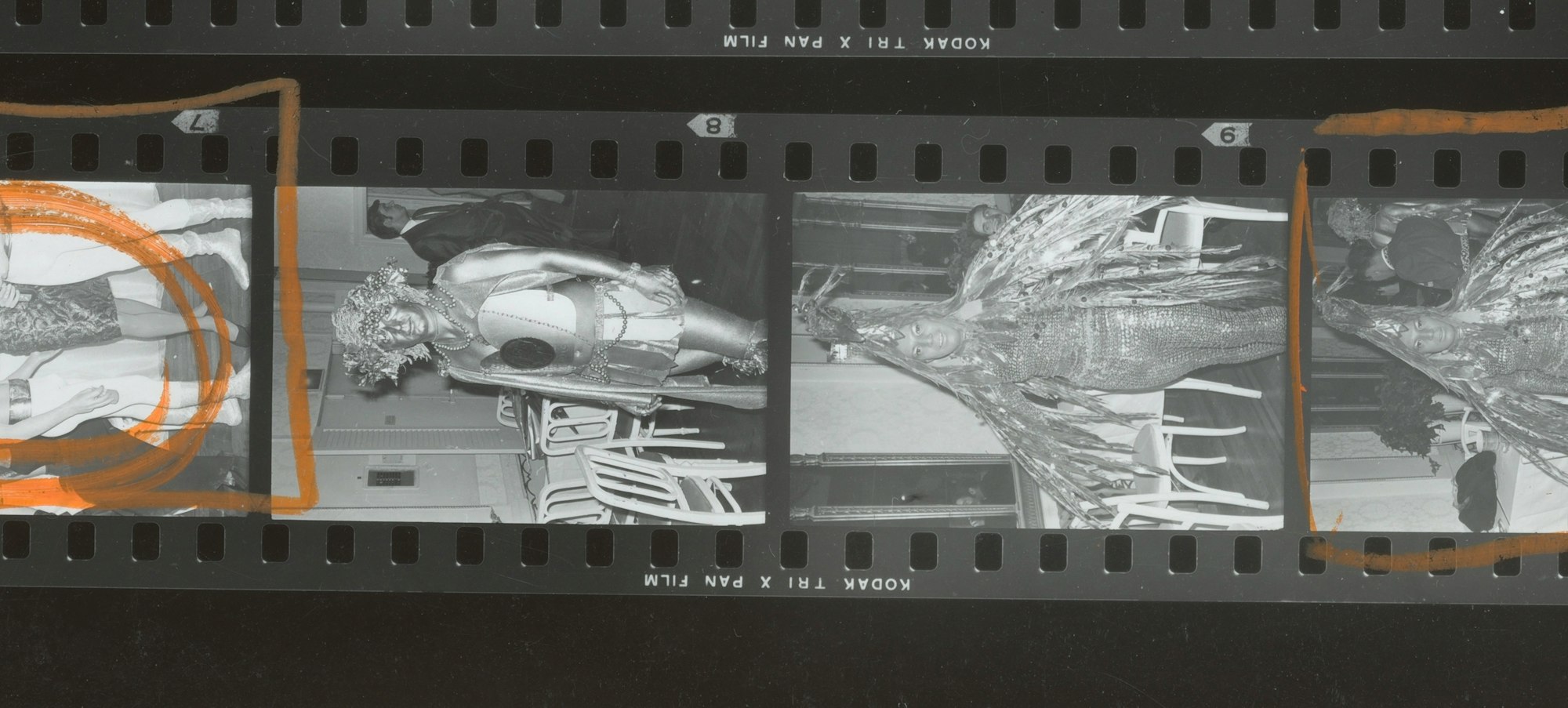
While Brewster parted ways with the Mattachine Society, he continued to use Halloween as a vital means of collecting funds. By 1969 he would do so for his own cause, the QLF. Inspired by street queens’ activism at the Stonewall Uprising and angered by the disregard for drag from the homophile, gay liberation, and lesbian feminist movements, Brewster set up this activist organization to serve the interests of trans feminine communities and legalize cross-dressing. From 1969 to 1973, Brewster independently held a series of drag balls at the Hotel Diplomat. As they increased in popularity, celebrities including Shirley MacLaine, Carol Channing, and Jacqueline Susann attended. Mattachine drag ball attendee Gina, from Costa Rica, caught the eye of Village Voice photographer Fred McDarrah, who snapped multiple images of her on the dance floor. Gina was later featured in Female Mimics, modeling her favorite ensembles, including the same metallic sequin-paneled Henri Lissaver dress she wore to Brewster’s ball.
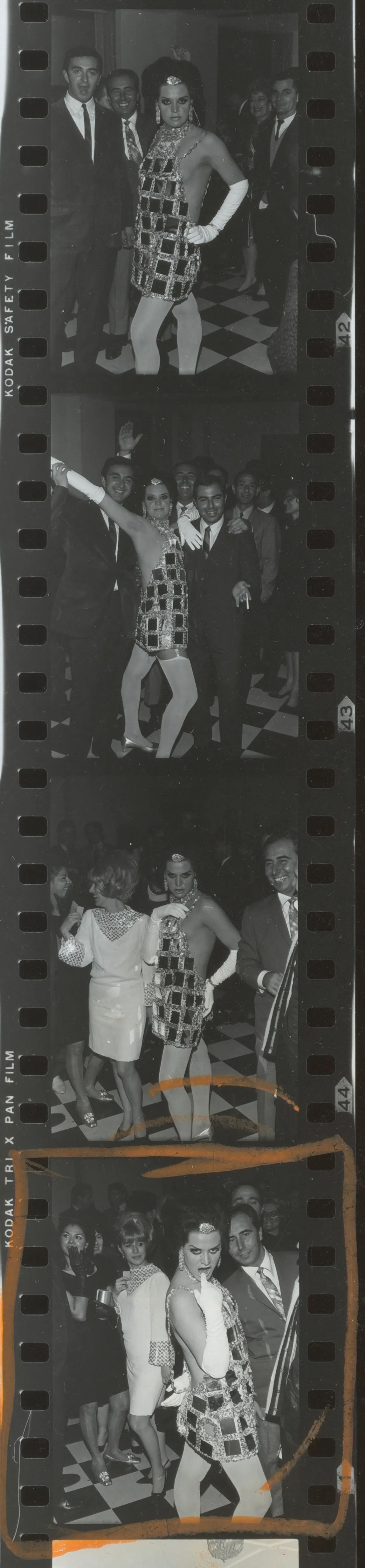
Fred W. McDarrah (1926–2007), photographer. Gina, from Costa Rica, wearing a Henri Lissaver designer dress at a Mattachine Society ball at the Hotel Diplomat, October 27, 1967. © The New York Historical / Fred W. McDarrah Collection, Gift of the Goldman Sonnenfeldt Family
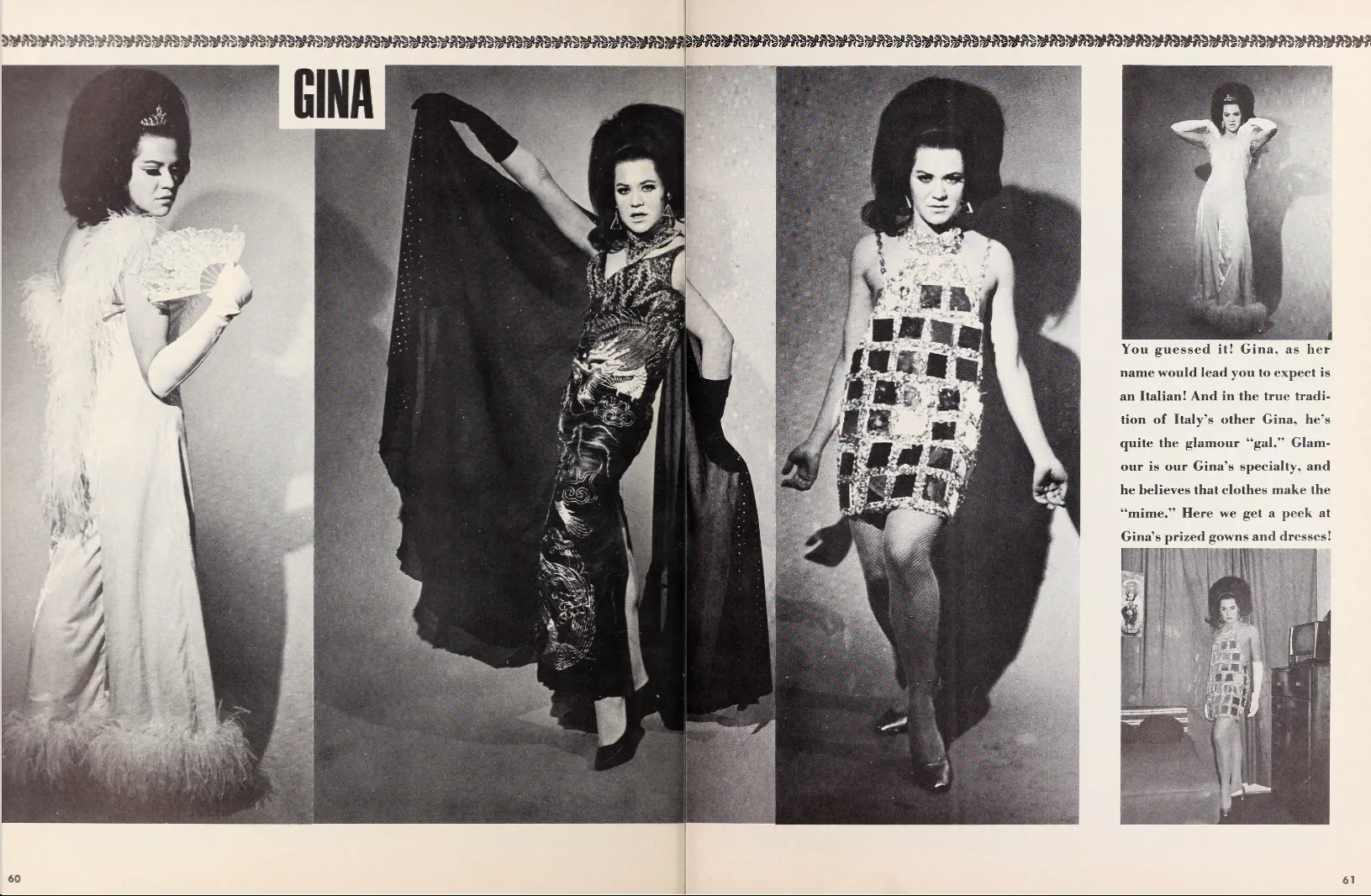
Gina's photographs in Female Mimics magazine, vol. 1, no. 12, Summer 1968. Digital Transgender Archive
A shrewd entrepreneur, Brewster simultaneously established Lee’s Mardi Gras Boutique as a mail-order business. Advertised as “the sole establishment of its kind, owned by, operated for, and staffed by a transvestite,” the Manhattan store eventually occupied a space which also headquartered Brewster’s trans feminine magazine, Drag. Brewster used Drag’s profits and other commercial enterprises to fund QLF’s activism, including a march on New York’s state capital to legalize cross-dressing. Brewster was frequently photographed alongside key figures including Sylvia Rivera and Marsha P. Johnson. Brewster and QLF ultimately were successful in ending New York City ordinances against cross-dressing.
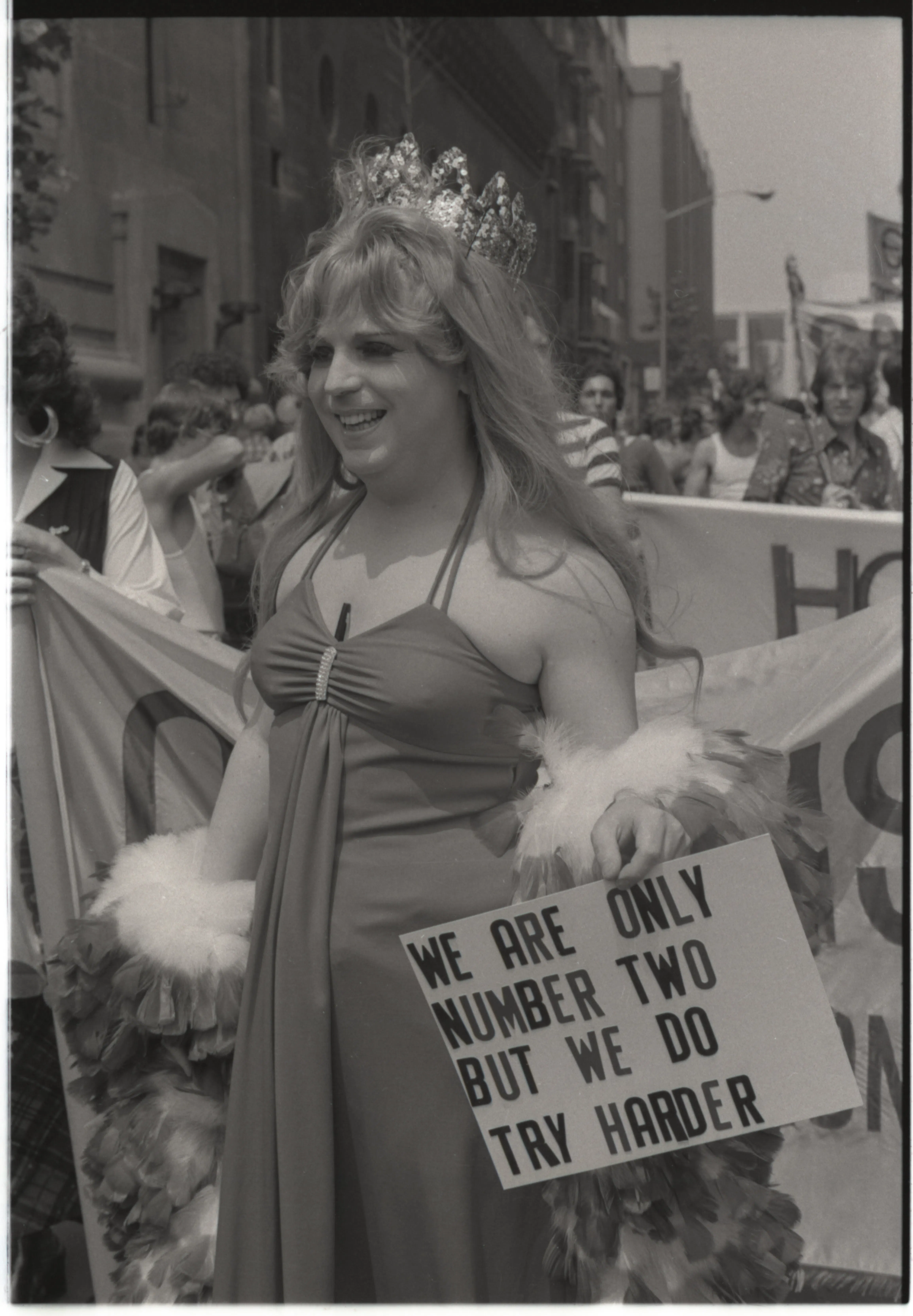
Fred W. McDarrah (1926–2007), photographer. Untitled (Lee Brewster, Fourth Annual Christopher Street Gay Liberation Day), New York City, June 24, 1973. © The New York Historical / Fred W. McDarrah Collection, Gift of the Goldman Sonnenfeldt Family
Halloween remained a fixture in Drag magazine. The publication listed Halloween events across the country and even reported on international gatherings. Jean Fredericks in London described French and Irish queens coming to her club in London for Halloween balls. In 1977, a decade after the Mattachine Halloween Ball organized by Brewster, Drag reflected on similarities and differences in the years passed. “There have been several changes in the Halloween scene hereabouts. Many of the local gay bars have set up their own little contests or balls. The clientele it follows is mostly gay male, this is a change from the population of the Drag Ball. Another truth is that many of these clubs would frown upon a regular drag attendance. Camp is one thing, but everyday … no!”
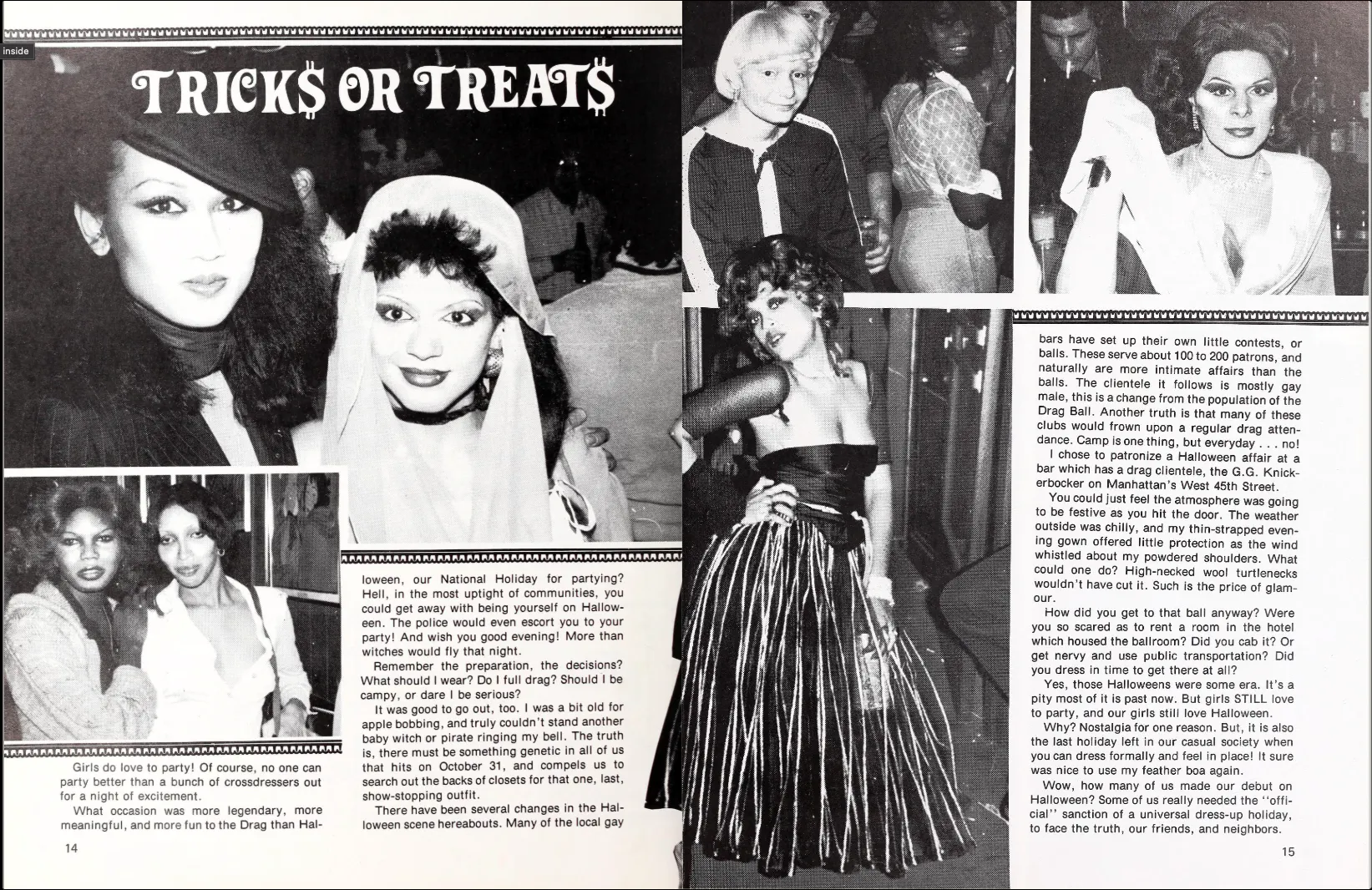
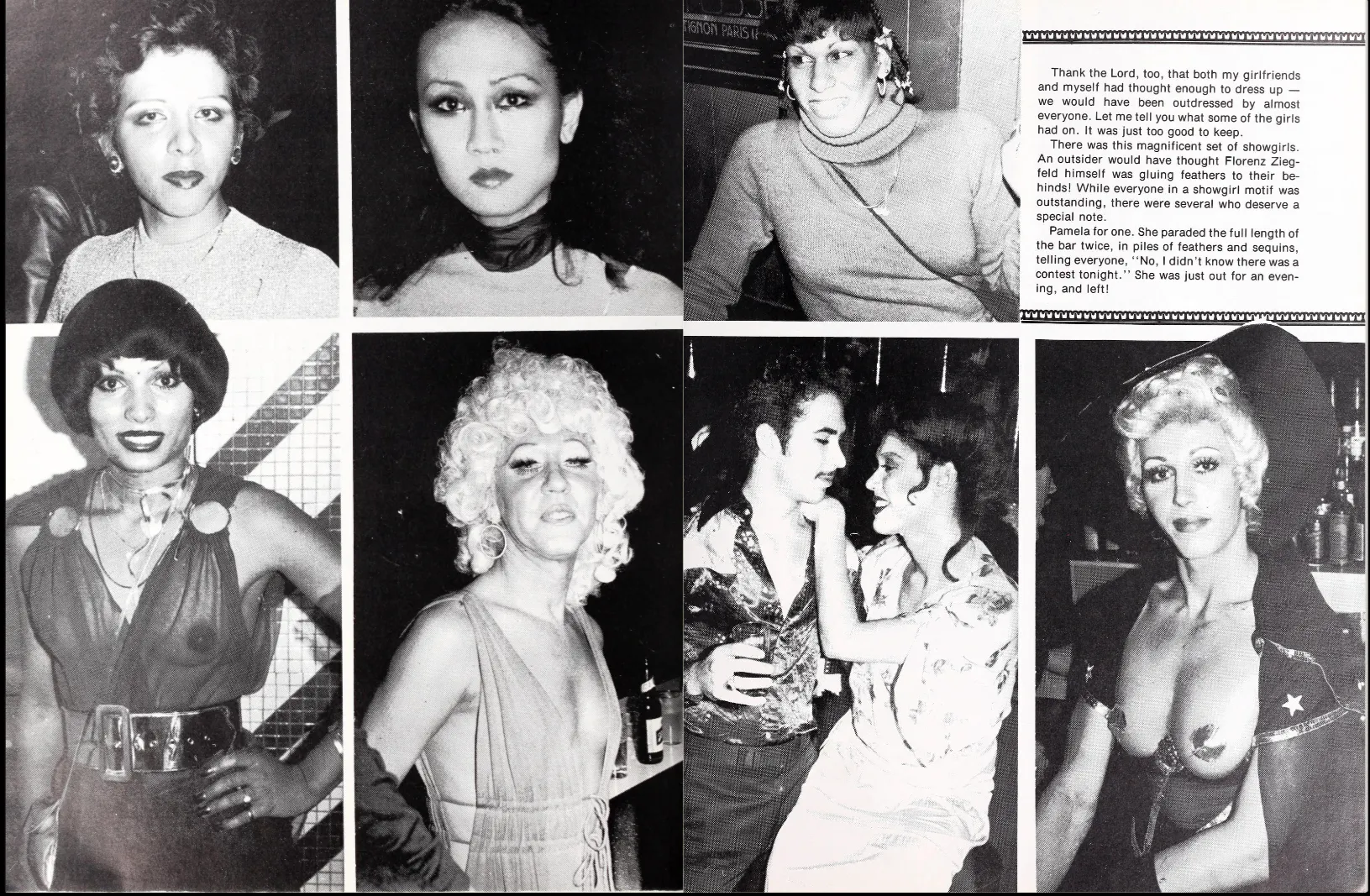
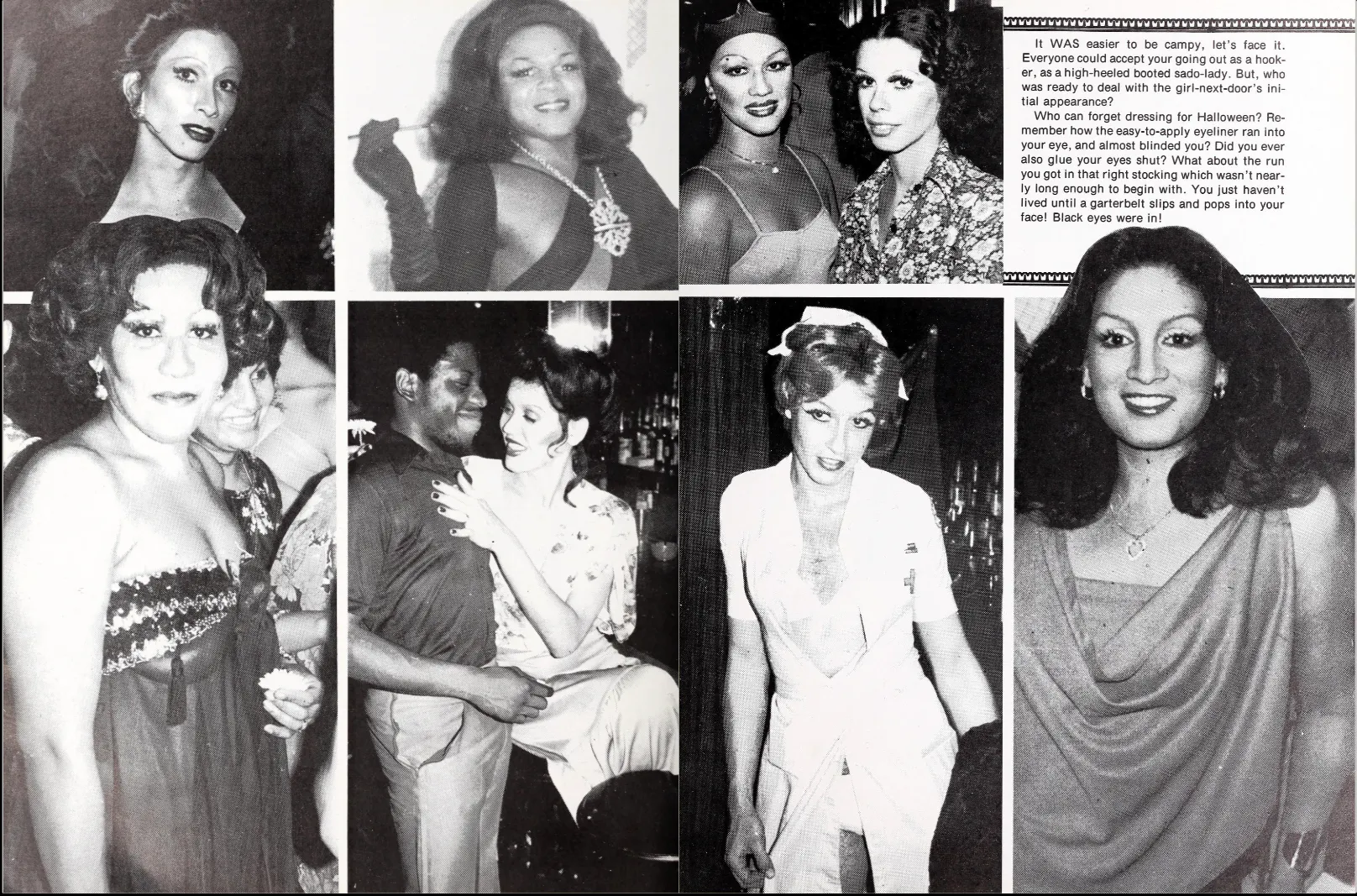
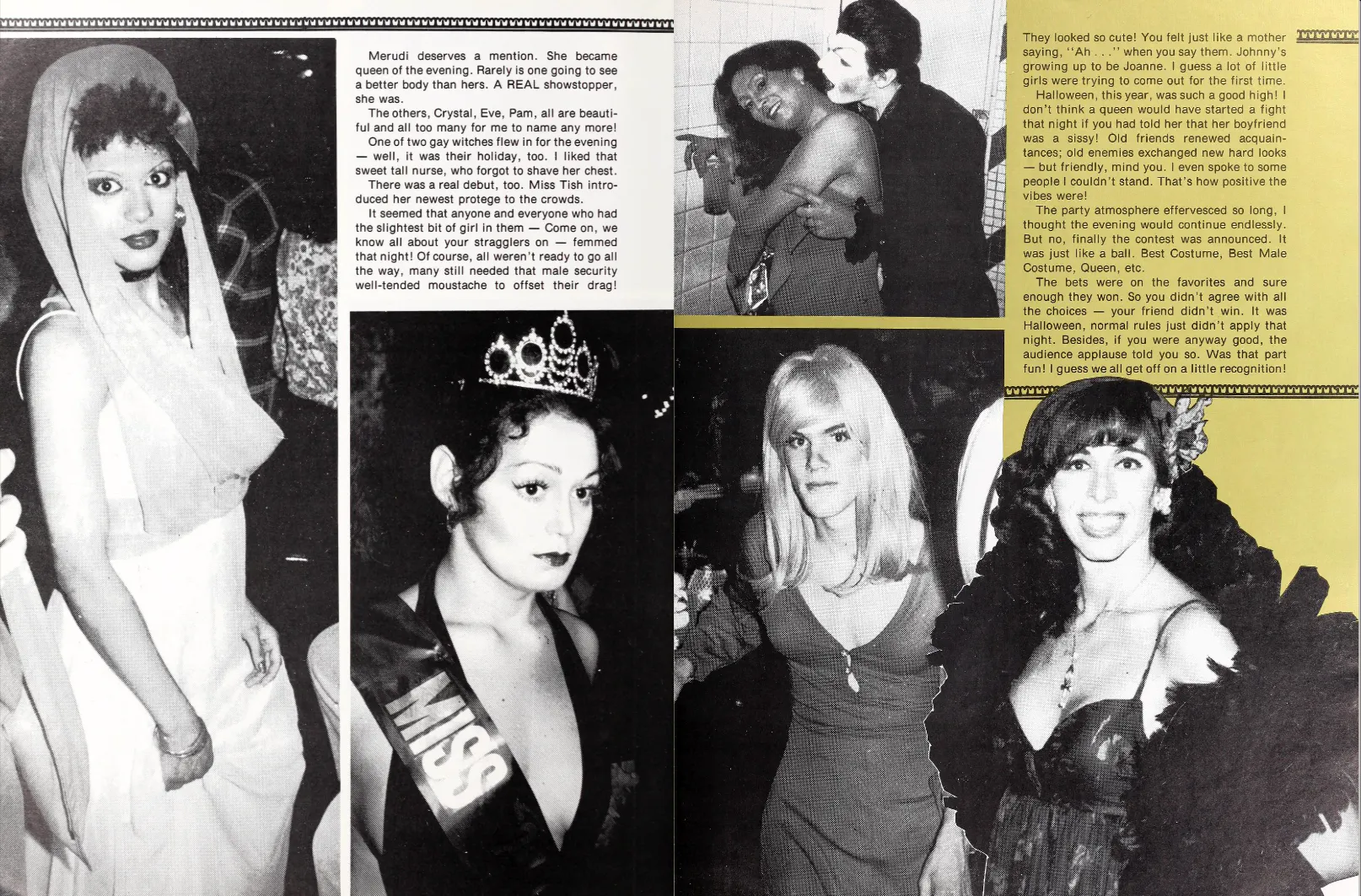
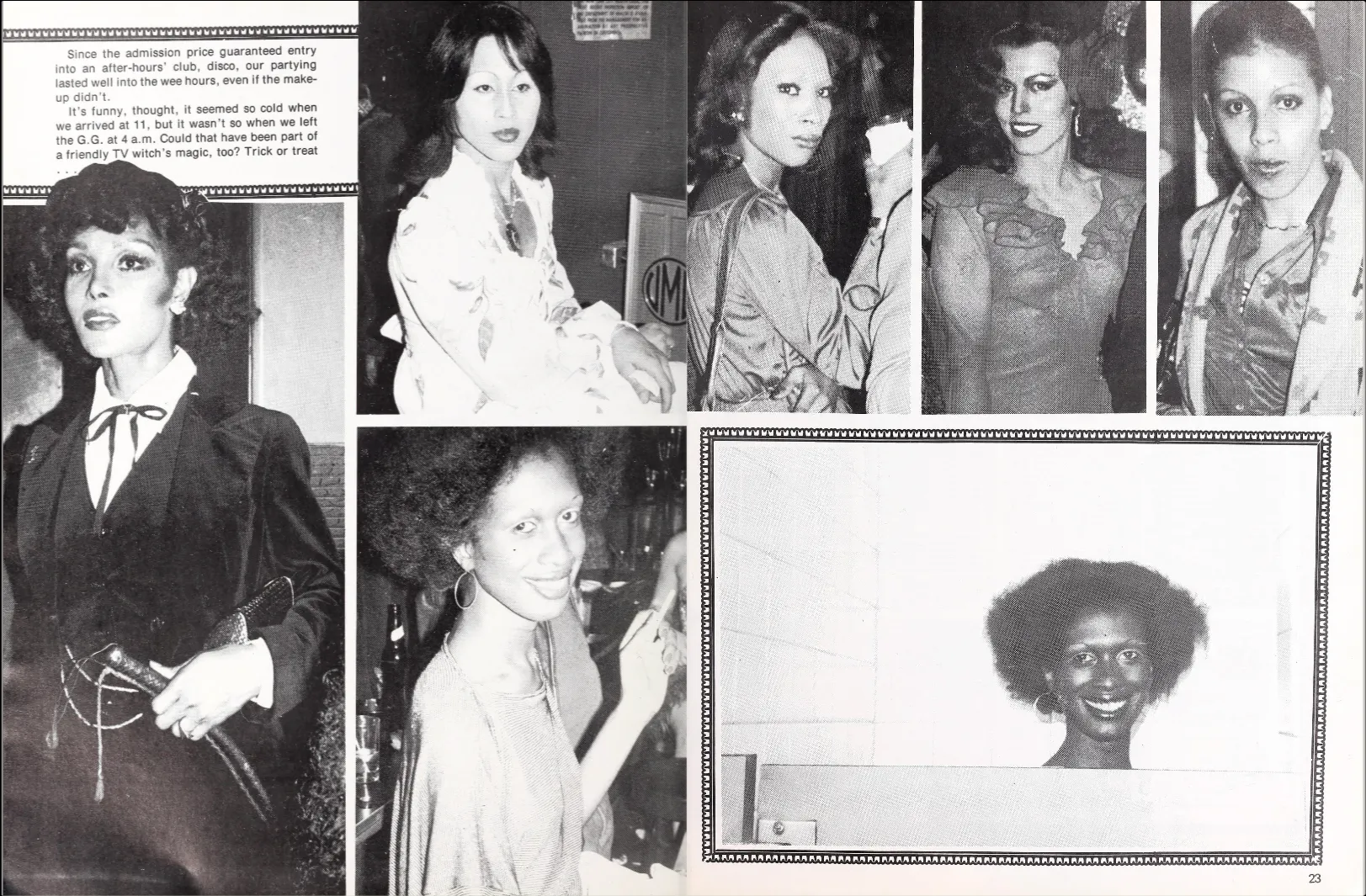
“Tricks or Treats” Halloween themed spread with photographs taken at a Halloween party at a bar with a drag clientele, the G.G. Knickerbocker on West 45th Street. Drag Vol. 7 No. 26 (1978). Digital Transgender Archive
Today Halloween remains a prominent date within queer and trans communities. From dances to performances, Dykes and Dolls, a New York City-based lesbian, trans, and queer zine and event calendar, established in 2025, lists an extensive selection of Halloween themed gatherings. They write: “we hope you all find queer joy and freedom at every event in this calendar. Everyone deserves the feeling of relief that comes from simply existing in spaces that are made by us, for us. Community will bring liberation for us all.”
Happy Halloween!
You can see a selection of these objects, and many others, on display in our fourth floor installation, Queer Joy / Gay Power, on view until June 20, 2027.
Written by Dr. Isabelle Held, Mellon Foundation Gender and LGBTQ+ History Postdoctoral Fellow, Jean Margo Reid Center for Women's History at The New York Historical
Keep Reading
- Women at the CenterNovember 17, 2026
Yuppies: A Conversation with Author Dylan Gottlieb
How did young urban professionals transform New York City in the 1980s? - Women at the CenterNovember 10, 2026
How Levi’s Denim Jackets Helped Fight HIV/AIDS
On November 10, 1986, a fashion show held on the Barneys staircase offered a new model for funding HIV/AIDS programs. - Women at the CenterNovember 1, 2026
Konwatsi’tsiaienni (Molly Brant), Haudenosaunee Women’s Diplomacy, and the American Revolution
Historian Maeve Kane discusses Konwatsi’tsiaienni (Molly Brant)'s Revolutionary War diplomacy and the challenges of recovering Native women's histories from surviving sources. - Women at the CenterOctober 9, 2026
Empire of Skulls: Reassessing Phrenology with Author Paul Stob
Is there anything we can learn from 19th-century phrenologists? Author Paul Stob argues that the phrenologists' legacy is still very much with us today.