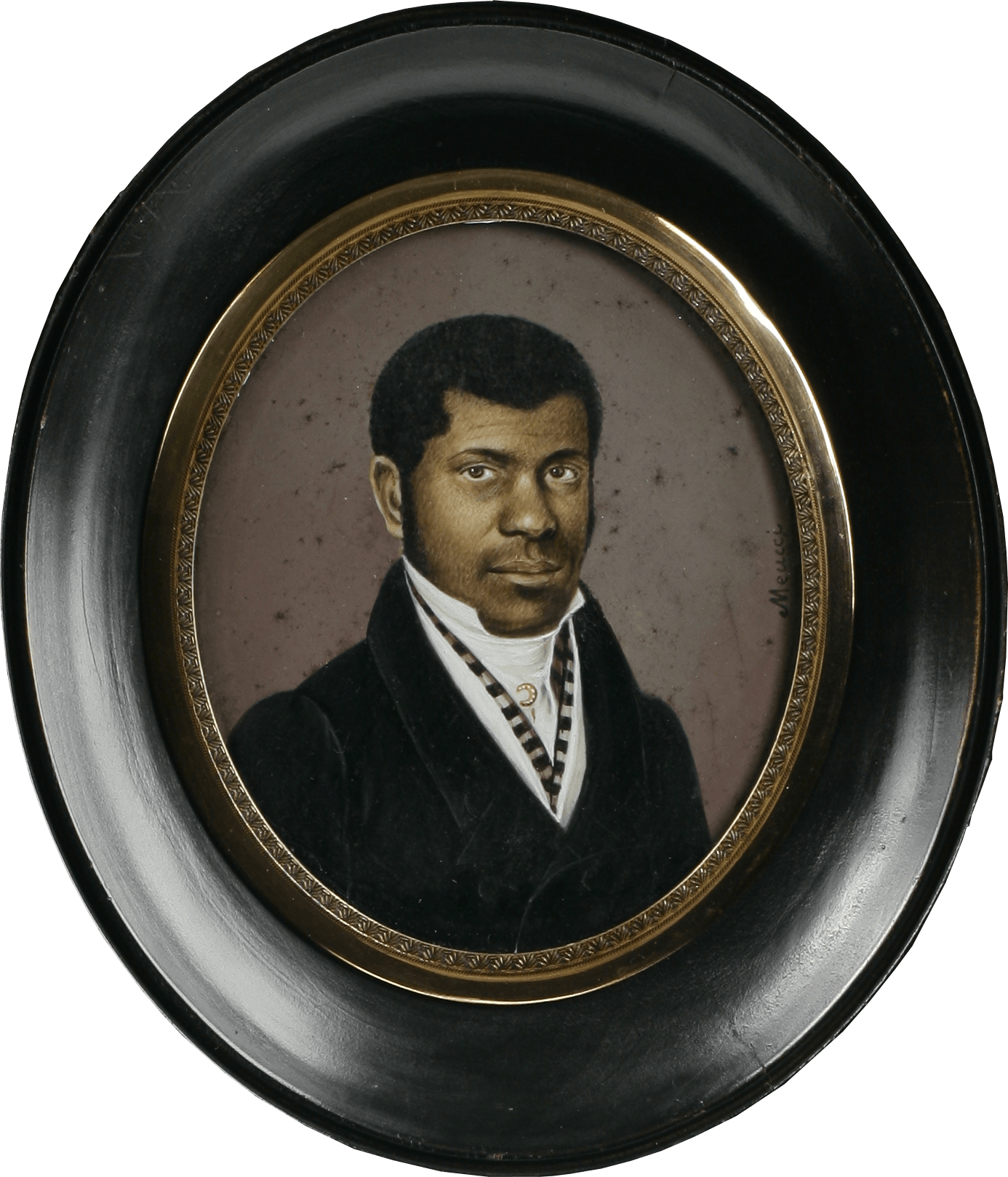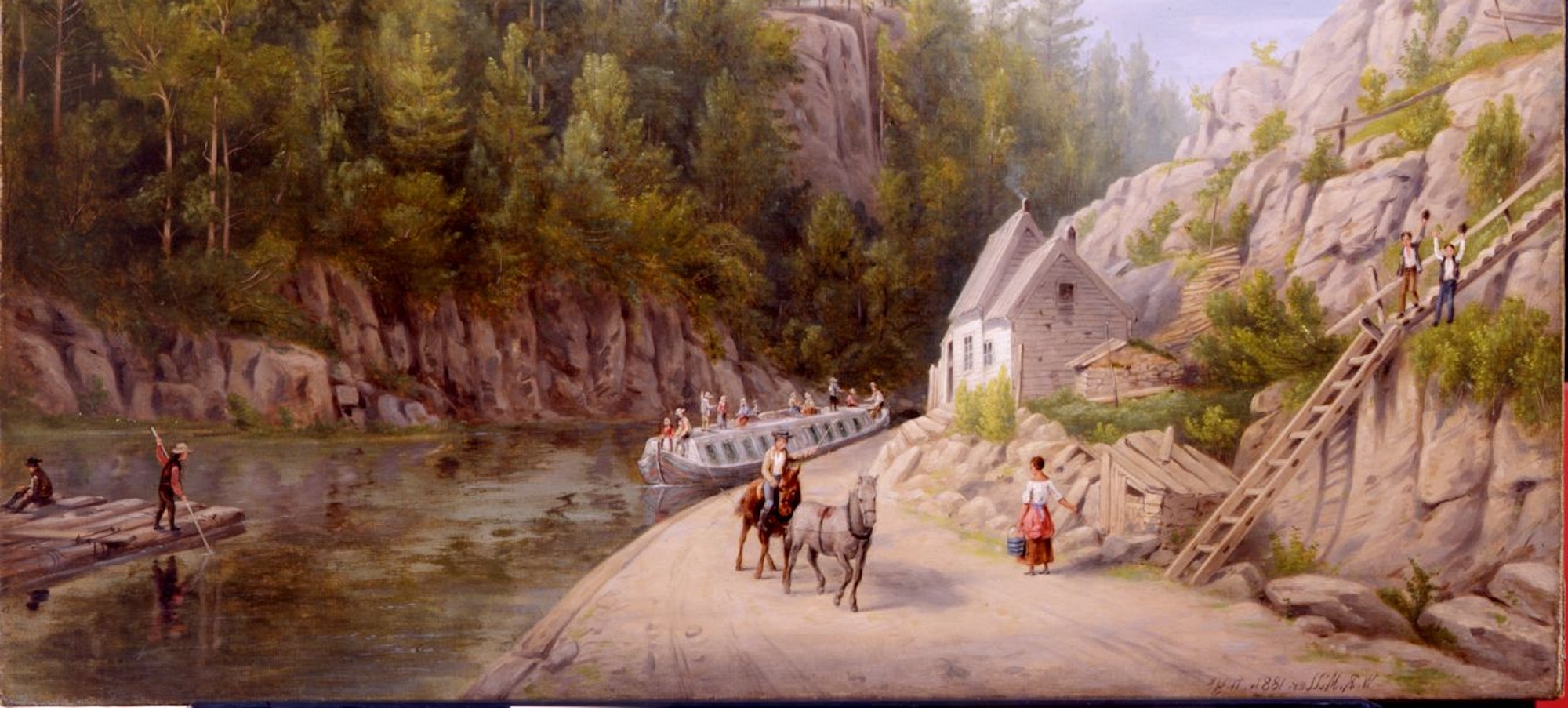
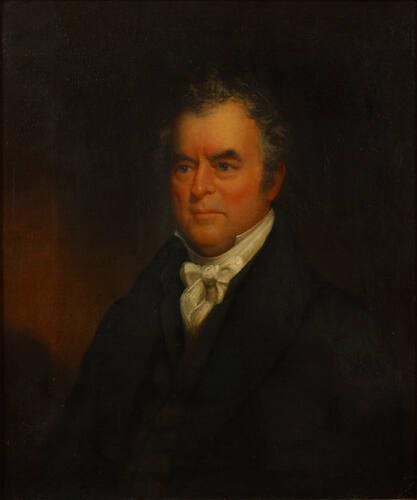
Portrait of Jesse Hawley by the artist Grove S. Gilbert, ca. 1825–1830. Oil on canvas. Gift of Jesse Hawley, 1832.1. The New York Historical.
When the Erie Canal Commissioners traversed the state in search of the most suitable route to connect western New York and the Hudson River, they carried among their papers a series of fourteen essays by central New York merchant Jesse Hawley (1773-1842).
In 1806, four years prior to this monumental excursion, Hawley wrote these essays from the cell of a debtor's prison. As a flour merchant who milled his wheat in Seneca Falls, Hawley had faced enormous difficulty shipping his product to New York City, due to the lack of a direct route to the Hudson River. These hardships were shared by many merchants, farmers, and other settlers of western New York's booming population. Hawley and his partner went bankrupt. During the twenty months he was jailed, he had nothing but time to imagine a solution to his problem.
Hawley’s solution was to propose the idea of a great canal connecting Lake Erie with the Hudson River. While he was not the first to imagine such a passageway (that honor is likely owed to Gouverneur Morris, in a letter he wrote to John Parish dated January 20, 1800,) he was the first to present the notion publicly. His essays on the subject were published under the pseudonym Hercules in the Genesee Messenger, from 1807 to 1808.
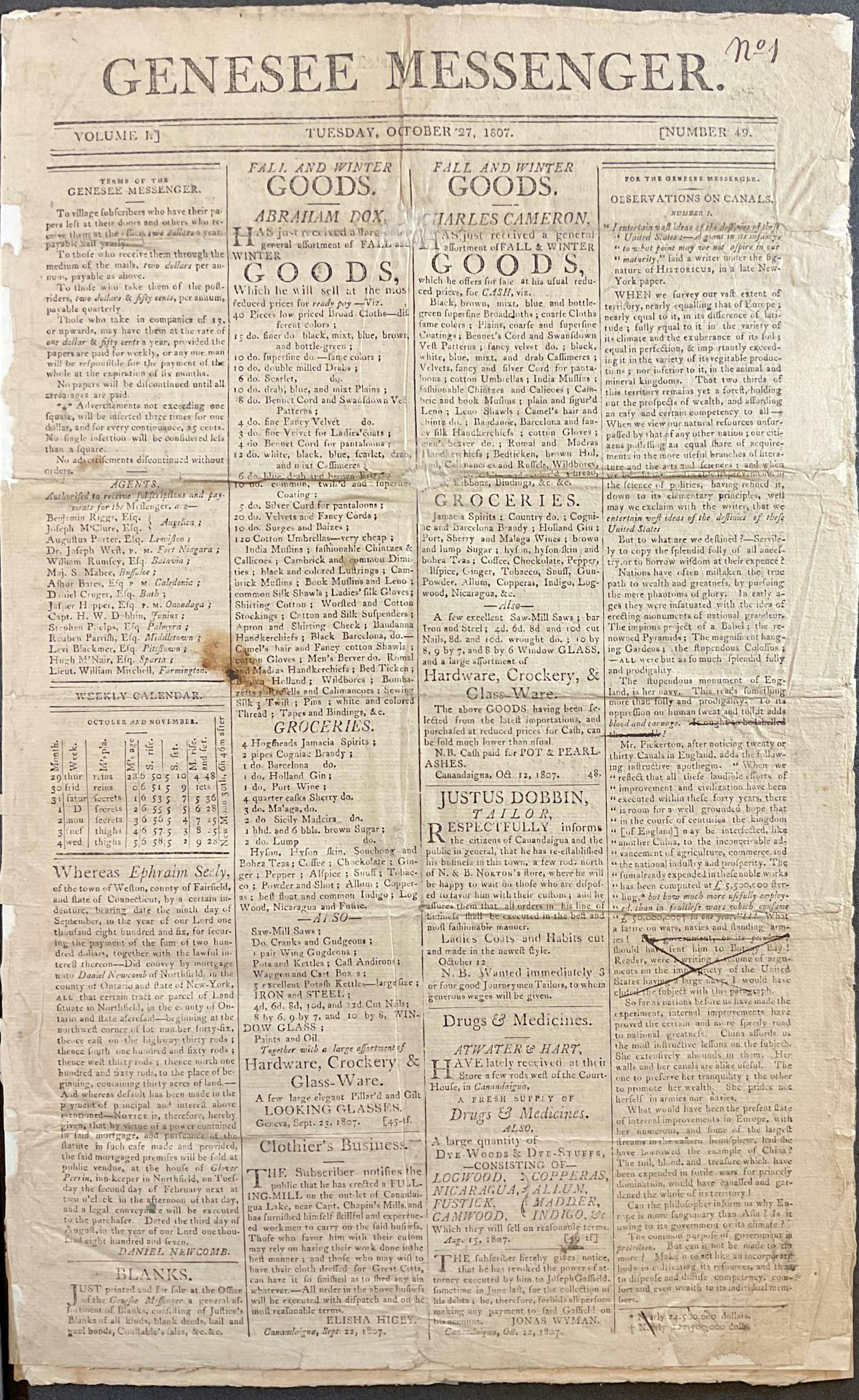
Page 1 of the October 27, 1807 issue of the Genesee Messenger. Canandaigua, N.Y.: Printed and published by and for John Abbott Stevens. The New York Historical. The first published essay, entitled "Observations on Canals," appears in the rightmost column and continues on the second page. The notations were likely made by Jesse Hawley.
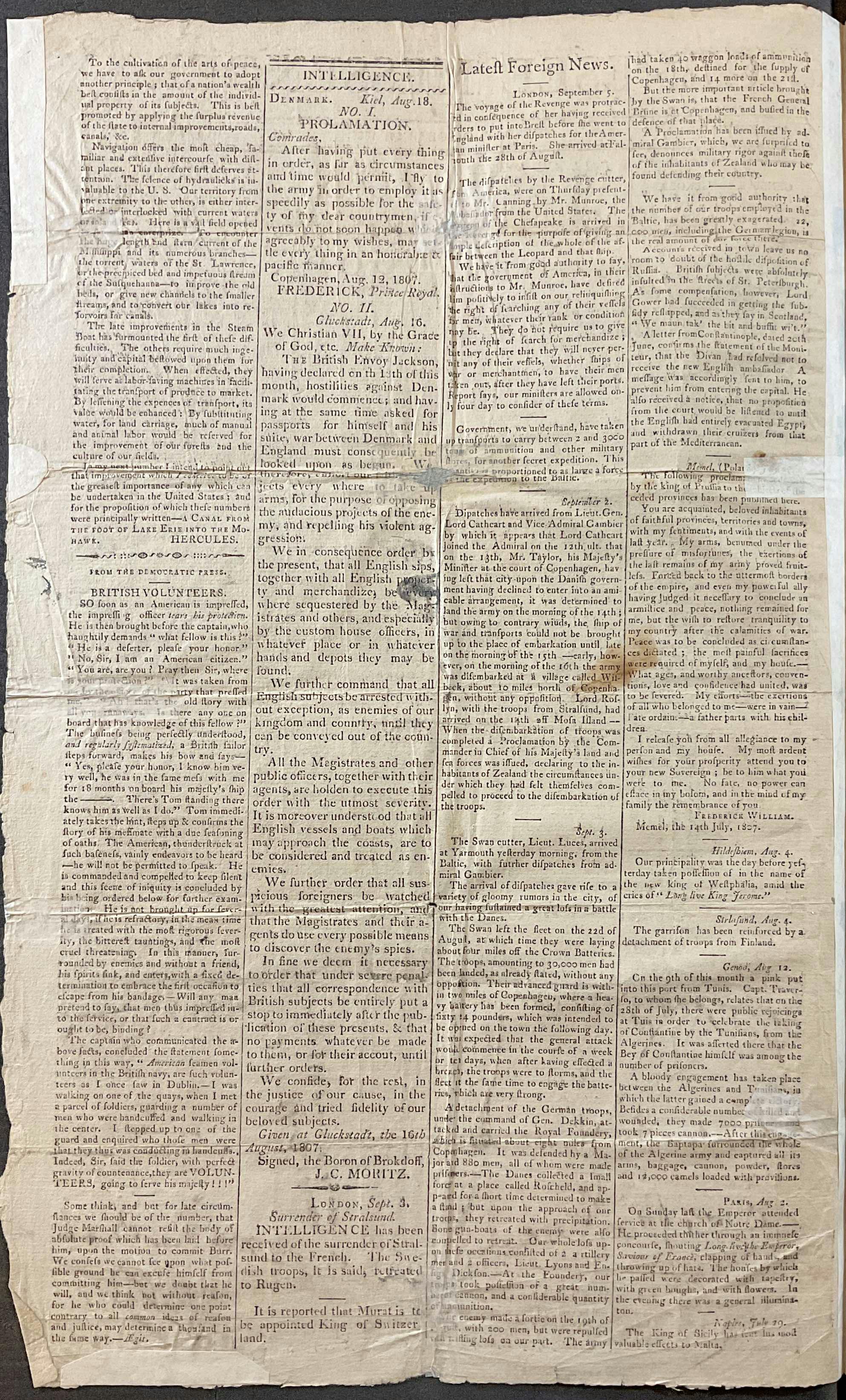
Page 2 of the October 27, 1807 issue of the Genesee Messenger. Canandaigua, N.Y.: Printed and published by and for John Abbott Stevens. The New York Historical.
The "Genesee Canal," as Hawley described, would stretch for two hundred miles and reach a depth of ten feet. He designed his canal to start near the mouth of the Niagara River and connect the waters of Lake Erie to the Mohawk River before reaching Utica. This proposal was met by the general public with scrutiny. However, Hawley's essays, along with the influential ideas of others, inspired the Canal Commissioners (DeWitt Clinton, Gouverneur Morris, Peter B. Porter, Simeon DeWitt, Stephen Van Rensselaer, Thomas Eddy, and William North) to think differently. Hawley's idea would come to fruition in 1825 in the completion of the Erie Canal, which follows a similar geographic path.
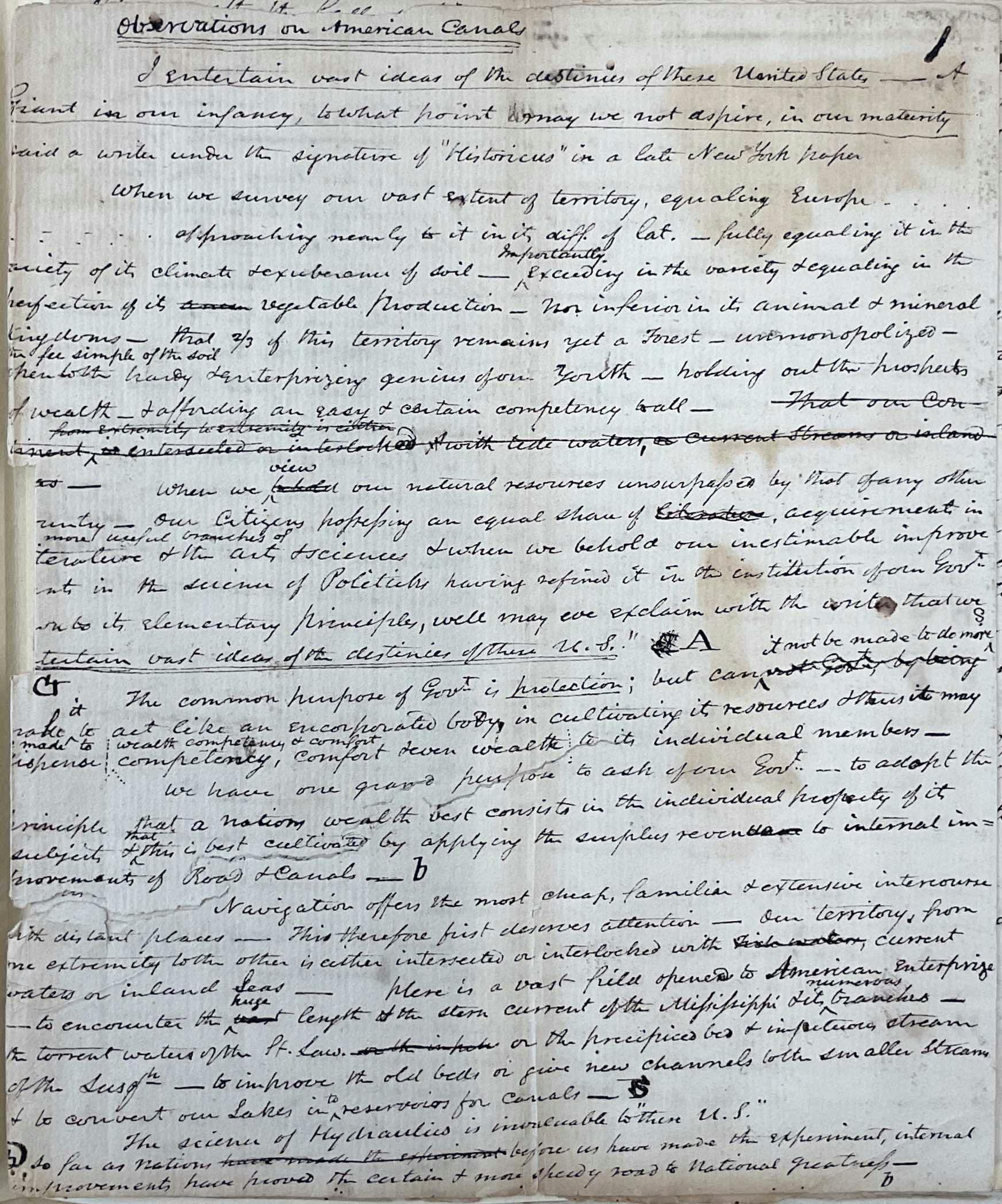
The first page of the essay drafts, "Observations on American Canals." Jesse Hawley Papers, MS 0291, New York Historical. The original drafts of Hawley's essays exist in the Patricia D. Klingenstein Library collections. Upon the death of DeWitt Clinton, Hawley graciously donated them to the New York Historical.
Hawley's essay drafts, entitled "Observations on American Canals" and published as "Observations on Canals," bear the passionate edits and remarks of a man with a grand idea. Inspired by Thomas Jefferson's second inaugural address, in which he called for any surplus tax revenue to be applied to the improvements of "rivers, canals, roads, arts, manufactures, education, and other great objects," Hawley articulates his own ideas about governmental responsibility, formed soon after the birth of the United States.
In the first draft, he writes,
" The common purpose of Govt is protection but can it not be made to do more [,] act like an encorporated body, in cultivating its resources [...] to be made to dispense wealth & comfort to its individual members— [...]
We have one grand purpose to ask of our Govt—to adopt the principle that a nation’s wealth best consists in the individual property of its subjects & that is best cultivated by applying the surplus revenues to internal improvements of Road & Canals—"
This was not Hawley's first response to Jefferson. Upon his arrival in western New York from Connecticut, he wrote to the president in 1803, urging that "the prosperity of infantile settlements depend greatly on either the fostering aid of the Government they are under” and that "the government is as often [...] unpardonable in abandoning the inhabitants of new-settlements to the disposition" of capitalists. He appealed to Jefferson to make similar improvements to rivers and roads. Hawley's request and his commitment to better national infrastructure are examples of the timeless expectations of citizens seeking the financial support of their governments.
Similarly, the Canal Commissioners would appeal to the federal government for construction funds, but after they were rejected, they would eventually secure backing from the state. In 1838, while expanding the Erie Canal—cited by Hawley as a clear indication of its success—Hawley would write about this defining moment, "Mr. Clinton turned on his heel and said I will go home and achieve it with New York funds as a State work. On this incident, the whole principle of Internal Improvement, whether they were hereafter to be made as National properties, or as State properties, turned, as on a pivot." (Lockport, 15th Jan. 1838. The Hon. Z. Barton Stout, Member in Assembly… Jesse Hawley Papers, MS 0291, New York Historical).
From Morris’ first conception to Hawley's more detailed dream, and finally to its eventuality, the Erie Canal represents one of the most important examples of citizen-conceived and government-driven economic growth in the United States, still fresh out of the Revolutionary War.
On view at the New York Historical until March 15th, 2026 in the Joel I. & Joan Picket Museum Treasures Case is "Erie Canal 200th Anniversary," a display celebrating the canal's bicentenary. The display was curated by Emily Pazar, assistant curator of decorative arts and material culture.
Keep Reading
- From the StacksMarch 23, 2026
A Journey Up Broadway: Discovering a Remarkable 1905 Photo Album
- From the StacksFebruary 23, 2026
What's Wrong with This Picture?
In the years following World War II, the newly built Stuyvesant Town development faced opposition for its discriminatory housing policies from civil rights groups, city council members, the press, and even its own residents. - From the StacksJanuary 28, 2026
Photographing the Immigrant Experience: Alexander Alland at The New York Historical
Alexander Alland's photography offers a snapshot of immigrant life in the first half of the 20th century. - From the StacksDecember 22, 2025
"On Donner, On Blitzen!" Revisiting Clement Clarke Moore's Christmas Manuscript