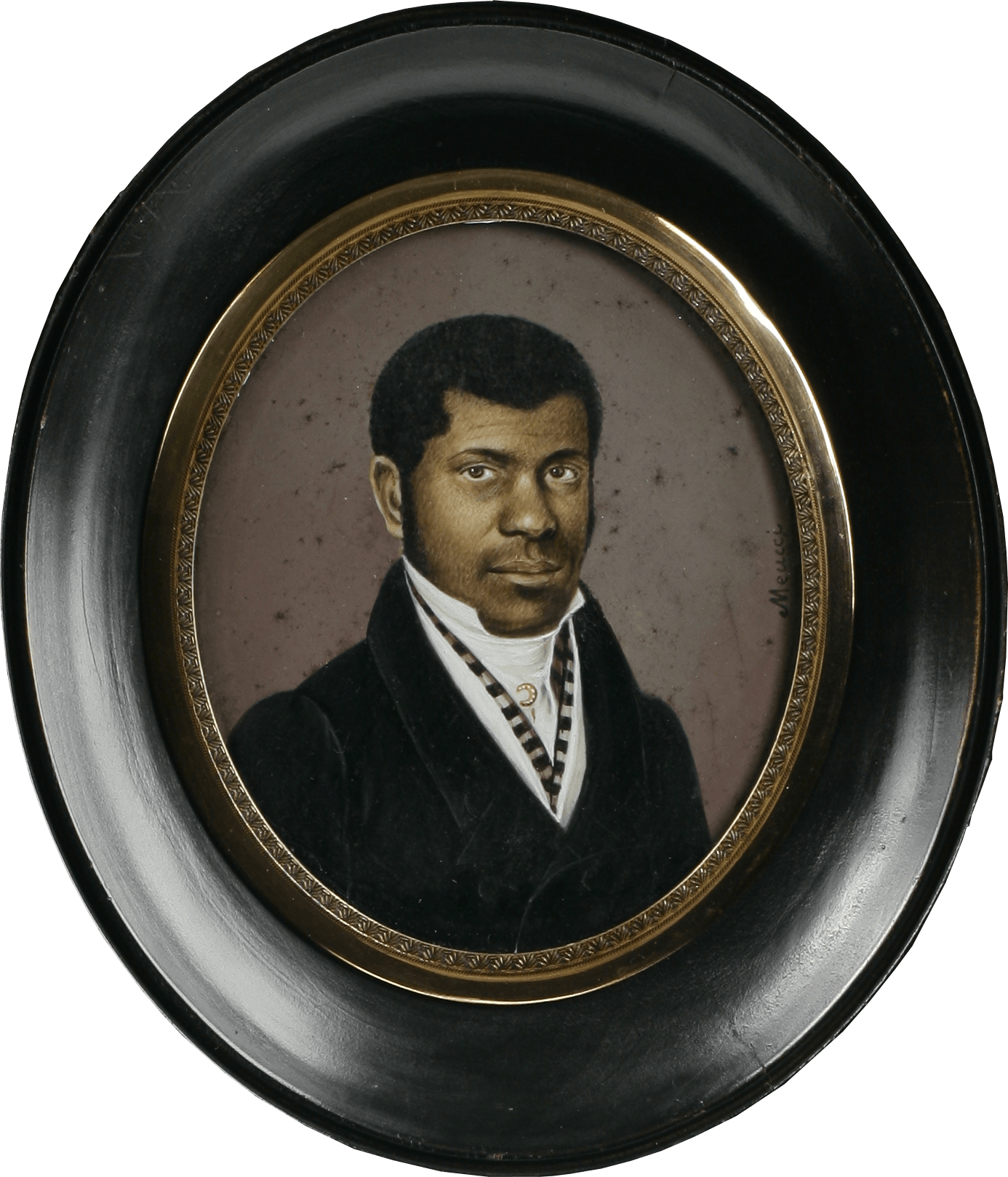
My daughter and I argued last night while reading "'Twas the Night Before Christmas.” Our conflict centered on whether Santa’s reindeer was called “Donner” (more familiar to us) or “Donder,” as it was printed in a new edition of the poem we'd recently acquired. What she didn’t know was that I had an unfair advantage in our dispute: I knew that I could double-check at least one manuscript written by Moore himself, because that manuscript is in the collection of the Patricia D. Klingenstein Library, here at The New York Historical.
Clement Clarke Moore produced our manuscript in March of 1862 at the request of New York Historical Librarian George D. Moore (no relation), many years after the poem was first published in 1823 as "Account of a Visit from St. Nicholas." The author's handwriting, as his cousin Thomas W.C. Moore notes, is “very remarkable, considering his advanced age (he completed his 82nd year July last), and his much impaired eyesight.” The Christmas of 1862 would be Moore’s last. The author, partially blind, died in July of 1863.
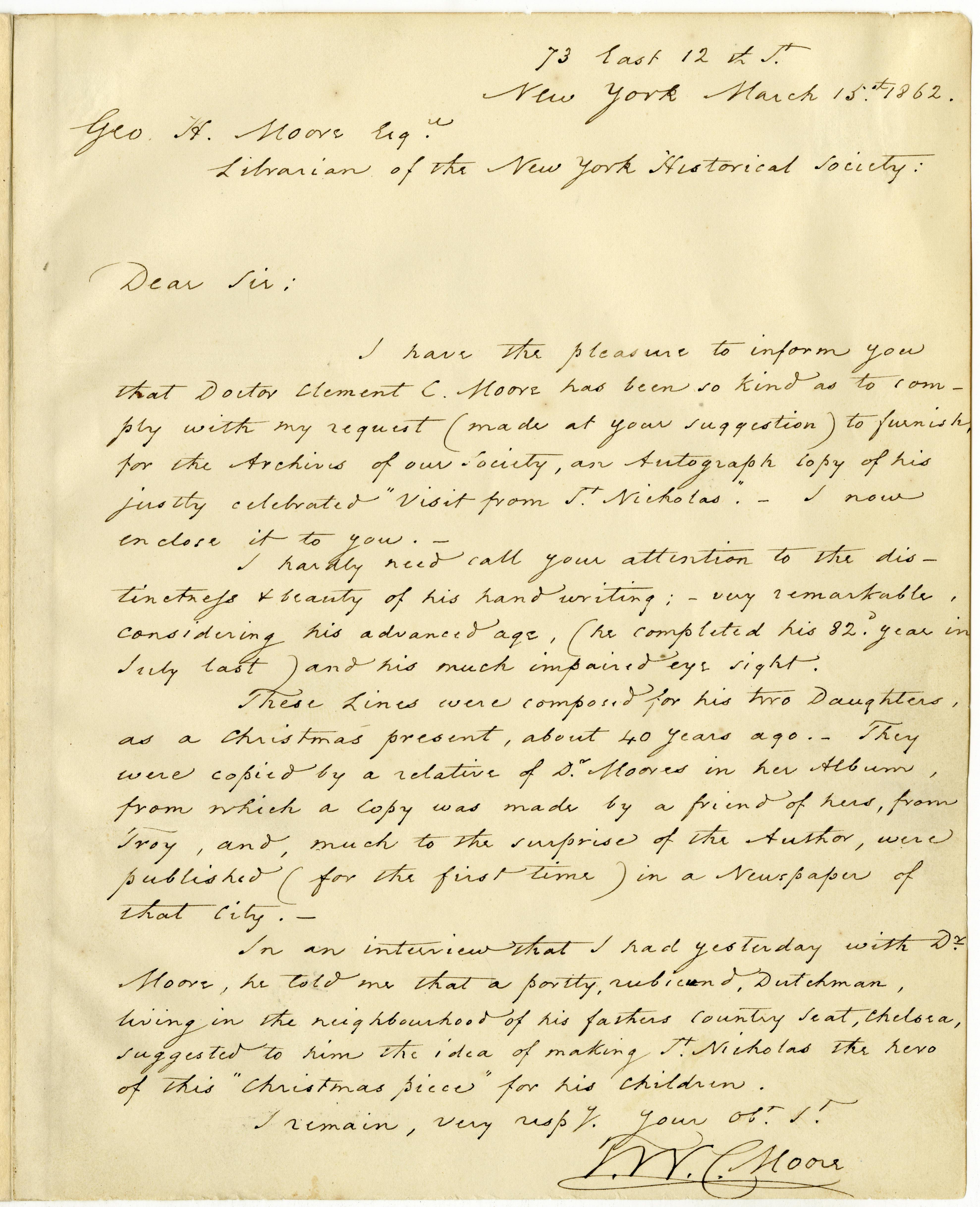
Letter from Thomas W.C. Moore, March 15, 1862, accompanying a manuscript in Clement Clarke Moore's hand of "A Visit from St. Nicholas." The Patricia D. Klingenstein Library, The New York Historical.
In his note to our librarian George Moore, Thomas W.C. Moore describes the moment when inspiration for his famous lines struck his cousin:
“In an interview that I had with Dr. Moore yesterday, he told me that a portly, rubicund, Dutchman, living in the neighborhood of his father’s county seat, Chelsea, suggested to him the idea of this Christmas piece for his children.” In the same letter, the poet’s cousin also explained that Moore composed the poem for his two daughters around 1822 when they were small children and presented it to them on Christmas day.
Now to that reindeer’s name: Moore calls Santa's seventh reindeer “Donder” in our 1862 manuscript. In the first published version of the poem printed in the Troy Sentinel in 1863, this reindeer’s name is given as “Dunder.” “Dunder” and “donder” were both Dutch words for thunder, a phenomenon that evoked the crashing noise of reindeer hooves on the roof, or, perhaps more scientifically, routine winter solstice weather phenomena. Donner is paired with "Blixen" in the Sentinel printing, the Dutch word for lightning. In our manuscript, Moore keeps the Dutch "Donder," but uses "Blitzen," (lightning in German) for Donder’s close antlered associate. The German "Donner" gained popularity in 1949 as the name of this reindeer when Gene Autry's "Rudolph the Red-nosed Reindeer" hit no. 1 on American charts.
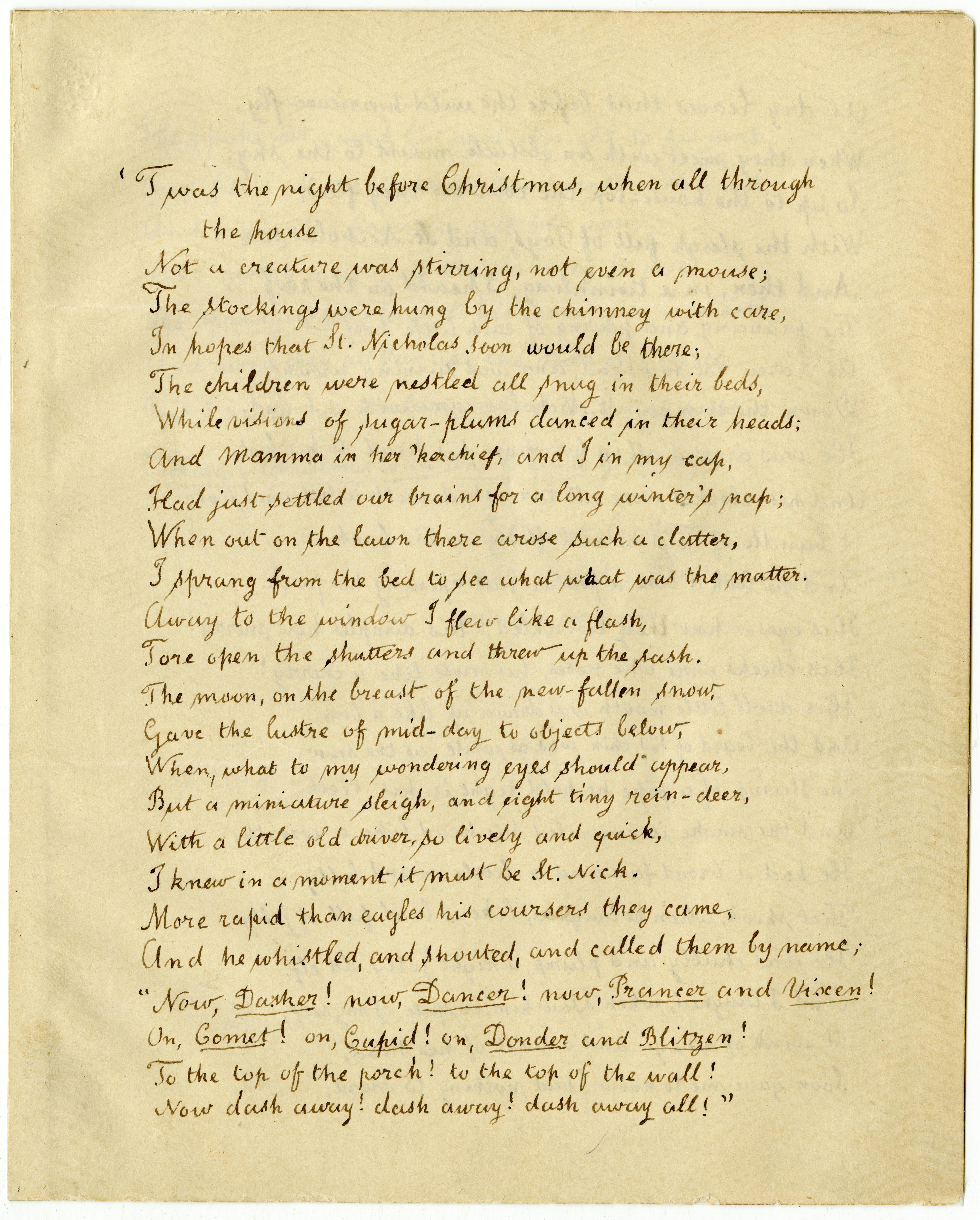
Page one of the poem, "A Visit from St. Nicholas," in Clement Moore's hand. March 13, 1862. The New York Historical.

Pages two and three of our copy of the poem, "A Visit from St. Nicholas," in Clement Moore's hand. March 13, 1862. The Patricia D. Klingenstein Library. The New York Historical.
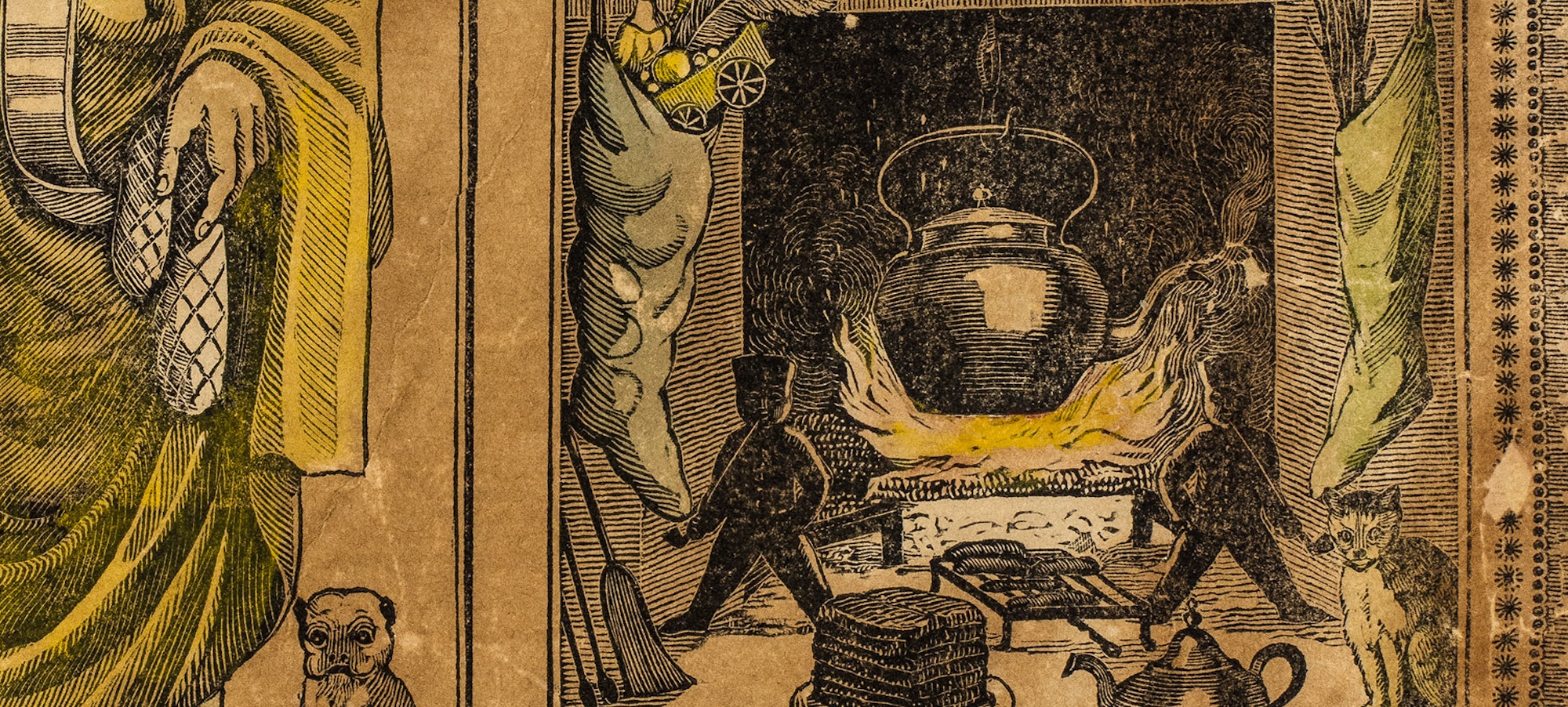
Incidentally, librarian George Moore’s request for a copy of “A Visit from St. Nicholas” in Moore’s hand wasn’t The New York Historical’s first collection development venture centered on St. Nicholas. The New York Historical founder John Pintard commissioned this broadside, printed by the brilliant illustrator Alexander Anderson in 1810 to honor The New York Historical's first observance of St. Nicholas Day. Thanks to Henry Raine, Director of the Library Digital Program, for pointing me to this treasure, below.
We wish you all a wonderful holiday season!
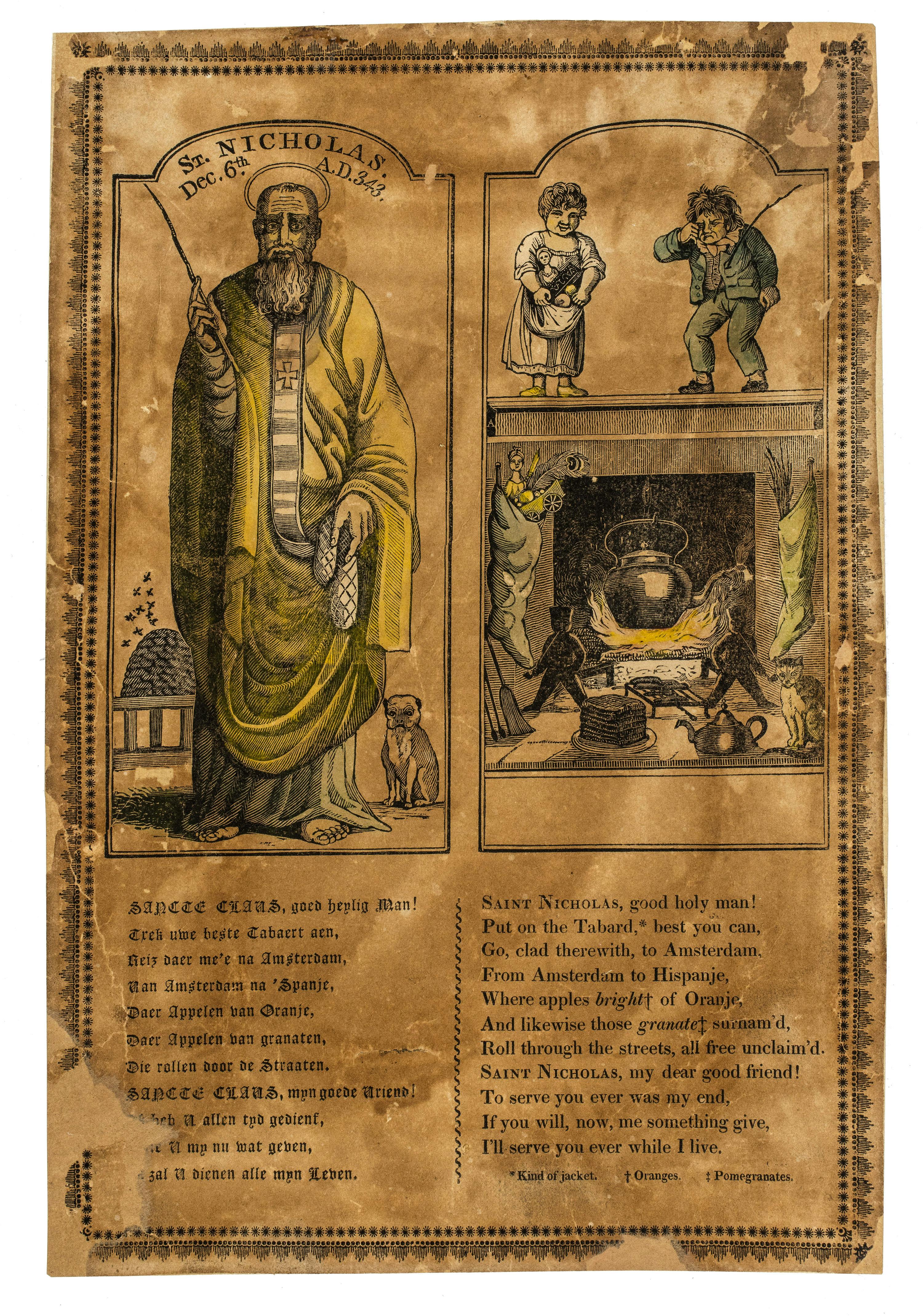
Alexander Anderson, "St. Nicholas. Dec. 6th. A.D. 343." Broadside commissioned by John Pintard on behalf of the New York Historical Society, 1810. The Patricia D. Klingenstein Library. The New York Historical Society.
Keep Reading
- From the StacksMarch 23, 2026
A Journey Up Broadway: Discovering a Remarkable 1905 Photo Album
- From the StacksFebruary 23, 2026
What's Wrong with This Picture?
In the years following World War II, the newly built Stuyvesant Town development faced opposition for its discriminatory housing policies from civil rights groups, city council members, the press, and even its own residents. - From the StacksJanuary 28, 2026
Photographing the Immigrant Experience: Alexander Alland at The New York Historical
Alexander Alland's photography offers a snapshot of immigrant life in the first half of the 20th century. - From the StacksDecember 3, 2025
Imagining the Erie Canal: Jesse Hawley's Call for Government Responsibility
New York merchant Jesse Hawley's essays argued for the importance of a passage between Lake Erie and the Hudson River, and contributed to the eventual creation of the Erie Canal.