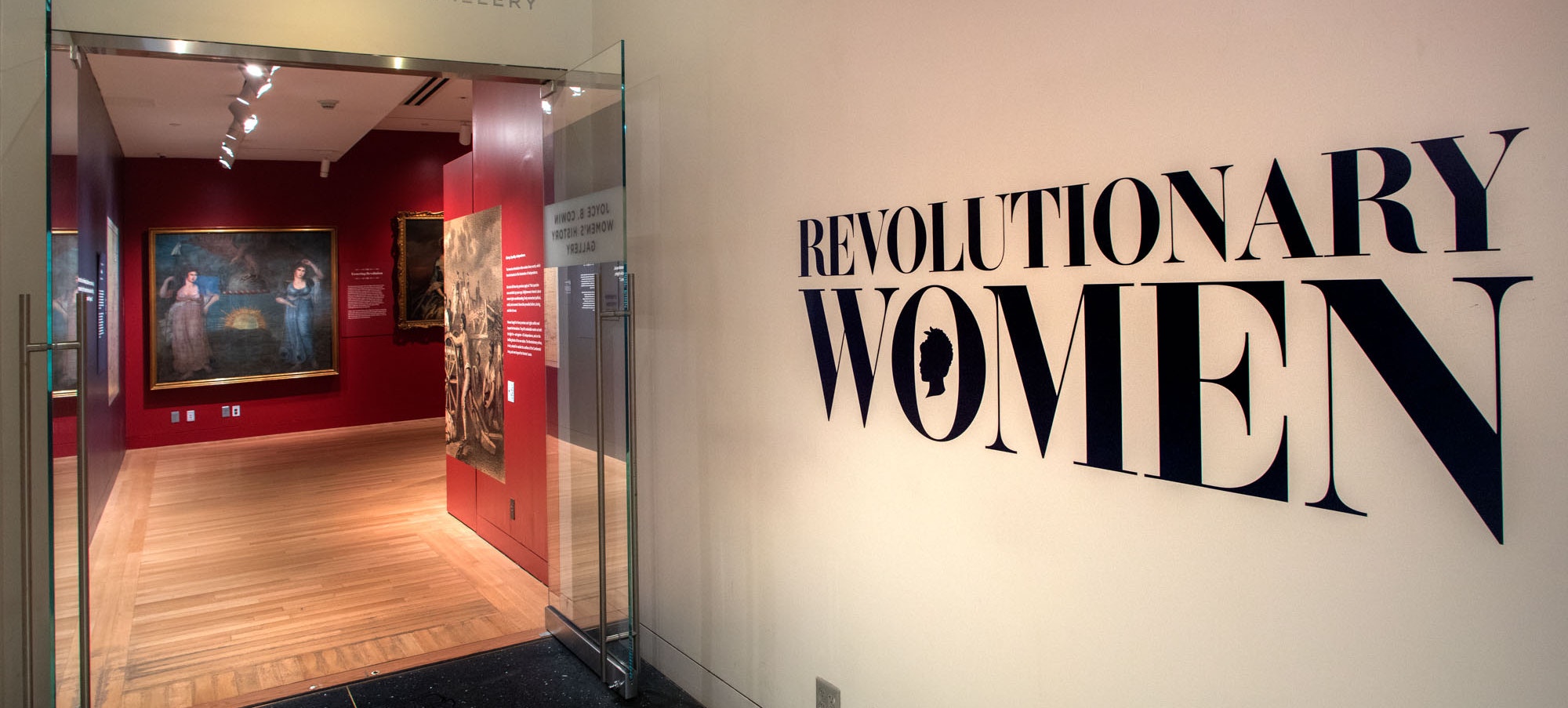
On March 1, 2026, the Jean Margo Reid Center for Women’s History kicked off Women’s History Month by hosting the 11th annual Diane and Adam E. Max Conference on Women’s History. Focused on the semiquincentennial of the signing of the Declaration of Independence, this year’s Max Conference interrogated the many meanings of "revolution," asking questions about what the revolution unleashed, how liberty was expanded or contracted, and what the legacy of the Revolution is today. In addition to analyzing these themes, the conference was a preview of the exhibition Revolutionary Women. Now on view in our Joyce B. Cowin Women's History Gallery, Revolutionary Women examines how women were impacted by the war and how the war was impacted by women. The exhibition brings to light the stories of women that have been overlooked for years. Together, the conference and exhibition unveil a rich tapestry of American history for the country’s 250th year since independence.
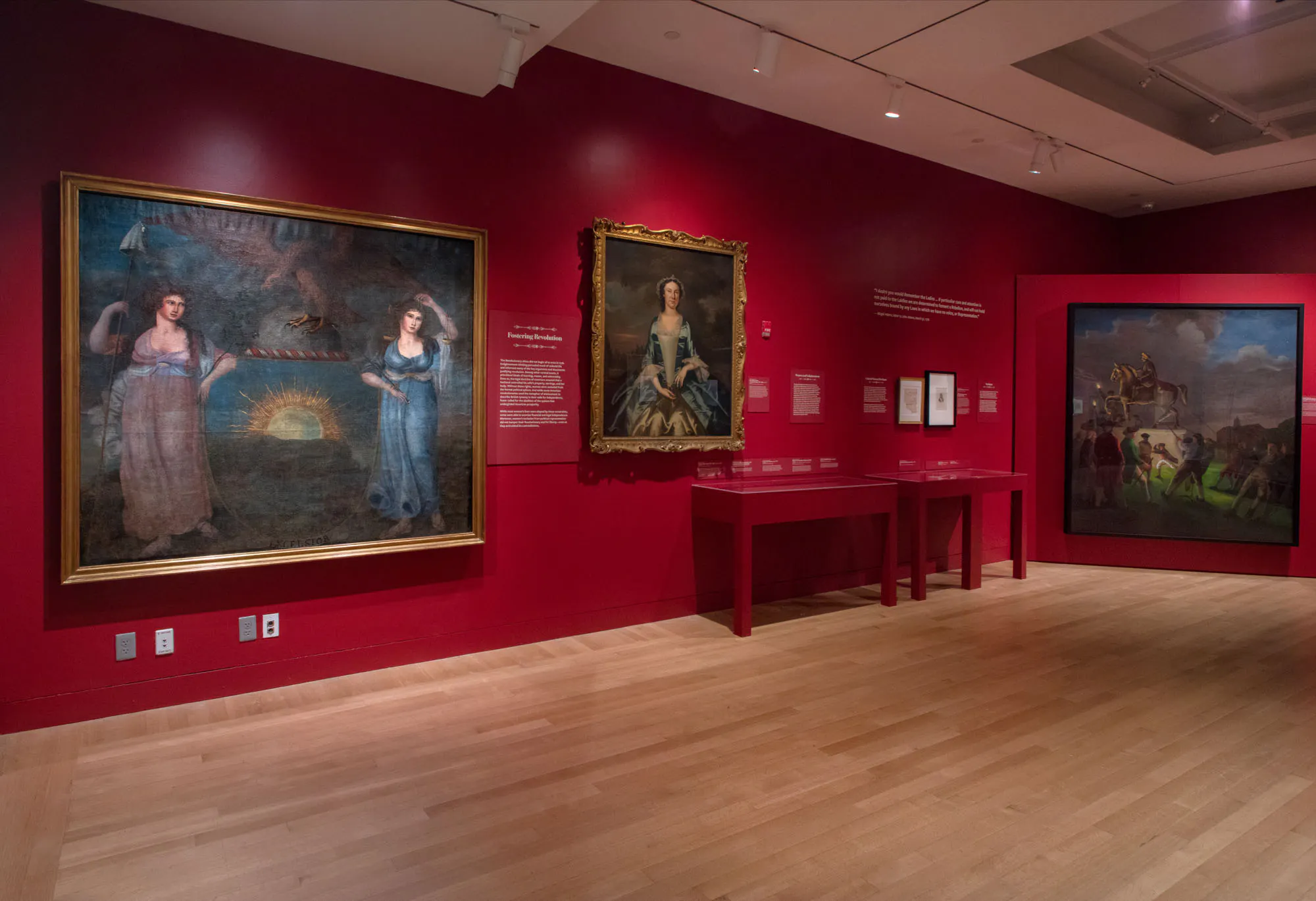
Photo by Glenn Castellano
This year’s Max Conference featured five conversations with prominent historians who specialize in the age of the Revolution, commencing with a keynote conversation between Jennifer Morgan (Silver Professor, Professor of Social and Cultural Analysis and History, New York University) and Karin Wulf (Beatrice and Julio Mario Santo Domingo Director and Librarian of the John Carter Brown Library, Professor of History, Brown University).
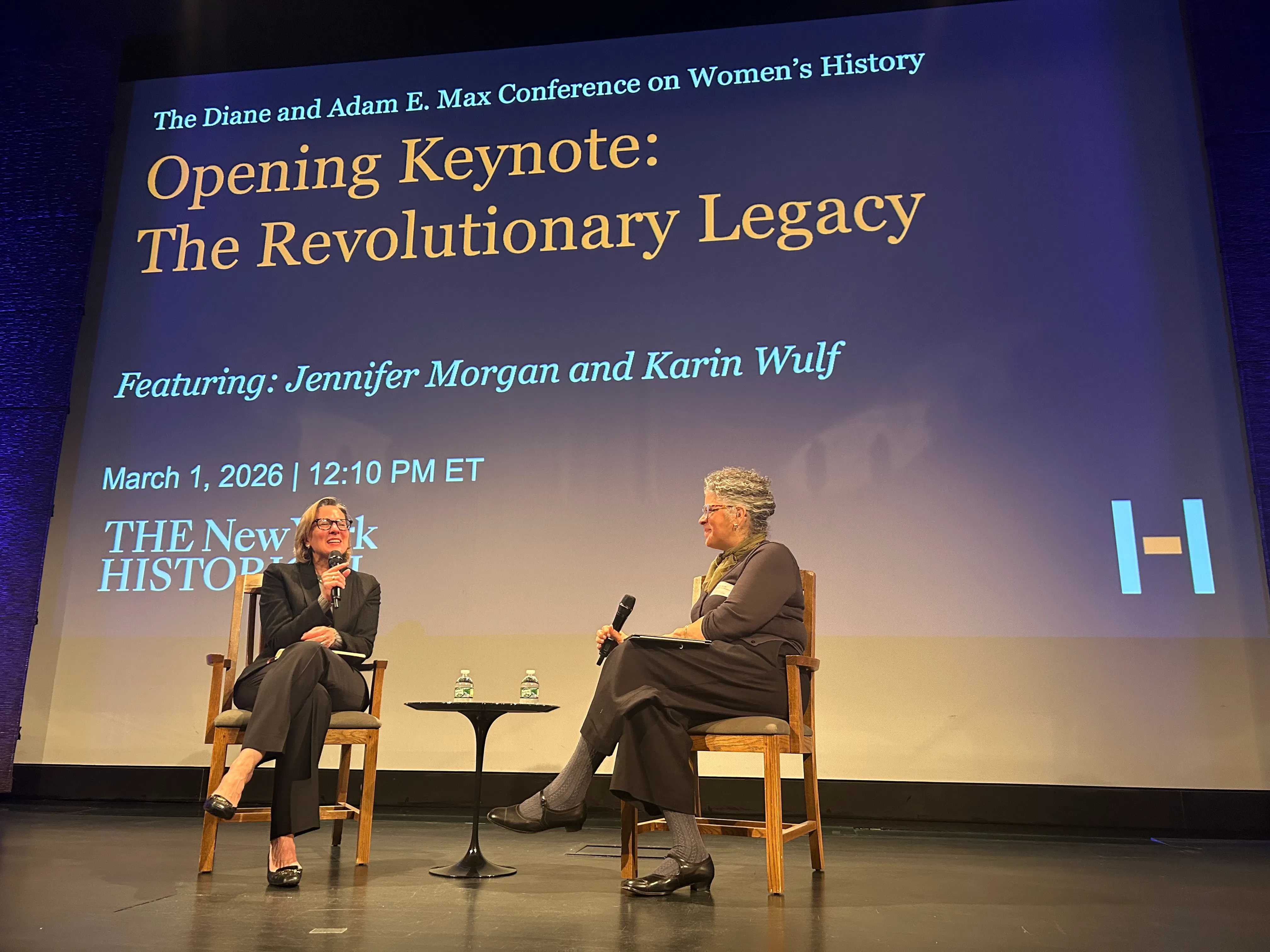
Karin Wulf and Jennifer Morgan. Photo by Keren Ben-Horin
Entitled “The Revolutionary Legacy,” this conversation touched on the impacts of the Revolution and how this legacy changed over time. It is evident that the Revolution did not grant everyone liberty, contrary to the ideas in the Constitution, but Morgan and Wulf pushed this concept further by questioning what liberty even is. Why were some people given liberties, while others were not? And who decided who deserved liberty and freedom? Both Morgan and Wulf interrogated the overall importance of the Revolution. Morgan, for instance, argued that for people of African descent, this time period was not a watershed moment because their lives did not fundamentally change. While the memory of the Revolution gained extreme power and significance over the years, for many people the aftermath of the Revolution was the same as before.
This is a common theme throughout their keynote conversation, as Morgan and Wulf frequently mention the importance of challenging traditional narratives that dominate “capital H” History in order to unveil stories that have not yet been told. They both talk about how it is essential to change the way we look at the archives, apply new methodologies and engage more in the process of history in order to highlight histories of marginalized peoples. Since the archives underrepresent minority voices, as evidenced by Martha Washington’s eighty letters that exist today compared to thousands of George Washington’s, it is essential to reconsider how we understand and view the past. The Center for Women’s History, which tells the histories of all women, demands that we look at history in a new light. It is not enough to simply add women into the narrative; they must be the focus. Only then, as Karin stated, can we have “more complex and full histories.”
The other four panels, “Expansion and Contradiction of Rights,” “Liberty for Whom,” “Divided Loyalties,” and "Carrying the Revolution Forward" continued to build on this keynote conversation. Jacqueline Beatty (Associate Professor of History, York College of Pennsylvania), Carol Berkin (Presidential Professor Emerita, History, Women’s and Gender Studies, CUNY), Linda Kerber (May Brodbeck Professor in Liberal Arts & Sciences and Professor of History Emerita, University of Iowa) and moderator Cassandra Good (Associate Professor of History, Marymount University) discussed the lack of equality between men and women following the Revolution, particularly in terms of property rights, as well as the origins of republican motherhood and historical memory of the Revolution.
The second panel, moderated by Christopher Brown (Professor of History, Columbia University) and led by Maeve Kane (Associate Professor of History, SUNY Albany) and Angela Tate (Chief Curator and Director of Collections, Museum of African American History, Boston) considered the contradictions of rights and liberties during the Revolutionary Period: who got freedom and who did not?
In the third panel, moderator Zara Anishanslin (Associate Professor of History and Art History, University of Delaware) and panelists Maya Jasanoff (X.D. and Nancy Yang Coolidge Professor of History, Harvard University), Kariann Yokota (Associate Professor of History, University of Colorado) and Serena Zabin (Stepehn R. Lewis, Jr. Professor of History and the Liberal Arts, History, Carleton College) talked about the lives of Revolutionary Women beyond the dichotomy of “patriot” or “loyalist.” Irin Carmon (New York Magazine), and Martha Jones (Society of Black Alumni Presidential Professor, Professor of History, Professor at the SNF Agora Institute, and Director of Graduate Studies, Johns Hopkins University) closed the conference with a conversation about how the Revolution has impacted other movements for women’s rights over the past 250 years.
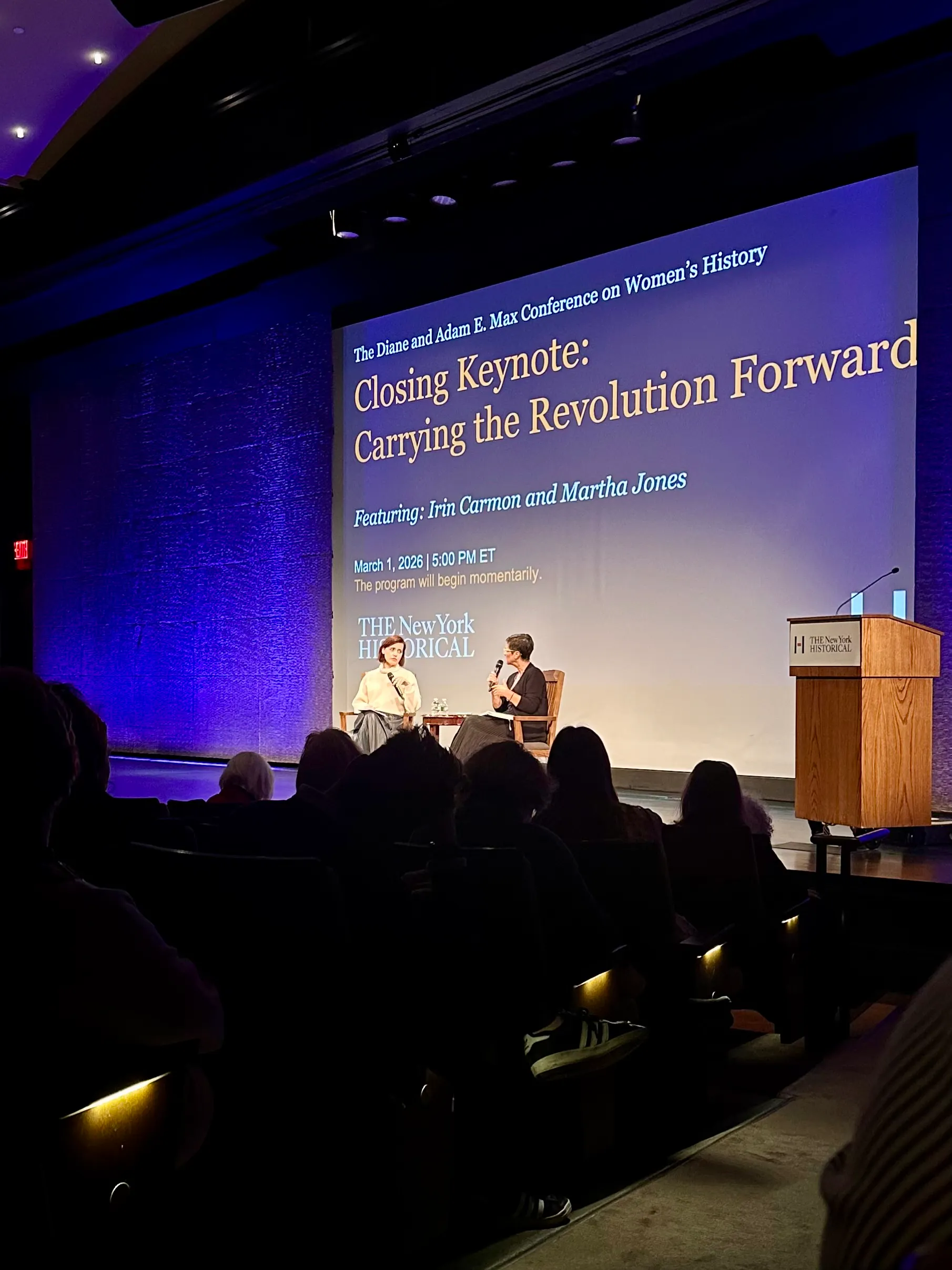
Irin Carmon and Martha Jones. Photo by Rachel Pitkin
Taken together, the panels pushed the boundaries of the traditional narrative of the American Revolution, bringing new insight to one of the most talked about and written about events in American history. This year’s conference helped shift the way we examine and interpret the past, encouraging people to consider every little detail rather than just the big picture.
Outside of the conference, the Center for Women’s History exhibition Revolutionary Women invites visitors to examine the Revolutionary War from a new perspective. Stories of women that have been lost or forgotten in the archives are brought to public attention. As every panelist stated at this year's Max Conference, it is important to create exhibitions that challenge the traditional narrative in order to highlight the true complexities of history.
Written by Carolyn Tananbaum, Summer Intern in Women's History, Jean Margo Reid Center for Women's History
Keep Reading
- Women at the CenterAugust 31, 2026
The 1876 Women’s Exhibition
What role did women play in commemorating the 100th anniversary of American Independence? - Women at the CenterAugust 3, 2026
A Revolutionary Chocolate Maker: The Business Records of Rebecca Gomez
How did Rebecca Gomez, a Jewish widow and businesswoman, help finance the first home of the New York Stock Exchange? - Women at the CenterJuly 27, 2026
Star-Crossed Lovers of the Revolution: The Letters of Eliza Shipton and Aquila Giles
Was it possible to fall in love across ideological lines during the Revolutionary War? - Women at the CenterJuly 20, 2026
The Things She Carried: Discussing the Power of Purses with Author Kathleen B. Casey
Historian and author Kathleen B. Casey discusses purses as adaptable toolkits that lead multidimensional lives of their own.