If you haven't yet heard of the Gilded Age journalist Zoe Anderson Norris (1860–1914), you're not the only one—but Eve M. Kahn is working to change that. Norris was "a Kentucky belle turned Kansas housewife turned New York writer," Kahn writes in the introduction to her recently published biography of Norris, Queen of Bohemia Predicts Own Death (Fordham University Press), adding "She was not always honest in her journalism, while her fiction teemed with so much autobiography that she was publicly scolded for 'making copy out of her friends.'" But Norris also wrote passionately about the plight of impoverished New Yorkers in The East Side, the magazine that she founded and published from 1909 to 1914, the final issue of which included Norris's premonition of her own imminent demise and gave Kahn's book its sensational title.
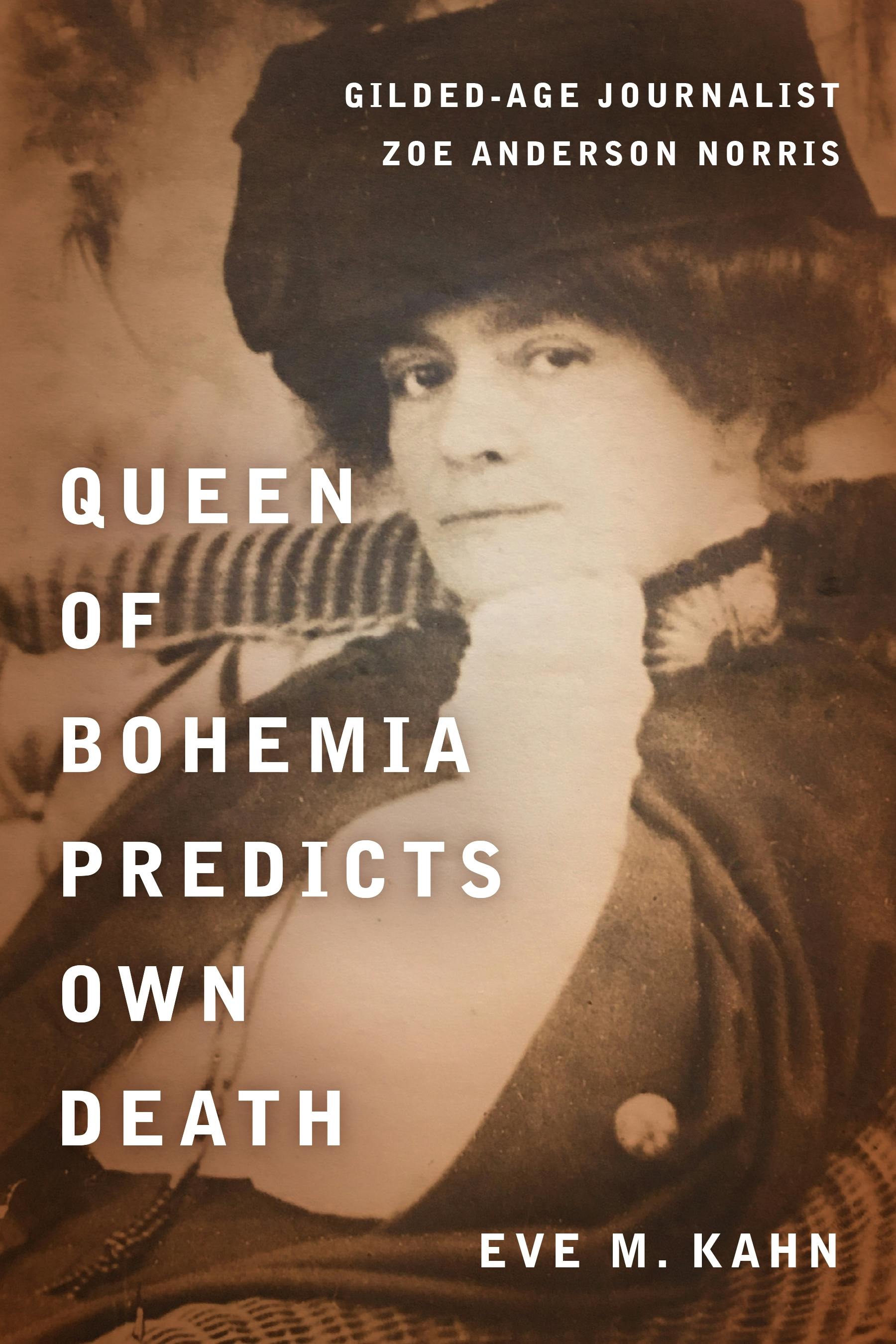
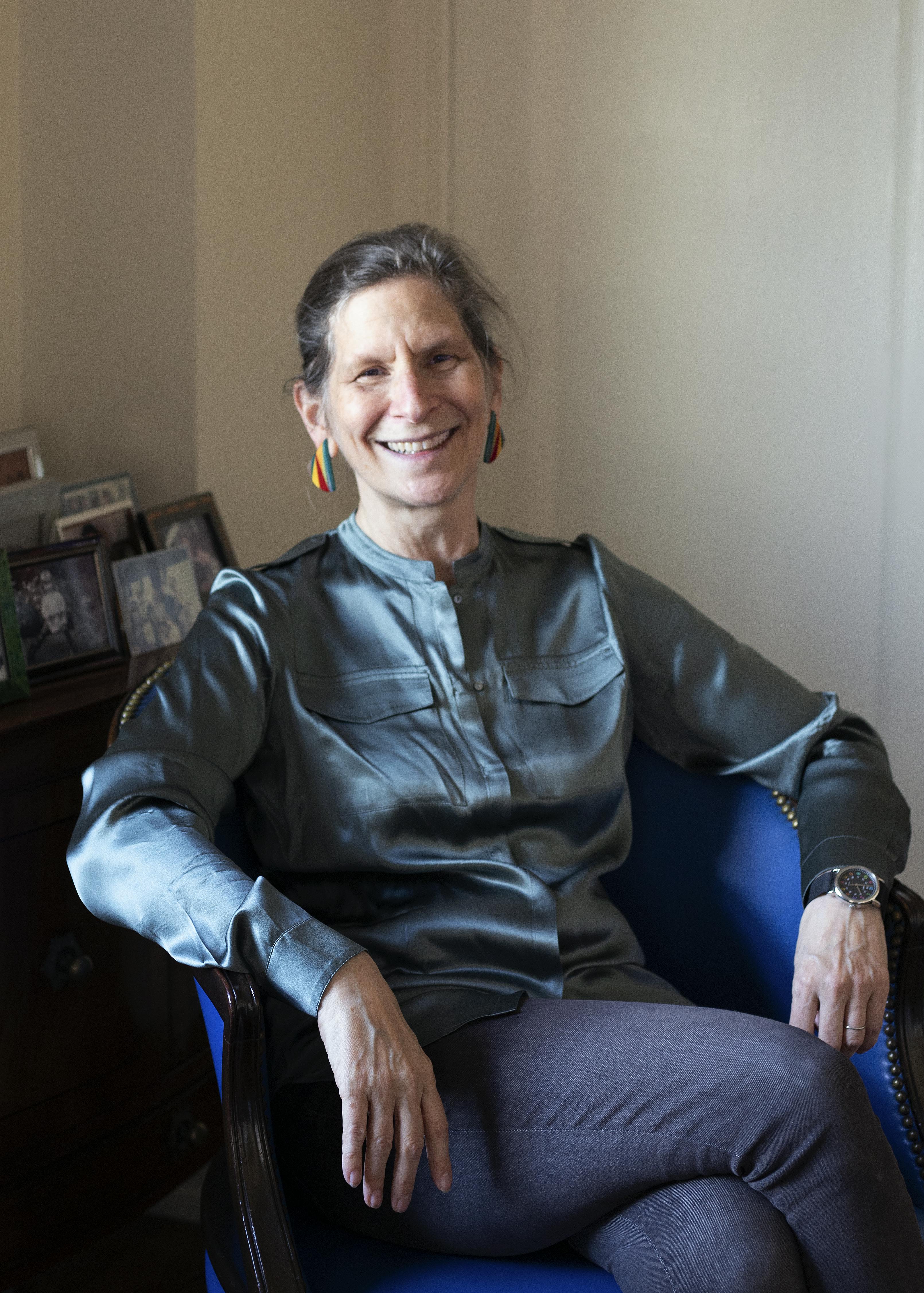
Courtesy of Eve M. Kahn. Author portrait by Nicole Neenan.
Zoe Anderson's early life was marked by poverty (including a bout of homelessness), her father's theologian zeal, and the needs of a very large family. She was one of the younger children among a brood of 15 siblings. One of the few in her family to receive higher education, Zoe attended Daughters College in Kentucky. Shortly after graduating, she embarked upon the first of her two unhappy marriages. Her new husband, Spencer William Norris, was the son of a disgraced businessman. The couple relocated to Wichita, Kansas, where Spencer ran a shop while Zoe taught school, raised their two children, and socialized. But she also began writing columns, articles, and short stories, many of which took a distinctly dim view of married life.
Her writing presaged the events of 1898, when Zoe divorced Spencer over his infidelities and financial mismanagement. She soon reinvented herself as a writer in New York, cranking out two novels and a flurry of magazine contributions (and embarking on a brief, unsuccessful second marriage to illustrator John Kennedy Bryans). However, her life remained economically precarious—even after her scholarly friend Marion Miller asked Norris why she didn't start a magazine of her own, to air her own opinions. When Zoe replied that she didn't think her opinions were worth anything, he responded, "They are not…but they are original."
With this rather lukewarm encouragement, Norris threw herself into the creation of her "little magazine," competing against the hundreds of other "magazinelets" that went in and (rapidly) out of business at the time. She thrived on undercover investigations, and seemed particularly keen to puncture the era's hypocrisies. For example, in 1912, she excoriated New York's philanthropic establishment as a "Charity Trust," too wrapped up in its own bureaucracy to distribute donations intended for the families of girls who died in the Triangle Shirtwaist Factory fire. She impersonated low-wage workers, recent immigrants, bereaved widows—even a blind street musician—in order to describe, accurately and compellingly, the ways in which impoverished people were exploited.
After printing her own obituary, Norris died abruptly on Friday, February 13, 1914, prompting a flurry of headlines nationwide. Eulogized by authors, advocates, and members of the "Ragged Edge Klub," Norris and her legacy have now been recovered by Kahn. We thank her for taking the time to answer our questions about the fascinating, if forgotten, Zoe Anderson Norris.
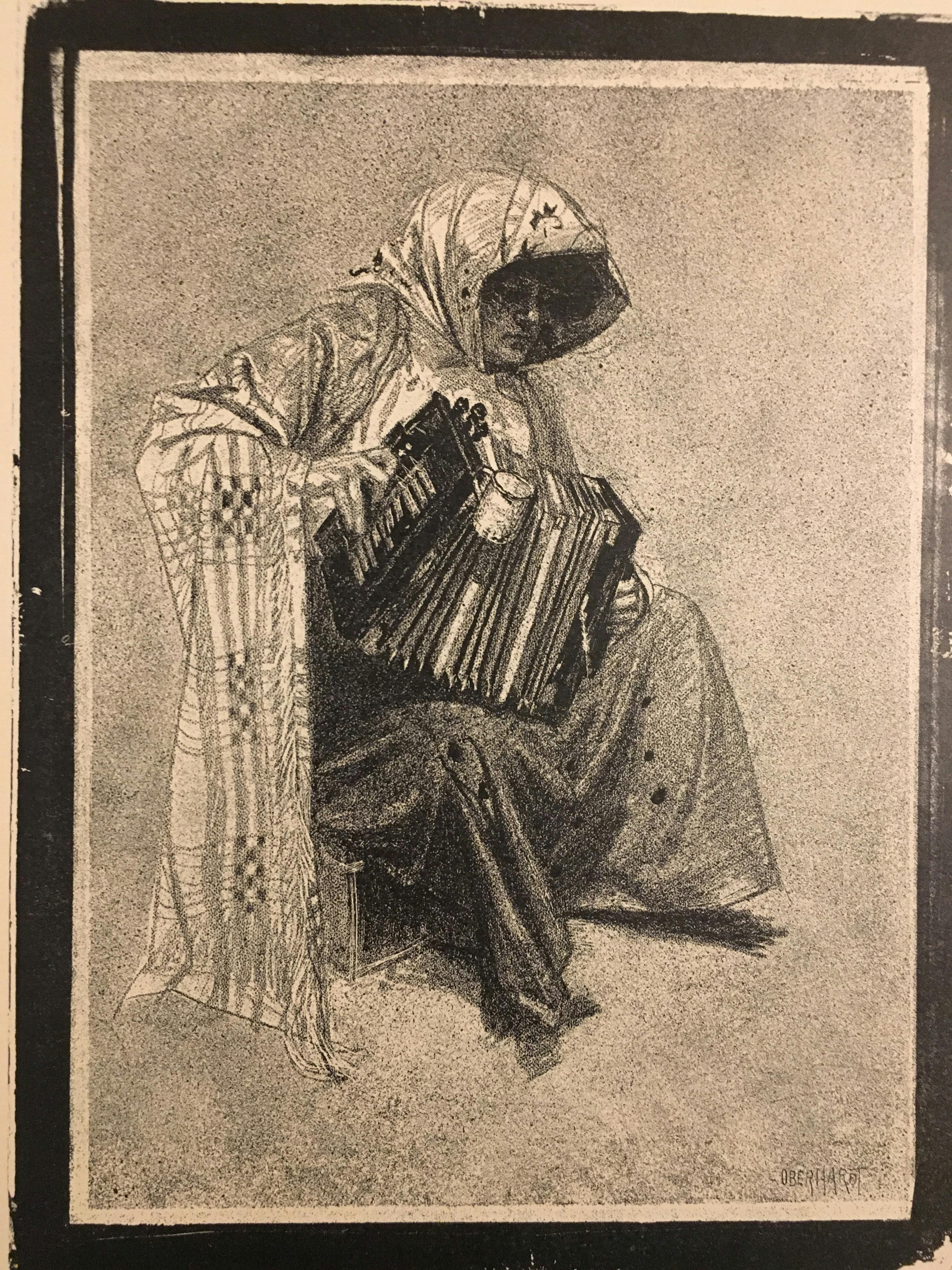
William Oberhardt (1882–1958), artist. Portrait of Zoe Anderson Norris (1860-1914) disguised as a street musician, 1910. Lithograph. Patricia D. Klingenstein Library, The New York Historical. Photo courtesy Eve M. Kahn.
Zoe Anderson Norris seems to have had a complicated relationship with ambition. What do you make of her ambitious desire to change the world with her writing? Where did it come from? Is it part of what drew you to her story in the first place?
In 1890s Wichita, once Zoe started breaking away from her era’s expectations for Kentucky belles—landing a weekly newspaper pseudonymous gossip column skewering pretentious locals, preparing to walk away from her unfaithful, stingy, icy husband Spencer, who was not conforming to the era’s gentlemanly behavior standards himself—anything must have seemed possible. Just a few years into her career, national magazines ran profiles of her as an important, caustic literary voice, which in turn persuaded more editors to publish her work. By the 1910s, she knew The East Side was having an impact, as reader mail poured in, thanking her for steeling the courage of deceived wives and reassuring bewildered new immigrants. Her ambition fueled accomplishment and attention, which in turn fueled more ambition. She put her own name huge in spiky typefaces on her own magazine pages—that’s decidedly part of her appeal for me!
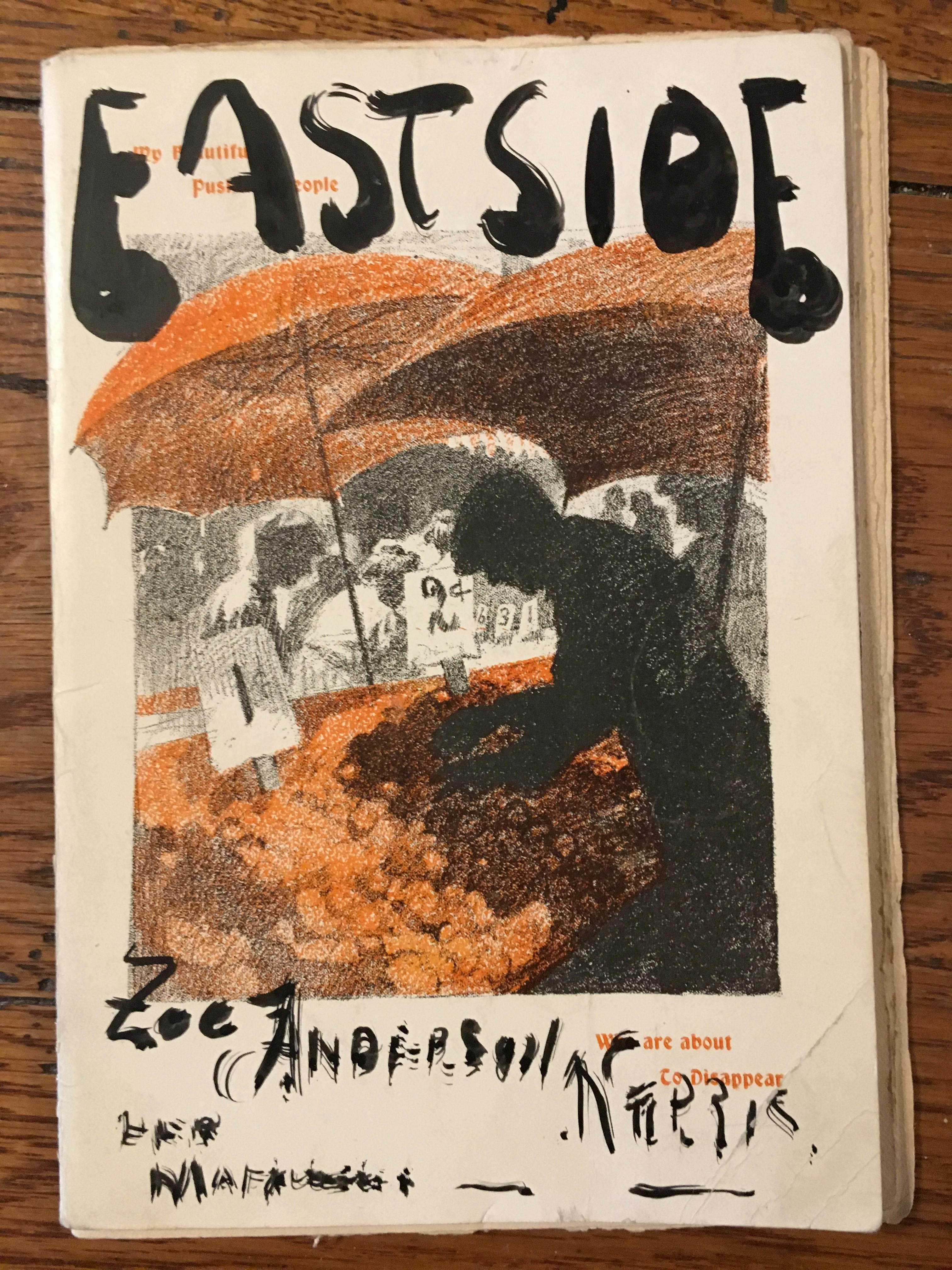
Zoe Anderson Norris (1860-1914), publisher. William Oberhardt (1882–1958), artist and lithographer. Mockup of The East Side magazine cover, September 1912. Patricia D. Klingenstein Library, The New York Historical. Photo courtesy Eve M. Kahn.
Zoe's first husband was, as you put it with admirable restraint, "suboptimal," and her experiences with him (and his shaky finances) shaped a lot of her subsequent writing on marriage, men, money, and women's work. Can you talk a little more about how her first marriage, and its denouement, impacted her career?
She never forgot how it had stung, in the early 1890s, to scrimp on household expenses while discovering that Spencer was squandering his store profits on mistresses. Zoe resolved thereafter to control whatever money came under her roof. She warned women in print to not make her mistakes, to be wary of ignorance and submissiveness. She defended herself unbendingly when deadbeat, plagiarizing male editors absconded with her earnings. Spencer catalyzed her into a hard-nosed businesswoman.
Zoe began her career writing for others before founding her own magazine, The East Side. Can you describe some of the economic and social factors that nudged her towards self-employment?
Zoe wrote vividly about women freelance writers, eking out livings, raging at editors’ generic rejection letters, slogging between newspaper offices full of condescending men. How thrilling it must have been for Zoe to bring her own East Side typescripts to the typesetters and deal with printers, binders, and distributors, even while girded for the inevitable errors!
Can you enumerate some of the ways The East Side was similar to the other "little magazines" of the time, and some of the ways it was different? What made it stand out?
Hundreds of dreamers in her time founded their own small—literally, about four by six inches, 30 or 40 pages per issue—magazines, known in their time as "magazinelets." They were all under-financed, understaffed, and told from the viewpoints of opinionated owners or editors—akin to modern-day blogs. They all charged about 10 cents per issue, $1 for an annual subscription, $10 for a lifetime subscription—The East Side listed its $10 donors as “life preservers.” And the writers argued with each other in print. For instance the Indiana-based, back-to-nature magazinelet The Open Road called Zoe a fool for loving New York, “an underworld of darkness,” but she retorted that, despite its flaws, she saw it rosily as “a Wonder City” with skyscraper windows “flashing back the fire of the sun.” The East Side stood out from the pack partly because it adhered to its promised bimonthly schedule (others appeared so erratically that they are known today among scholars as “sporadicals,” not periodicals!). And The East Side was utterly unique in being run by a woman who wrote virtually every word; Zoe’s only major female competitor, the firebrand anarchist Emma Goldman, published multiple authors’ contributions in her Mother Earth magazine. Zoe gave herself every East Side masthead title, changing them with every issue, including over the years Bootblack, Printer’s Devil, Circulation Liar, and The Whole Shebang. And while her competing magazinelet editors mostly commissioned images from various artists and photographers, Zoe gave readers a cohesive stream of memorable sketches by the extraordinarily talented William Oberhardt.

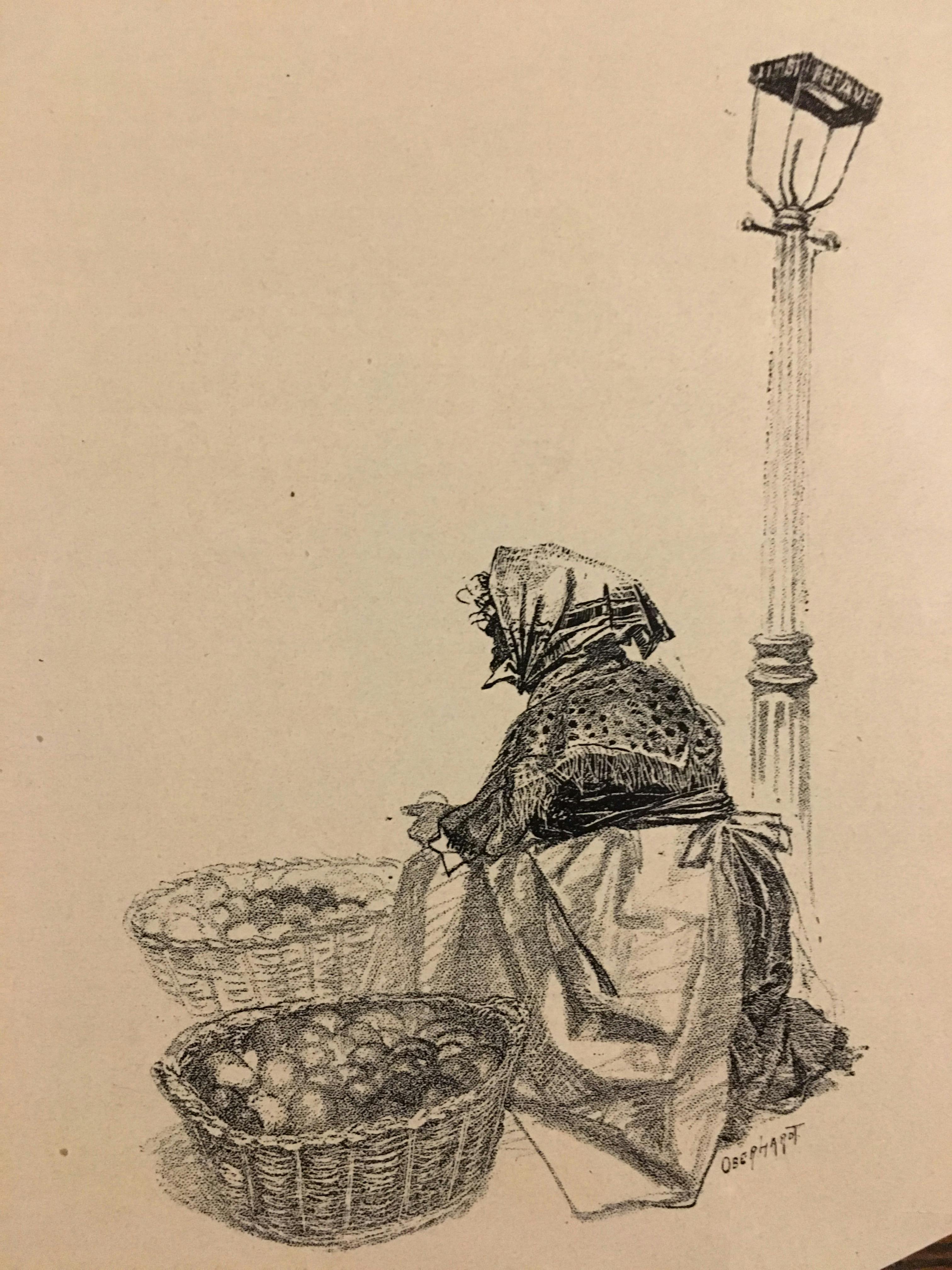
Left: William Oberhardt (1882–1958), artist and lithographer. Pawnshop sketch for The East Side, July 1912.
Right: William Oberhardt (1882–1958), artist and lithographer. Portrait of orange peddler, The East Side, March 1912.
Patricia D. Klingenstein Library, The New York Historical. Photos courtesy Eve M. Kahn.
The strategies Zoe employed to help her magazine survive were many and variable. Can you name some of them? What worked and what didn't?
Unlike her competitors, who landed advertisers as elite as Tiffany & Co., Zoe did not splurge on hiring ad reps and never attracted much advertising. But the lack of East Side ads reassured readers that she was beholden to no one, independent, brutally honest. What I have never pinned down is how she logistically kept track of her newsstand sales and subscribers’ addresses and payments. Her writings do not mention subscription forms, ledgers or any other sensible business tools.
The book makes frequent mention of the "Ragged Edge Klub" and its membership. What constituted a "Ragged Edger," and why was Zoe so enamored of them? What made the "Klub" so popular?
To join the Ragged Edge Klub, prospective members just needed to show up when Zoe hosted the Edgers at her latest favorite restaurant and pay for their own meals (about $1 a head). Unlike her era’s typical stodgy clubs (mostly all-male), the coed Klub imposed no rules, dues, constitutions, nor dress codes. It was simply dedicated to “the Killing of Kare…with Komfortable exklusiveness.” The regulars were fascinatingly varied: reformers, performers, writers, artists, filmmakers, physicians, lawyers, businessmen just curious about life on the Lower East Side. Zoe and fellow journalists wrote about the Edgers’ antics; they learned the latest dance moves, including the Banana Peel Slide, which required yellow gowns with thigh-high slits and white tights underneath that showed as sliders flowed across the dance floor. The Edgers also had a serious side; activists gave Klub speeches, calling for reforms including women’s suffrage and safety nets for starving immigrant families. Zoe prided in her kaleidoscopic Klub, “its spontaneity, its good fellowship, its brilliancy and éclat.”
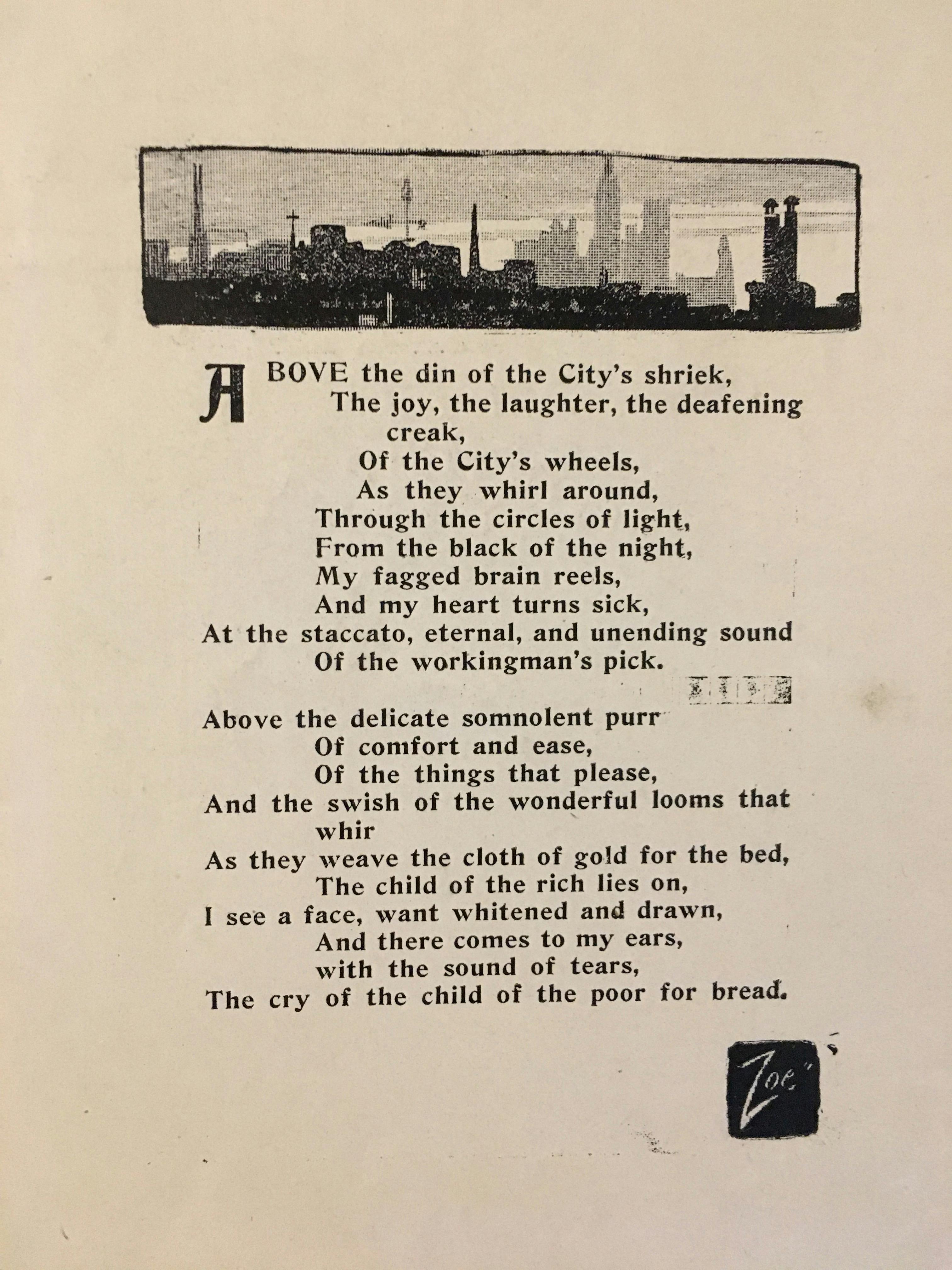
Left: Zoe Anderson Norris (1860–1914), author. William Oberhardt (1882–1958), artist and lithographer. Poem from The East Side magazine, back cover, summer 1910.
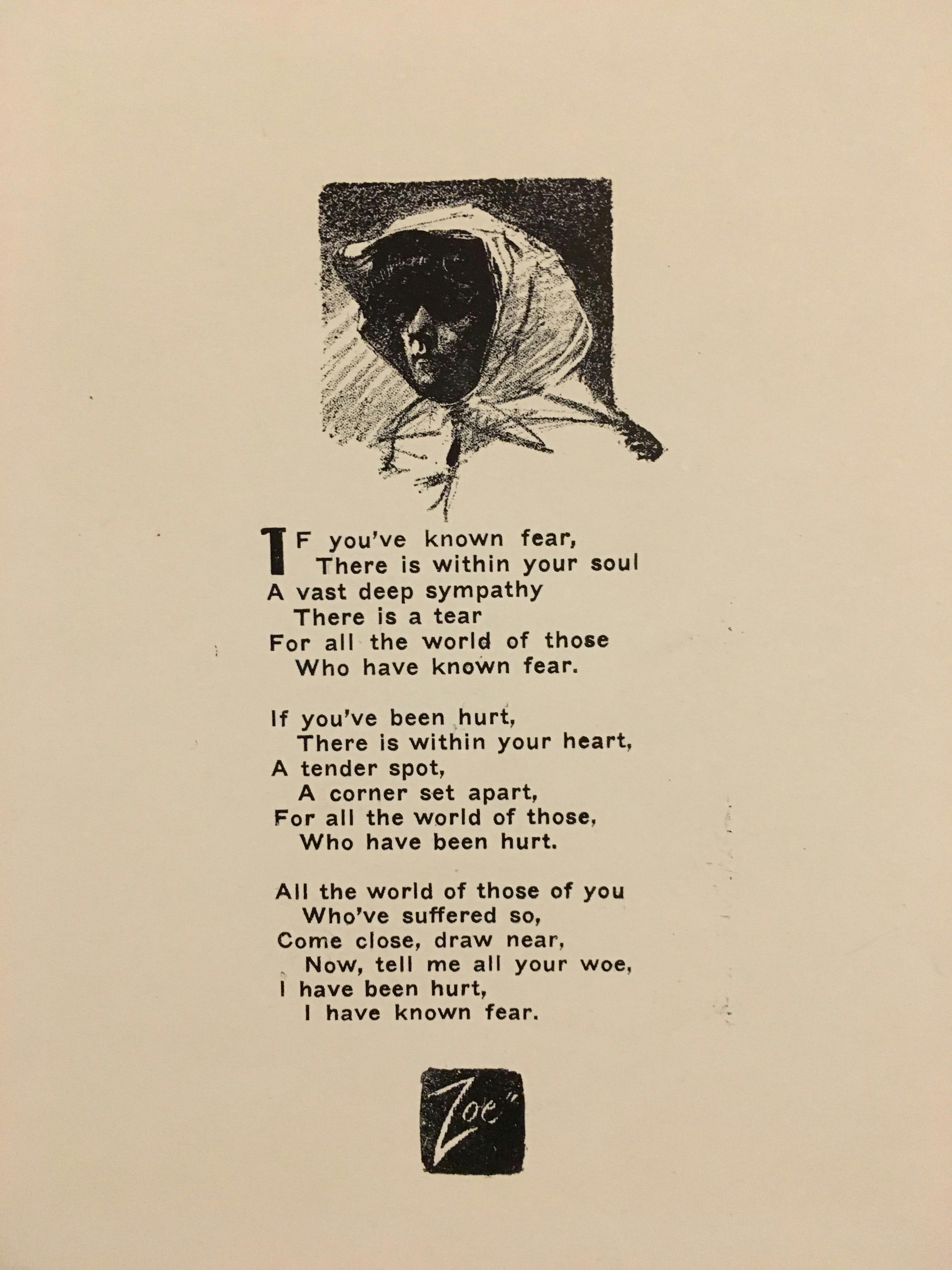
Right, Zoe Anderson Norris (1860–1914), author. William Oberhardt (1882–1958), artist and lithographer. Poem from The East Side magazine, back cover, March 1912.
Patricia D. Klingenstein Library, The New York Historical. Photos courtesy Eve M. Kahn.
The book really gives you a sense of the rich interconnectedness of Zoe's life, all the different networks of friends, family, and professional connections that covered seemingly all of New York City and stretched across half the country. What about Zoe's personality do you think attracted so many people?
Her defiance of societal norms had wide appeal, amid the socioeconomic fluidity of the Gilded Age, the newly minted millionaires and self-reinventing immigrants. Zoe was vivacious, brazen, fearless, and radiantly beautiful—that last phrase she would have particularly appreciated, since she was also incredibly vain and lied about her age, shaving a full decade off by the end of her life. (I have apologized when visiting her grave in rural Kentucky that my biography tells the chronological truth.) And even as she became known for hyperbole, she made fun of herself for bragging, and she maintained her sense of humor. When she claimed to have accumulated millions of East Side subscribers, from the Bowery to Budapest, Harlem to Hong Kong, she added a caveat: “Oh! You Circulation Liar!”
Written by Jeanne Gutierrez, Manager of Scholarly Initiatives, Jean Margo Reid Center for Women’s History
Keep Reading
- Women at the CenterDecember 22, 2025
Child's Play
What can the playthings of the past tell us about how children understand "women's work"? - Women at the CenterNovember 1, 2025
Vietnamese Stories from Stirring the Melting Pot: Photographs from The New York Historical Collection
At the heart of the story of Vietnamese refugees in 1970s New York is parents struggling to survive—and children learning how to translate that survival into a future. - Women at the CenterOctober 31, 2025
Scream With Me: An Interview with Author Eleanor Johnson
Which six classic horror films, released between 1968 and 1980, are "inextricably linked with the fight for women's rights in the United States"? - Women at the CenterOctober 13, 2025
Show Us Your Sari!
Every sari carries a history. Now it’s your turn to add to it.