On the stormy night of Nov. 8, 1972, at 7:30 pm, almost 400 subscribers in Wilkes-Barre, PA, experienced the future of television. One of a new breed of “pay-cable” channels—called Home Box Office—started its first broadcast.
“On their screens that evening, an earnest young man appeared. Welcoming the viewers to the debut of Home Box Office was Gerald "Jerry" Levin, programming vice president for the new channel. He introduced the evening's two offerings: a hockey game between Vancouver and New York and a film starring Paul Newman and Henry Fonda. In retrospect, it now seems more than fitting that the film was titled Sometimes a Great Notion.”
The above description is taken from The First Ten Years, a glossy booklet created for HBO staffers as they celebrated the 10th anniversary of the network in 1982. The booklet is just one of the many HBO-related documents and ephemera in the Patricia D. Klingenstein Library collection, all part of the Time Inc. records. (The publishing and media giant was a major stakeholder in and eventual owner of HBO.)
In the five decades since its launch, HBO has become one of the most respected brands in entertainment, known for both the quality of its programming—the network earned 127 Emmy nominations just this month—and its stunning reach—HBO, HBO Max, and its corporate sibling Discovery+ announced they had 96.1 million worldwide subscribers at the end of 2022. More recently, the network has been embroiled in shifts within its current parent company, Warner Bros. Discovery, that saw the acclaimed streaming platform HBO Max rebranded as just plain Max.
But long before this latest news and long before The Sopranos, Sex and the City, and Succession, HBO was just an experiment built around a radical idea—that people would consistently pay for premium TV.
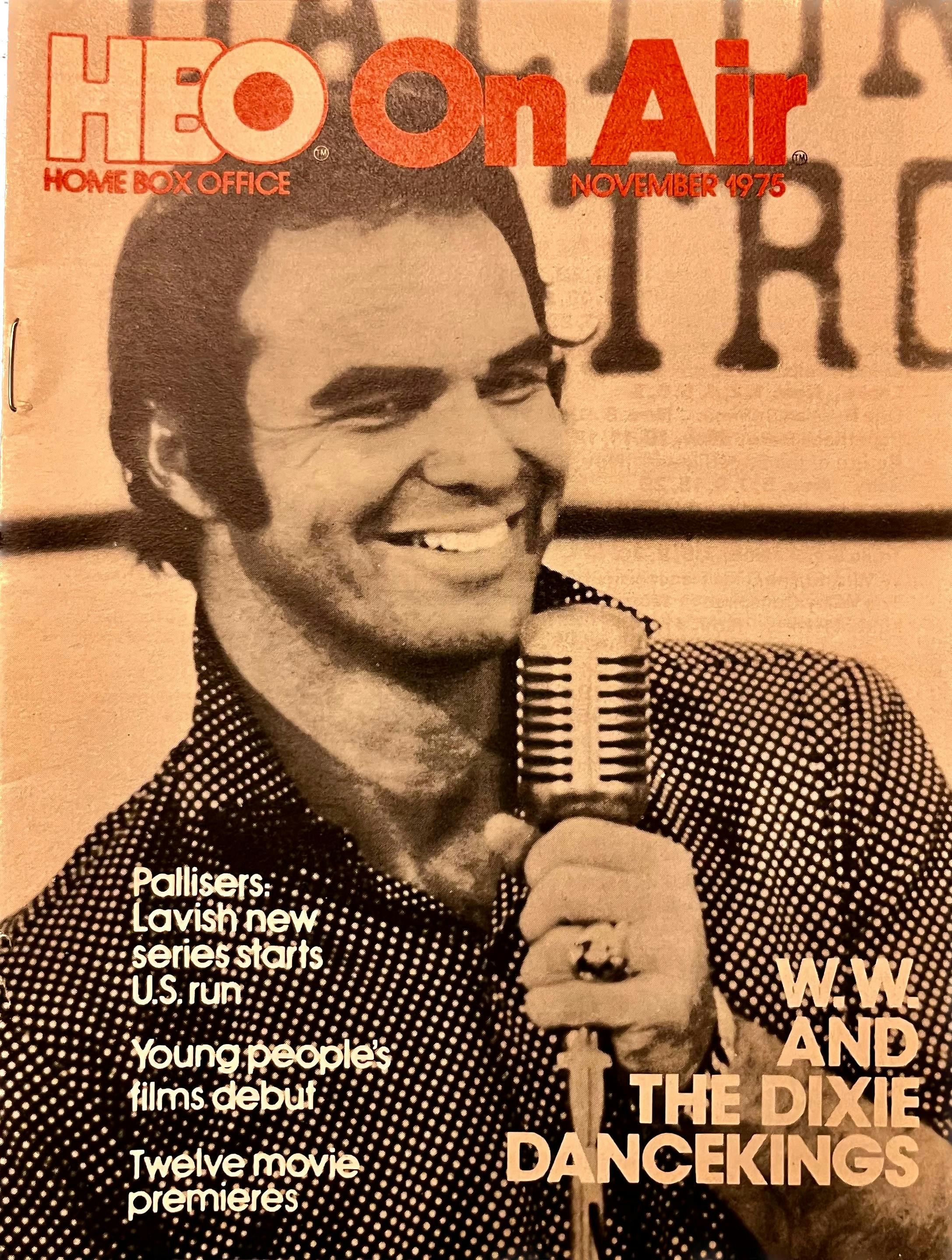
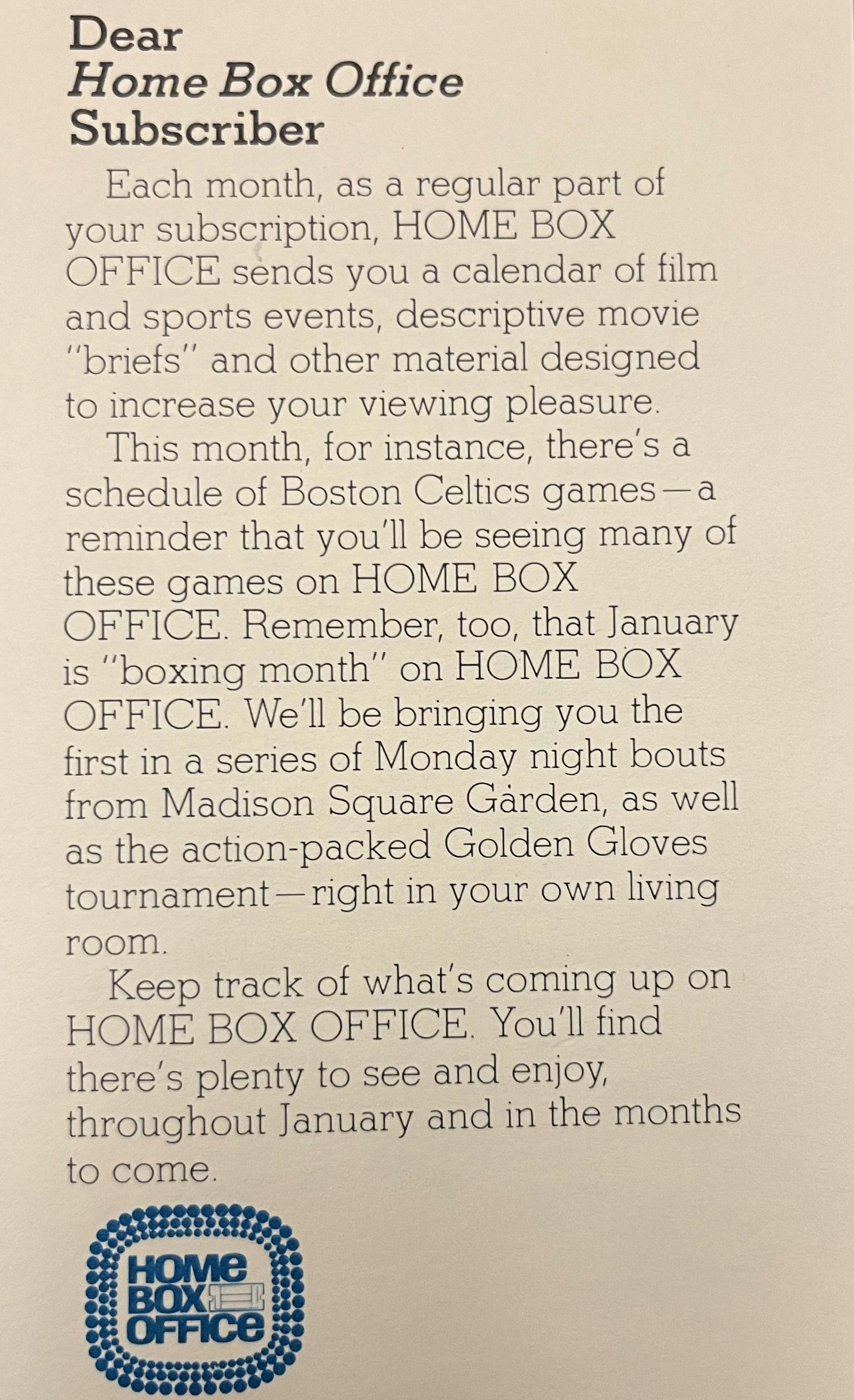
(Left) A copy of "HBO On Air"—a viewing guide for subscribers—from November 1975 featuring Burt Reynolds; (right) a card sent out to HBO subscribers explaining the benefits that they'd receive.
The idea for the network came from Charles F. Dolan, an early cable entrepreneur who'd founded Sterling Communications, a Manhattan cable system then controlled by Time Inc. (Dolan would later found Cablevision, and the Dolan family still controls Madison Square Garden, the MSG Network, the New York Knicks, Radio City Music Hall, and other major media and sports entities.)
In Dolan's telling, he had the idea for HBO during a two-month family trip to France in the summer of 1971. As he related in a 2018 University of Pennsylvania oral history interview, "I thought, 'Well, what an opportunity to write a memo explaining what we wanted to do and how it would work financially and technically.' I was way up on the third floor of this house. All the kids were playing downstairs." Once he returned to New York, he pitched the idea to executives at Time Inc. "We needed, we thought, $300,000 to start Home Box Office. That was a lot of money," Dolan said. Despite the sum, the company was in.
The new enterprise was called "The Green Channel" as a placeholder. In his interview, Dolan says that the team thought about the converter box that homes needed to receive the cable signal. From there, they landed on calling the channel "The Home Box." Continued Dolan, "Then somebody said, 'Well if it's ‘Home Box,’ and we're selling movies, why don't we make it the ‘Home Box Office’?"
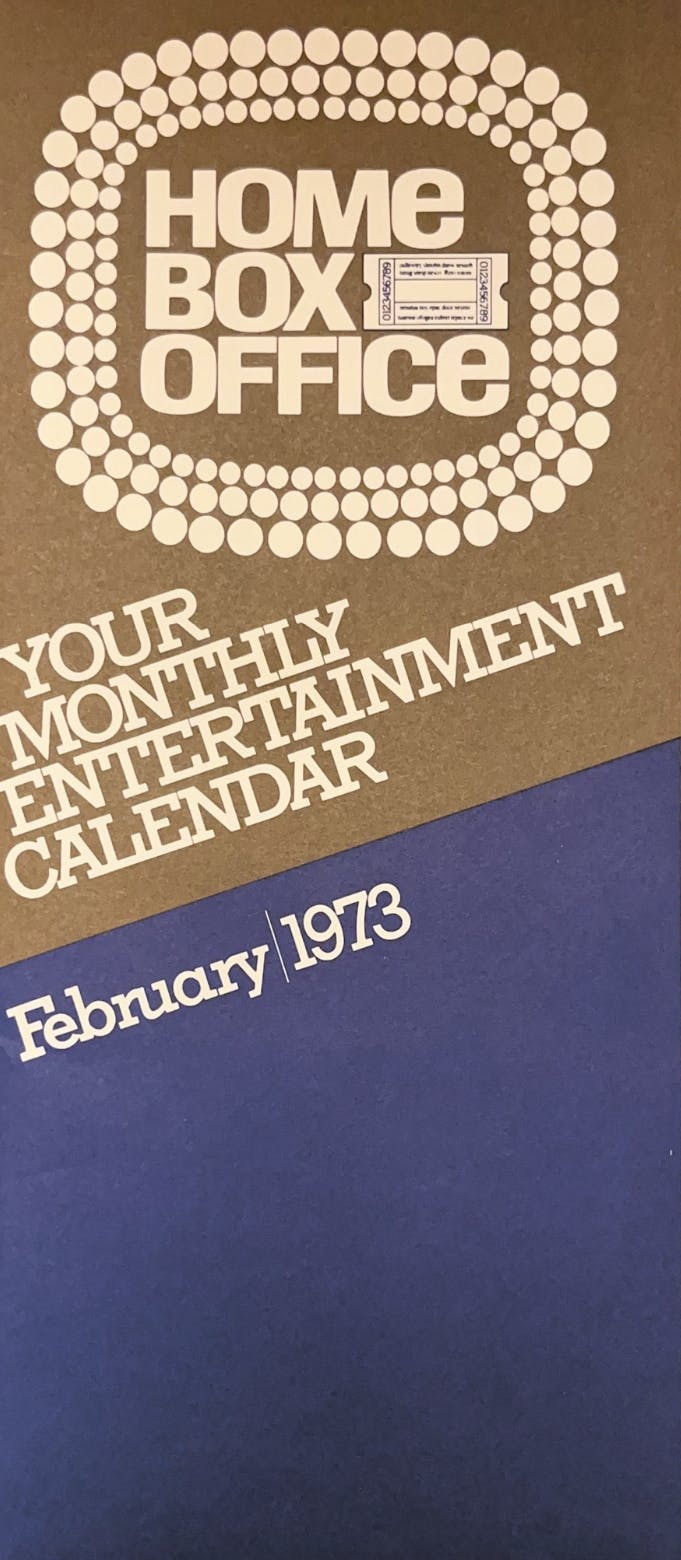
The cover for the February 1973 entertainment calendar that was sent to subscribers.
After much jockeying, the team behind HBO landed on Wilkes-Barre as the city to launch in with 365 subscribers. The run-up to the debut was hectic: A storm hit the area on premiere night, and the HBO execs who were supposed to drive in from New York City for an inaugural ceremony got stuck in traffic on the West Side Highway. (It was just as well—the local newspaper declined to cover the event anyway.) HBO's engineers were consumed with making sure the technology worked, although a report that one of them had to physically hold a windblown microwave dish in place turned out to be just a tasty company legend.
That first November, HBO broadcasts started between 6:30 pm and 8 pm depending on the schedule and usually signed off before midnight. Among the initial offerings were nine NBA games and five NHL games. Sometimes a Great Notion repeated six times and was joined by screenings of Play Misty for Me, The Railway Children, Red Sky at Morning, and The Andromeda Strain. Just four years later, a feature in American Way magazine (a copy of the issue is also in the Library's collection) charted the company's growth from those humble beginnings. By September 1976, HBO had 243 affiliates in 35 states, which served 500,000 subscribers 12 hours of programming a day.
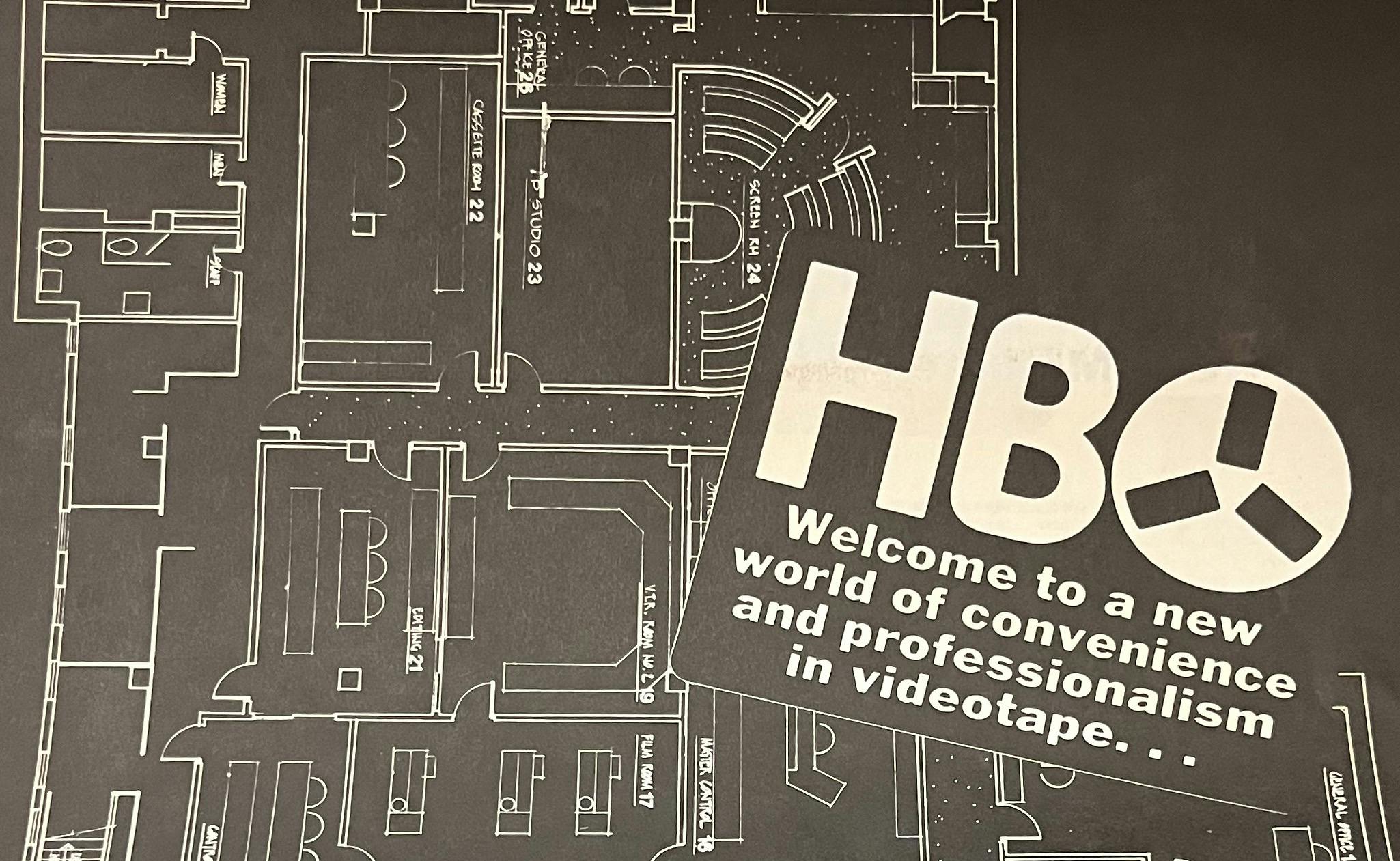
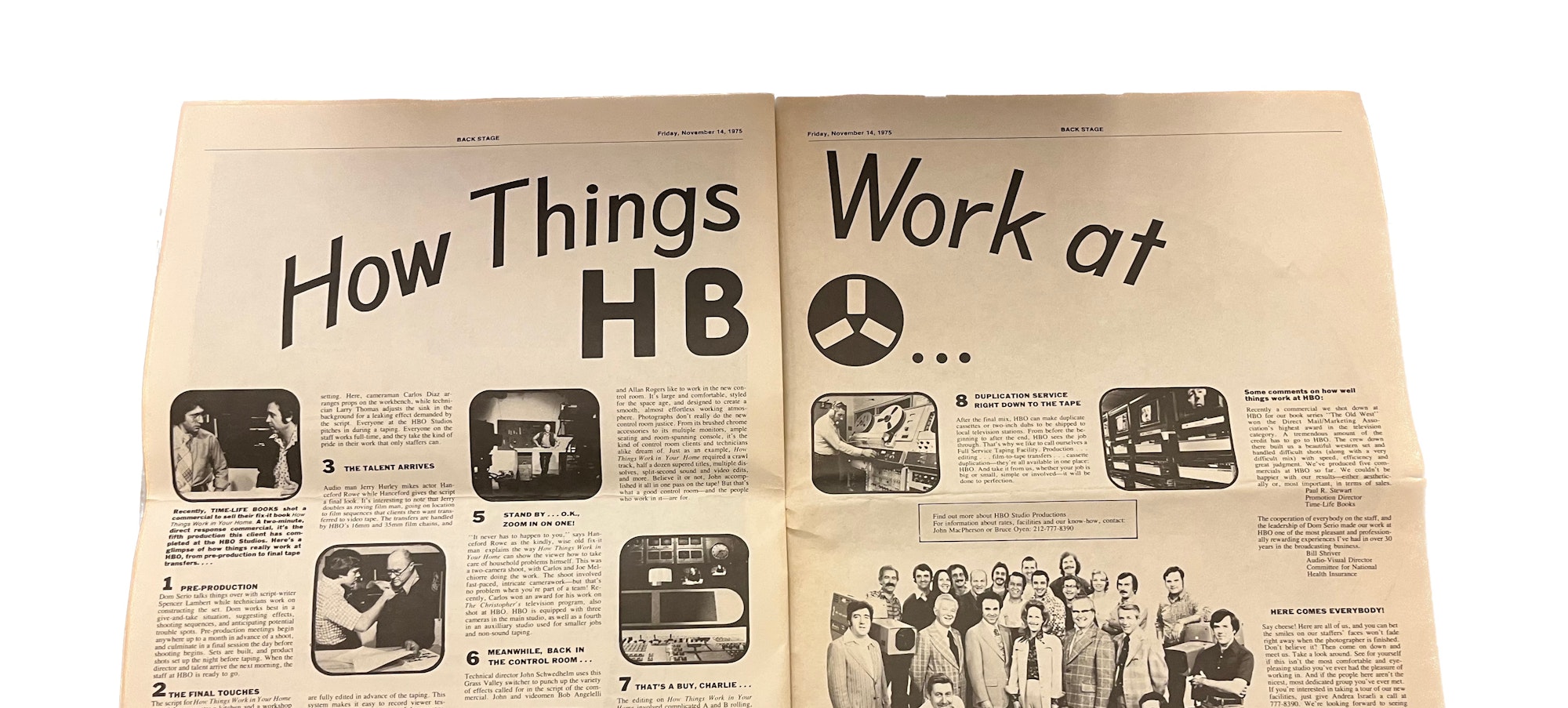
Detail of a full page graphic in the November 1975 issue of "Back Stage"
The Time Inc. records include much of this early history, including other magazine and press clippings, handwritten notes from executives, marketing materials and viewing guides, and internal memos, like a Sept. 11, 1972, draft of a letter to the Federal Communication Commission that essentially outlines what this new service aimed to be. Early in the letter is the line, "We believe that many cable subscribers will respond favorably to the optional service if it proves to be an economical alternative to other information and entertainment media and if it is not a duplication of commercial television." Fifty-plus years and millions of subscribers later, it would appear that their notion was sound.
The Time Inc. records are one of the thousands of manuscript and archival collections held by the Patricia D. Klingenstein Library at the New-York Historical Society. For over 200 years, the Library has—through its manuscripts, books, maps, newspapers, photographs, architectural drawings, and prints—richly documented the history of New York and its wider national and global surroundings. These unparalleled collections are available to researchers, students, and all those curious about our shared past and present. To learn more about the Library’s holdings and fellowship opportunities, and to plan a visit, visit its website.
Keep Reading
- From the StacksAugust 28, 2026
"The Patriots in the Dumps": A British Cartoon Takes on the Battle of Long Island
250 years ago this month, Americans were embroiled in a crucial end-of-summer Revolutionary War clash: the Battle of Long Island. - From the StacksAugust 13, 2026
"Oh Eliza, I'm undone": Part II, Conservation
The second installation of this blog series, following a manuscript from storage to exhibition, highlights treatment in the conservation lab. - From the StacksAugust 5, 2026
A Revolutionary Tunebook
An American tunebook kept in 1776 captures the soundtrack of revolution. - From the StacksJuly 20, 2026
"Oh Eliza, I'm Undone": A Journey from Storage to Display
Explore the conservator's role in this three-part blog series through the lens of a Revolutionary War-era love poem as it moves from storage to the conservation studio and finally to an exhibition.