While Charlotte Cushman and Maude Adams saw tremendous changes over the course of their long lives, the pace of change accelerated in the second half of the 20th century, wrought by the Civil Rights movement, the sexual revolution, Black Power, Red Power, gay rights, the environmental movement, the anti-war movement, and the women’s liberation movement. The power of collective action to effect social and political change was on full display—as was a belief in the power of collaborative art, especially in theater. Ensembles such as the Living Theatre (founded in 1947 by Judith Malina and Julian Beck) and the Open Theatre (founded in 1963 by Joseph Chaikin and others) envisioned performances that emerged from "collaborative, interactive relationships that developed among playwrights, directors, and performers," often through extensive improvisational workshops. This theater movement, which the Village Voice dubbed "Off-Off Broadway" in 1960, was also characterized by "a very clear sense of shared community, and a shared resistance to the economic imperatives of mainstream American culture," as author Stephen J. Bottoms put it.
This anticonsumerist bent dovetailed with New York's fiscal crisis (exacerbated by deindustrialization, job losses, rising crime, and "white flight") which led to high vacancies and low rents—bad for the city's finances, but certainly beneficial to artists looking for affordable spaces to live and create work without having to strive for commercial viability. SoHo's former factories and warehouses became lofts and studios; when Bell Telephone vacated its research facility on the Hudson River, it was repurposed as Westbeth Artists Housing, the first subsidized housing for artists in the United States (and, not coincidentally, the home of an influential early women's theater group: the Westbeth Playwright's Feminist Collective).
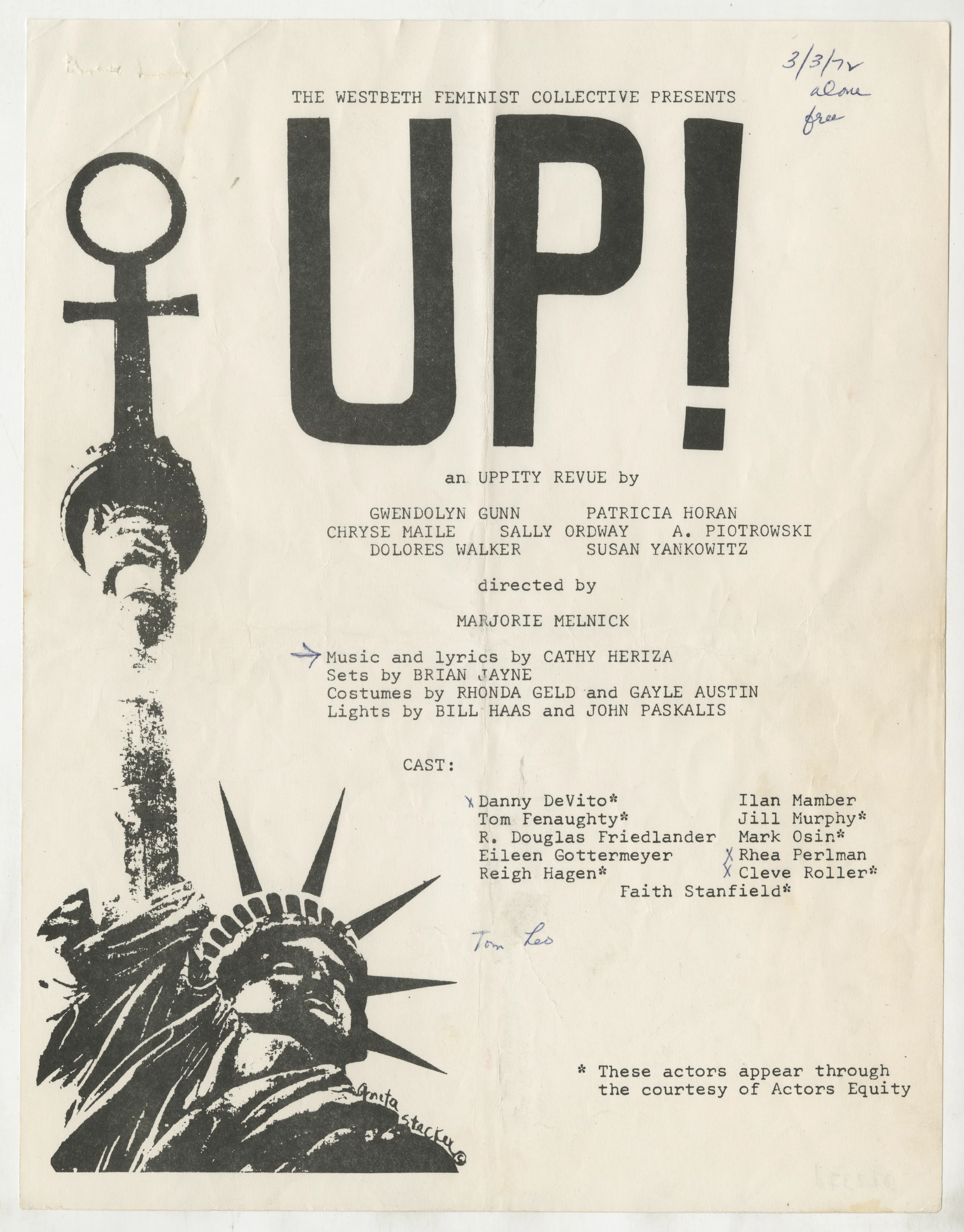
Westbeth Playwrights’ Feminist Collective (1972–1976), Anita Steckel (1930–2012), artist. UP! An Uppity Review, 1972. Patricia D. Klingenstein Library, The New York Historical
Indeed, for a period of time in the late 20th century, much of downtown Manhattan, from Greenwich Village to the Lower East Side, became a vast stage for an explosion of creativity that explored radical, transgressive, and explicit content—including a groundbreaking wave of queer content. Many bold new works were incubated in tiny, unorthodox spaces such as cafés, clubs, churches, galleries, basements, and bars. Not only were these small venues more open to experimentation and less costly than the big Broadway houses, but their "unofficial" status helped circumvent the Wales Padlock Law—a state statute that allowed police to shut down performances on the grounds of "sex degeneracy or sex perversion." (One of the law's earliest casualties was Mae West's 1927 show The Drag, rewritten in 1928 as The Pleasure Man; West herself had been indicted on obscenity charges relating to her play Sex the day before the Padlock Law was signed.) Repeal of the Padlock Law in 1967 helped bring queer characters and themes before a wider audience. Meanwhile, as playwrights, performers, musicians, dancers, writers, directors, designers, and visual artists, queer women broke down barriers between the arts, pioneered innovative new forms, and revolutionized American theater. They explored, spoofed, and critiqued power structures of all sorts, forming overlapping networks, new organizations, intimate partnerships, and creative collaborations that reverberate to this day.
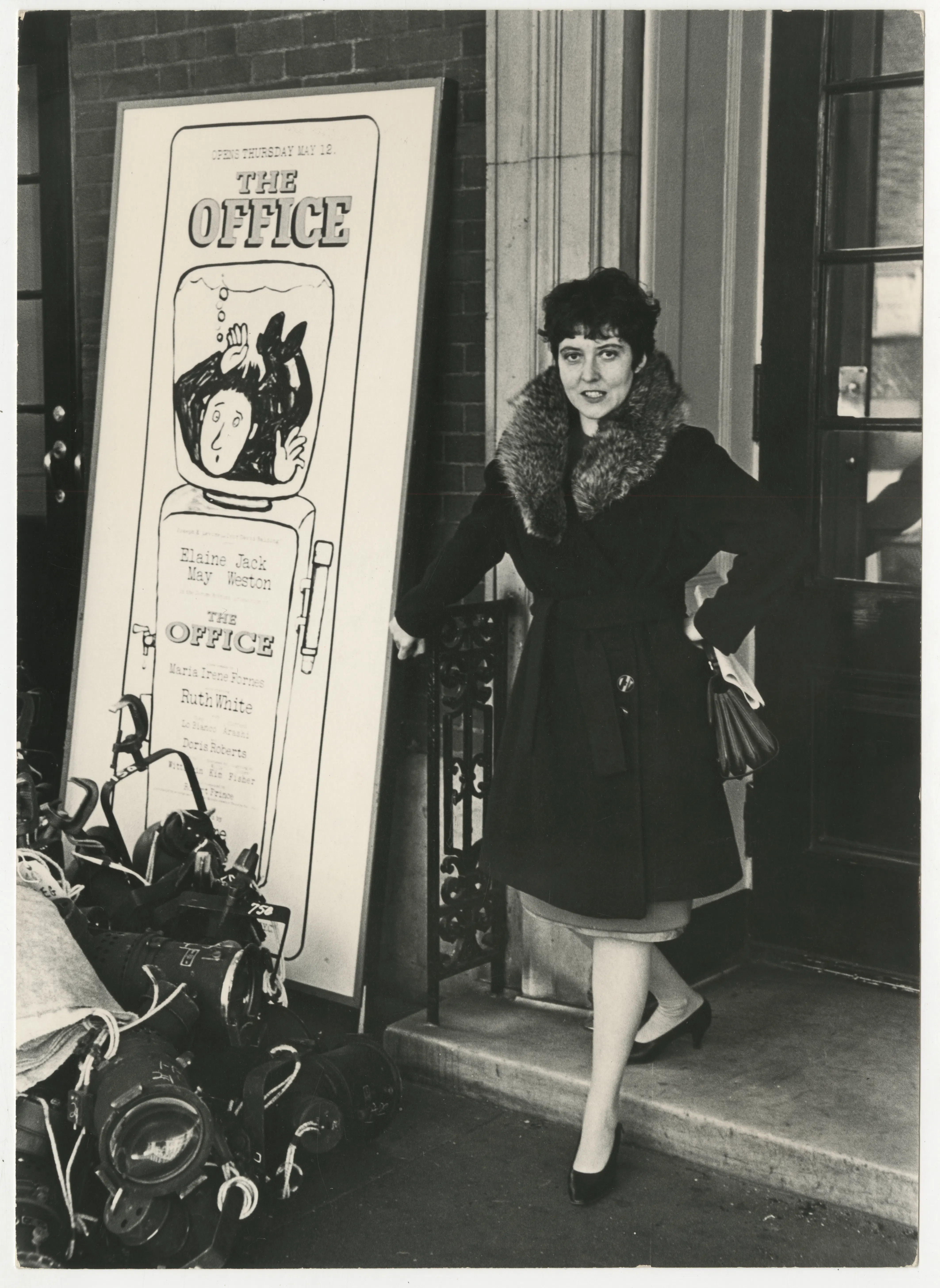
Fred McDarrah (1926–2007), photographer. María Irene Fornés (1930–2018), 1966. Patricia D. Klingenstein Library, The New York Historical
Certainly the career of Cuban-born playwright and director María Irene Fornés bears this out. Her first play was performed in 1961, and she quickly became a pivotal figure in New York’s Off-Off Broadway theater scene, winning the first of her nine Obie Awards in 1965. (However, when director Jerome Robbins brought her 1966 play The Office to the Henry Miller Theatre, now the Stephen Sondheim Theatre, it closed in previews, indicating that Broadway was not quite ready for her.) Fornés nevertheless went on to author over 50 works for the stage, pioneer a number of groundbreaking immersive theatrical techniques, and become a renowned teacher. She mentored new generations of award-winning playwrights (including Carmelita Tropicana, David Henry Hwang, Tony Kushner, Migdalia Cruz, and Nilo Cruz), many of whom were involved in the Hispanic Playwrights in Residence Laboratory that Fornés founded in 1980. For twelve years, the lab was part of the International Arts Relations (INTAR) Hispanic American Arts Center (formerly Asociación de Arte Latinoamericano) and is widely acknowledged and remembered as an important incubator for Hispanic talent.
Ana María Simo (b. 1943) was a member of the 1982 cohort at the Playwrights in Residence Lab, but by then she had been part of the downtown theater scene for years. Simo fled Cuba in the 1960s to escape political repression and violent homophobia, and after a stint in Paris, she arrived at La MaMa around 1972. The city's longest-running Off-Off-Broadway theater, La MaMa was founded in 1961 by fashion designer turned theatrical impresario Ellen Stewart. Its first location was the basement of Stewart's dress shop on East Ninth Street, but by the late 1960s, grants from the Ford and Rockefeller Foundations had helped La MaMa purchase and renovate its current home on East Fourth Street. In 1971, Stewart was able to acquire additional space on Great Jones Street and start refurbishing a donated building on East Third. This allowed La MaMa to begin offering residencies and workshops, such as the community workshop taught by Simo and Magaly Alabau (b. 1945), who had also left Cuba in the 1960s.
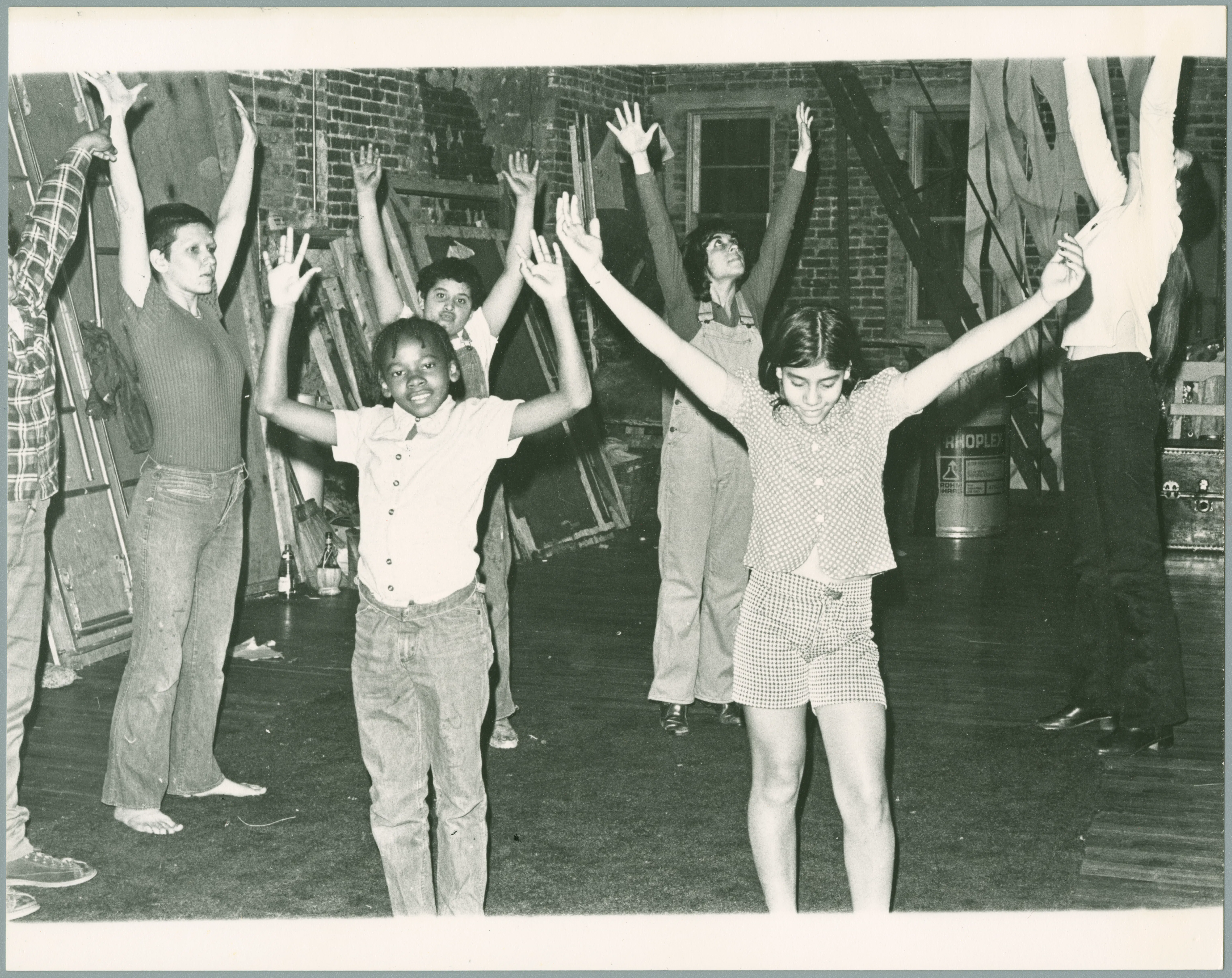
Irene Vilhar (active 1970s), photographer. East Third Street Community Workshop, 1973. Courtesy of the Rockefeller Archive Center
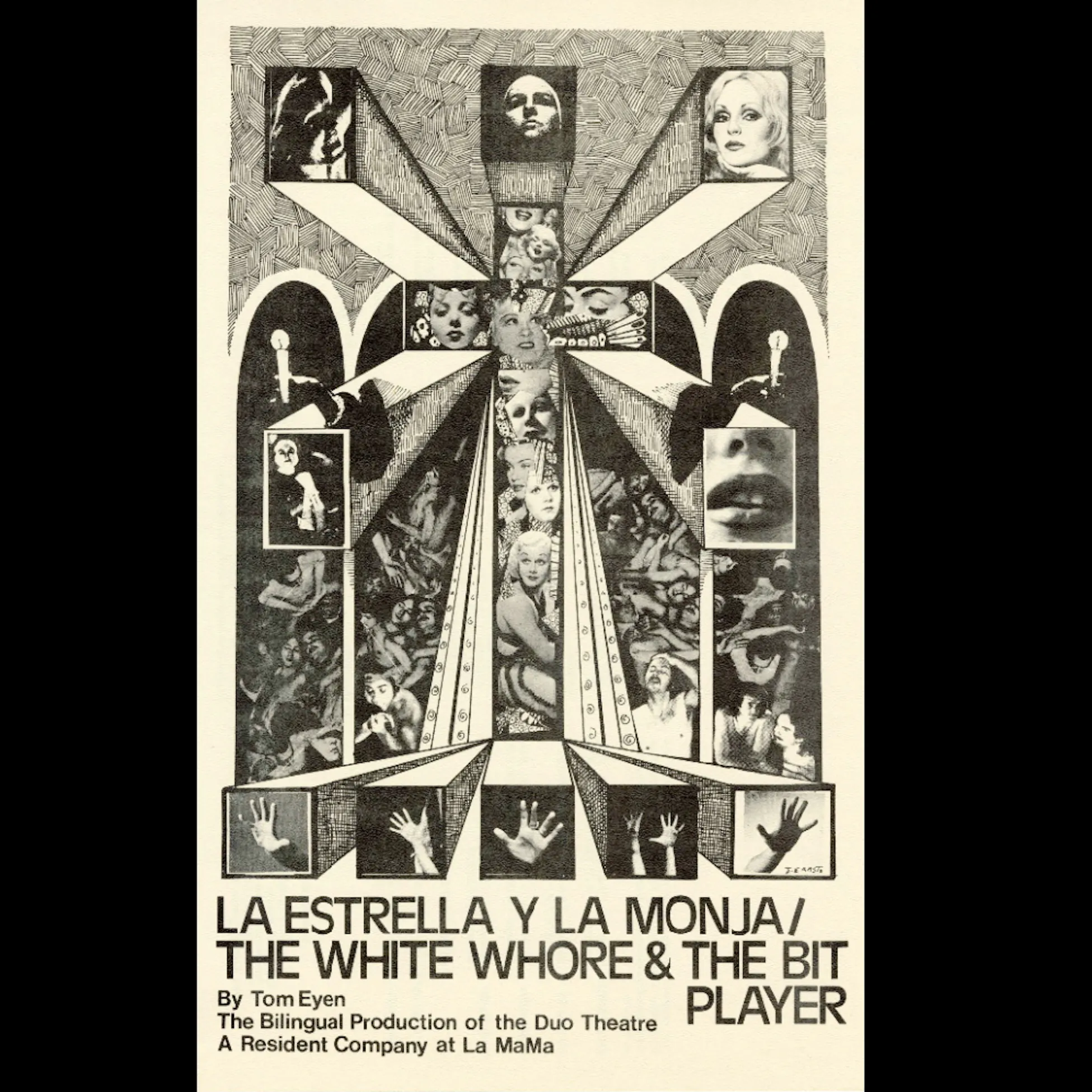
Jose Erasto Ramirez (active 1970s), designer. La Estrella y La Monja / The White Whore and the Bit Player, 1973.
Alabau was a co-founder of Duo Theatre/Teatro Dúo, a bilingual company that spent their 1973 residency at La MaMa developing a revival of Tom Eyen's 1964 play, The White Whore and the Bit Player. Alabau played La Monja in Spanish, alternating nights with Candy Darling (1944–1974), who portrayed the Whore in English. Darling, a trans performer and one of Andy Warhol's "superstars," appeared in several other plays at La MaMa, including Vain Victory (1971), a campy, improvisational musical satire written by another “superstar,” the actor and drag performer Jackie Curtis (1947–1985).
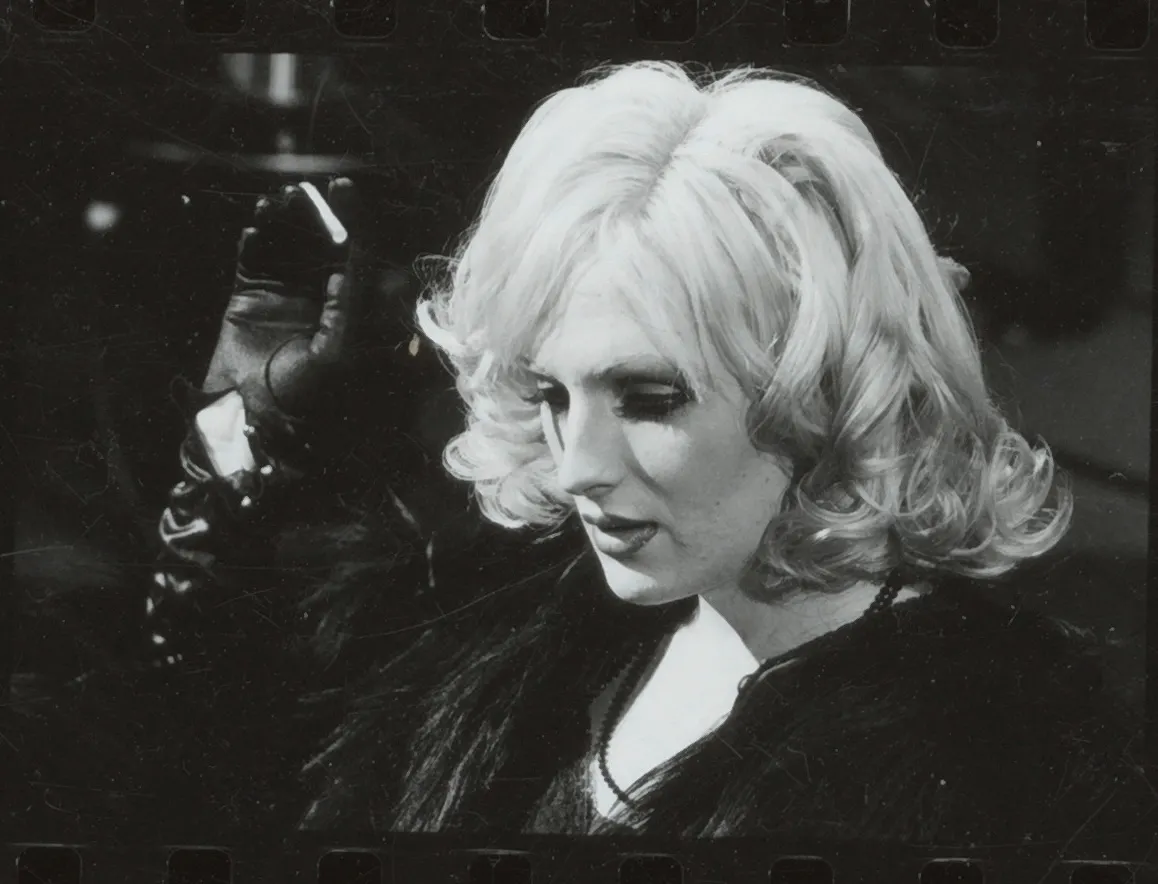
Fred McDarrah (1926–2007), photographer. Candy Darling, December 7, 1970. Patricia D. Klingenstein Library, The New York Historical. Gift of the Goldman Sonnenfeldt Family
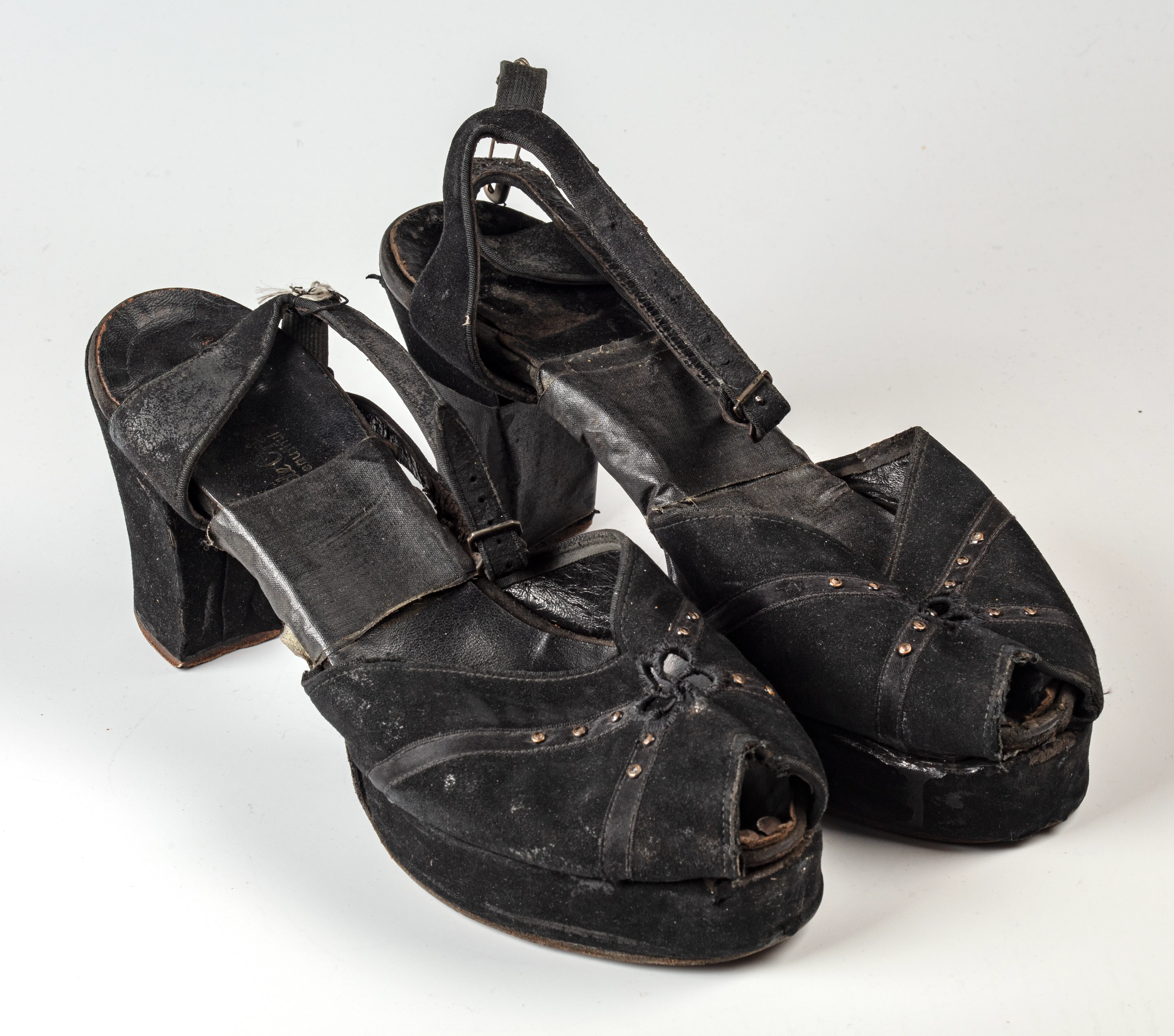
Shoes worn by Candy Darling in Vain Victory, ca. 1971. Leather, metal, plastic. The New York Historical Purchase, Luce 20th and 21st Century Collecting Fund, 2023.46.2ab
Though La MaMa supported the careers of many queer women playwrights, performers, and directors (and continues to do so today), it was not specifically devoted to their work. Rather, Medusa's Revenge, the multidisciplinary venue created by Simo and Alabau in 1976, was the first space in New York City dedicated to lesbian performance. Alabau led the resident theater company, which produced original plays—including Bayou, a fantasia written by Simo and set in a dreamlike lesbian bar—as well as works submitted for the Medusa’s Revenge Playwriting Award. Before closing due to a rent increase in 1981, the space also hosted dances, films, musicians, and performances, from Edwina Lee Taylor’s A Piece of the World drum ensemble to Spiderwoman Theatre.
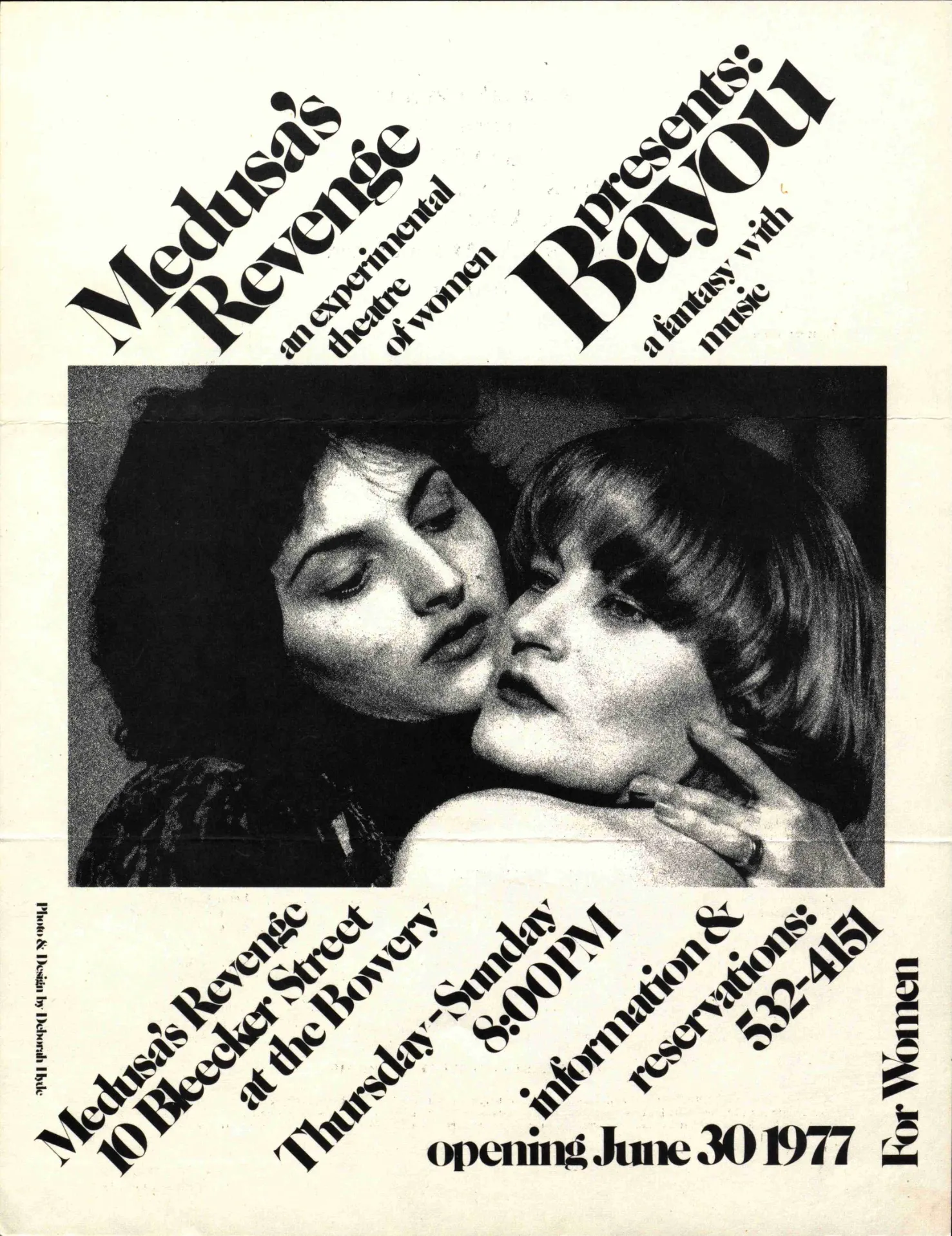
Deborah Hyde, photographer and designer. Bayou, 1977. Courtesy of the Lesbian Herstory Archives
Spiderwoman, founded in 1976 and still active today, is the longest-running women’s performance group in the United States and one of the most important. Muriel Miguel (b. 1937), Spiderwoman Theatre's co-founder and artistic director, is also one of the co-founders of the Little Eagles (now the Thunderbird American Indian Dancers, the oldest Native American dance troupe in New York), a student of modern dance, and one of the Open Theatre's original members. Alongside her sisters, founding members Lisa Mayo and Gloria Miguel, Miguel drew upon their Rappahannock and Kuna heritage and storytelling traditions to incorporate words, movement, music, and visuals into the making of narratives and imagery, creating Spiderwoman's noted "storyweaving" technique. (This process also recalls the Open Theatre's collaborative practice.) Through works such as Women in Violence (1976), An Evening of Disgusting Songs and Pukey Images (1979), I’ll Be Right Back (1982), and Winnetou’s Snake Oil Show from Wigwam City (1988), Spiderwoman examines weighty subjects such as sexual assault, cultural appropriation, nuclear war, and anti-Native prejudice with humor, songs, and biting satire. In her one-woman show Hot 'N' Soft (1992), Muriel Miguel reinterprets the Coyote trickster figure, who features in stories across many Native American nations, as a lesbian woman in order to discuss her own experiences with lesbian desire.
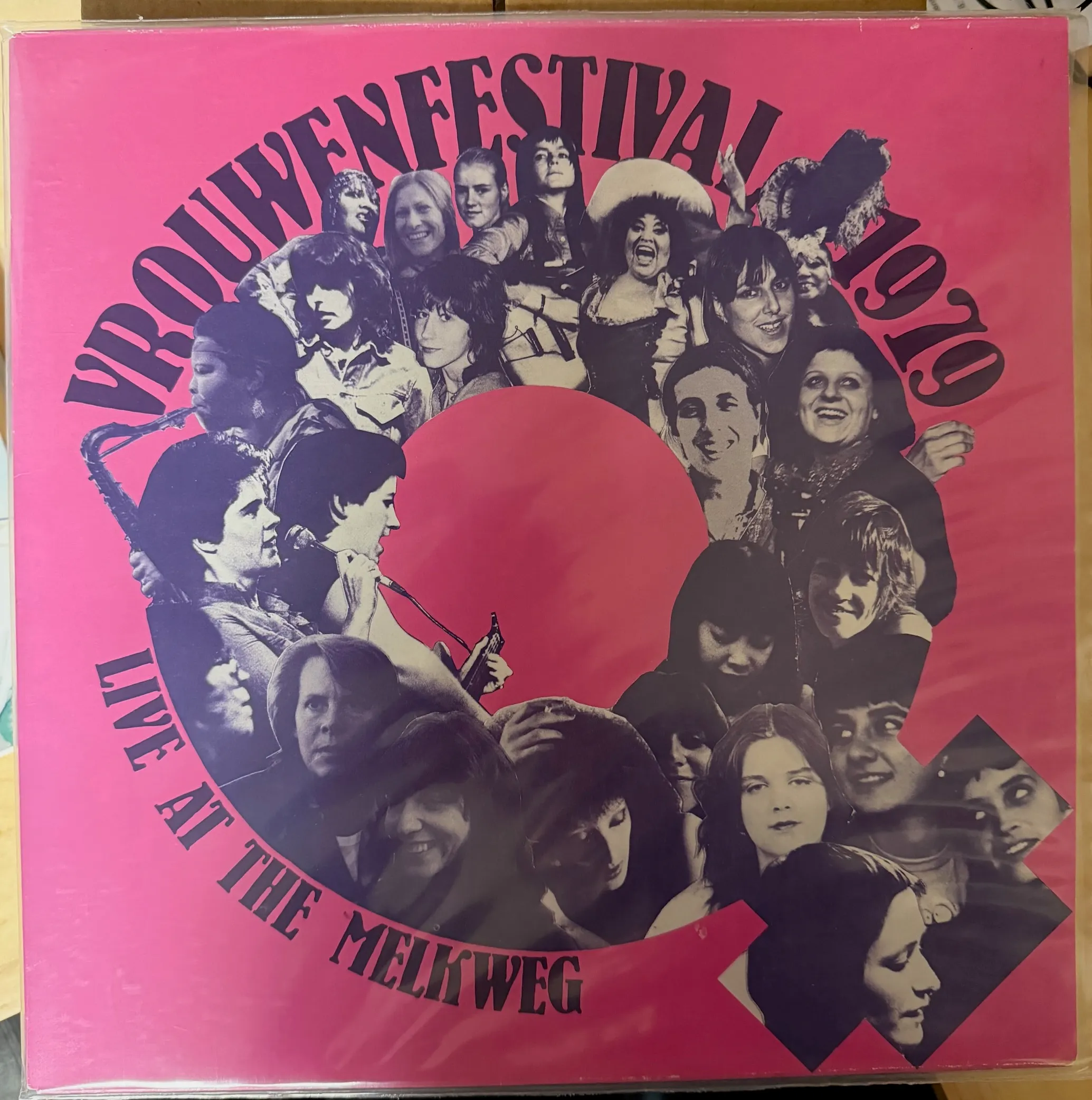
Milkyway Records. Marjolein Kuijsten, cover artist. Live at the Melkweg, 1979. LP in cardboard sleeve. The New York Historical
Spiderwoman Theatre performs throughout the United States and is also well-known internationally, having appeared regularly at venues such as Amsterdam’s Melkweg—a cultural center housed in a former dairy. During Melkweg’s 10-day Vrouwenfestival (Women’s Festival) in 1979, Spiderwoman actor Lois Weaver began talking with Peggy Shaw, Pamela Camhe, and Jordy Marks about hosting a similar event in New York. Despite the lack of support and funding often offered by European governments, and in the absence of private grants ("It became a choice between pursuing the festival and pursuing funding," explained Marks), the group mounted the first Women’s One World (WOW) Festival in October of the following year. Forty-nine performers and groups from the US and beyond paid their own way to New York City; many of their performances took place in the All Craft Center on St. Mark's Place. During the second WOW Festival in 1981, the Flamboyant Ladies Theatre Company mounted a production of NO there. This “collection of new poems, political statements, and innovative stories,” written by Alexis De Veaux and adapted by Glenda Dickerson, contained explicit references to lesbian desire. Peggy Shaw later speculated that it was “a little too sexy” for the All Craft Center, which locked WOW out after the Flamboyant Ladies’ performance.
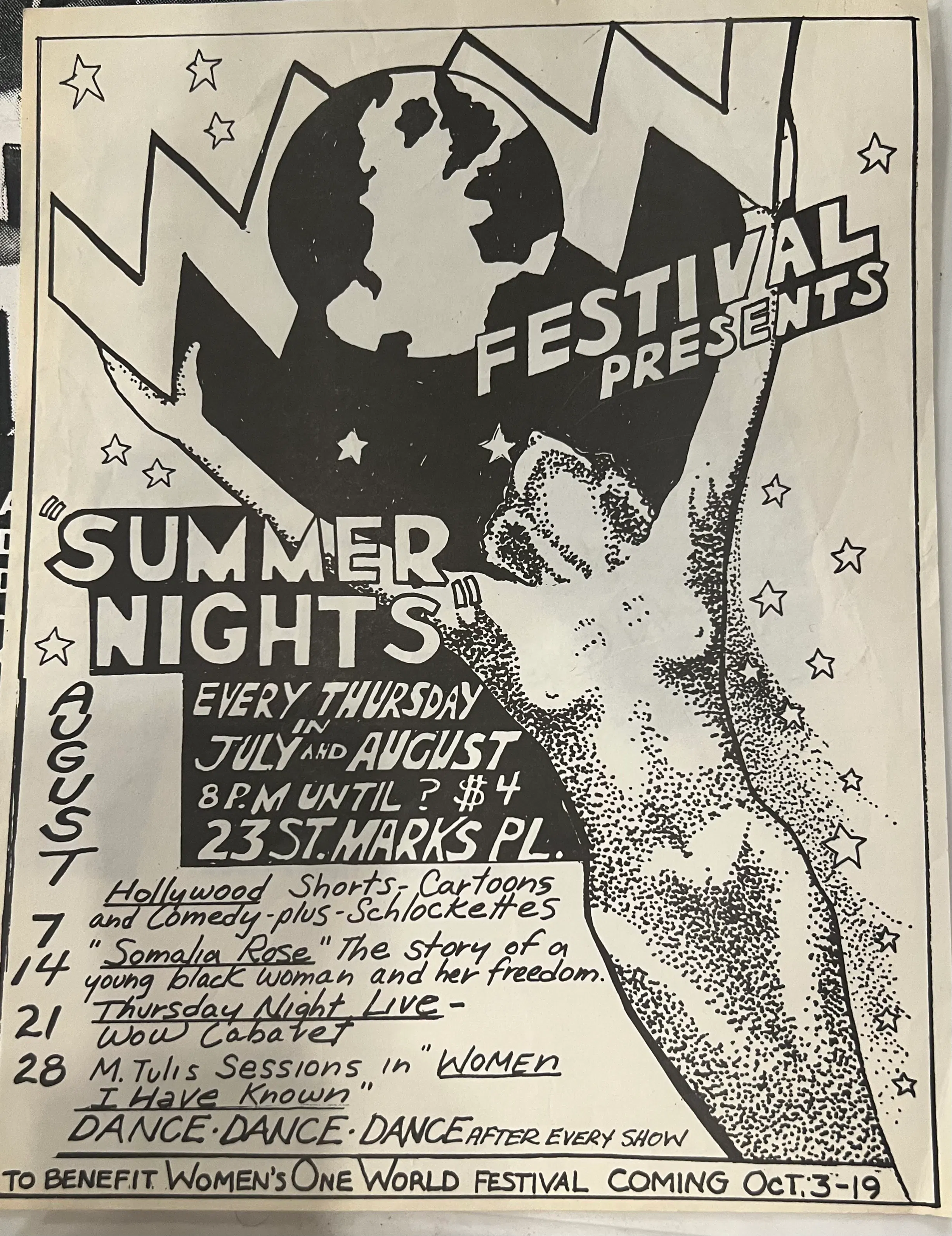
Peggy Shaw (b. 1944), artist. Women's One World Festival poster, ca. 1980. Collection of the WOW Café Theatre
The loss of their borrowed venue, coupled with the intense enthusiasm generated by the WOW festivals, led Shaw, Weaver, and a group of “wayward girls” to open a small storefront on East 11th Street. "It is without question an intimate space," noted Joannie Fritz in Womanews. "With the aid of a shoehorn, it can house fifty friendly people." Tickets, food sales, benefit parties, and memberships helped cover rent and utilities, but as performer Carmelita Tropicana (Alina Troyano) put it, overall the WOW Café was a “scrappy, do-it-yourself operation without any licenses, permits, or grants.” It ran on sweat equity—whoever showed up to put in the work could also put on a show. WOW members not only wrote and directed plays, but they also composed songs, built sets, fashioned costumes, worked the box office, and mopped the floors. "We were encouraged to do it all," Carmelita Tropicana recalled, and from this "fertile playground" emerged a number of notable ensembles, individual artists, and award-winning works.
The Split Britches Theatre Company was founded by Peggy Shaw (b. 1944) and Lois Weaver (b. 1949), who met while Weaver was performing with Spiderwoman Theatre and Shaw with the Hot Peaches drag troupe. Their eponymous play Split Britches debuted in 1980, an interwoven portrait of Weaver's three aunts that was set in Virginia's Blue Ridge Mountains during the 1930s. Alongside collaborator Deb Margolin, Weaver and Shaw presented "a day in their life—a lifetime in a day… so deftly written and performed [that] it is consistently dramatic, full of surprising lurches and probes," despite the absence of a conventional plot. "Searing perfection," concluded Laurie Stone's review in the Village Voice. Many critics and viewers later recalled Shaw's "fire in my pocket" monologue as a powerful articulation of lesbian desire, and the price exacted by attempts to suppress it.
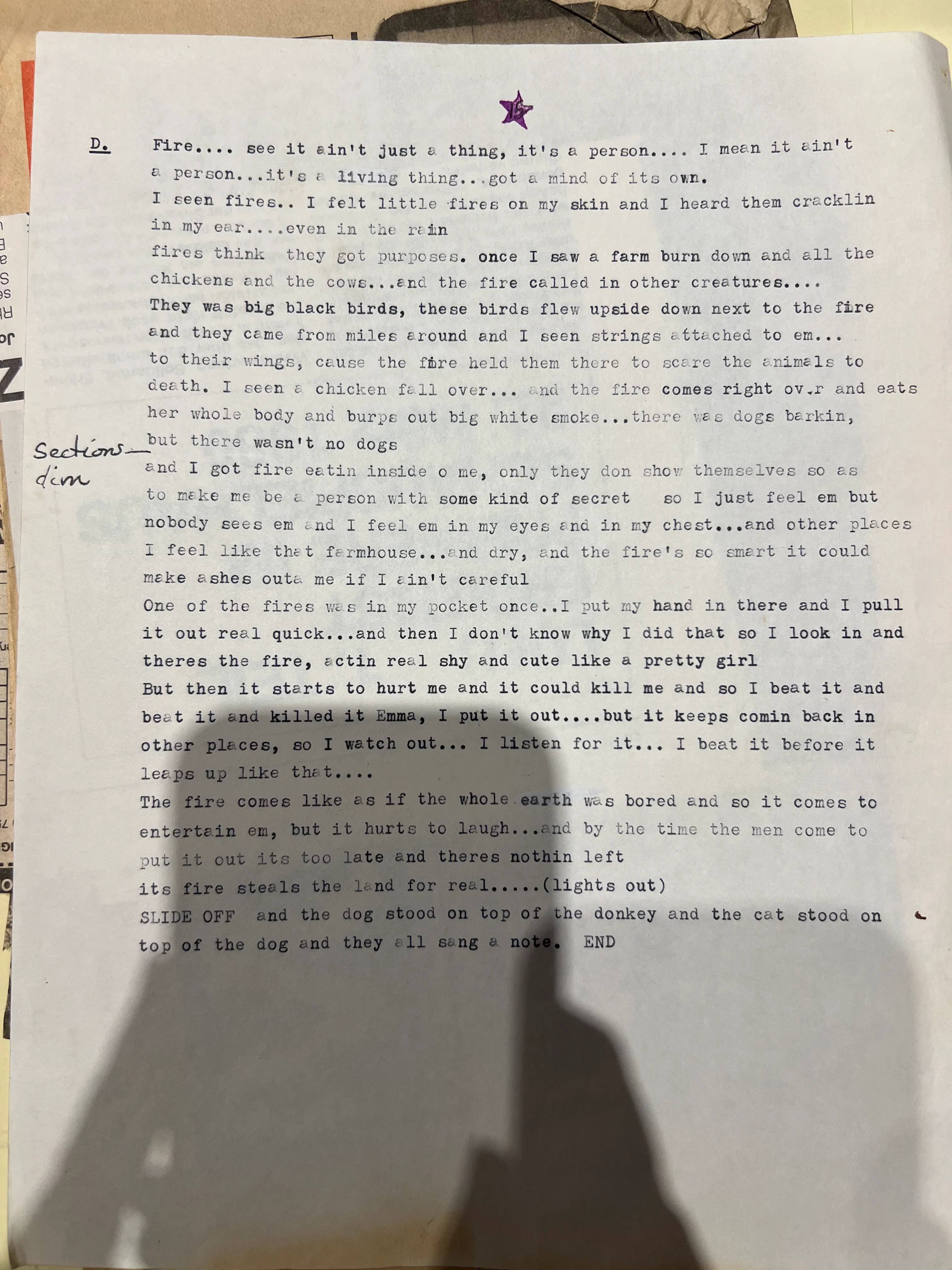
The Split Britches Company. Split Britches script page, ca. 1980. New York University Fales Library Special Collections
Shortly after the WOW Café opened in 1982, performance artist Holly Hughes found her way there. According to a later profile by Cynthia Carr, she was soon "booking it, staffing it, making melted brie sandwiches (pretty much the only thing on the menu), and running the lights (such as they were)." Hughes also began penning raunchy, campy "dyke noir." These satirical plays had tongue-in-cheek titles such as The Well of Horniness, The Lady Dick (both premiered at WOW in 1985) and 1987's Dress Suits to Hire, an Obie-award winner performed by Weaver and Shaw as a "carnivorous free-for-all" that "scrapes away decades of encrusted decorum…and hushed sentimentality," as Edward Guthmann wrote in the San Francisco Chronicle. Shortly thereafter, Hughes rocketed to national prominence as one of the "NEA Four," a group of performance artists whose federal grants were revoked on homophobic "obscenity" grounds. (The artists filed suit, and though an initial ruling in 1992 found the NEA's "decency clause" violated the First Amendment, the Supreme Court overturned that decision in 1998.)
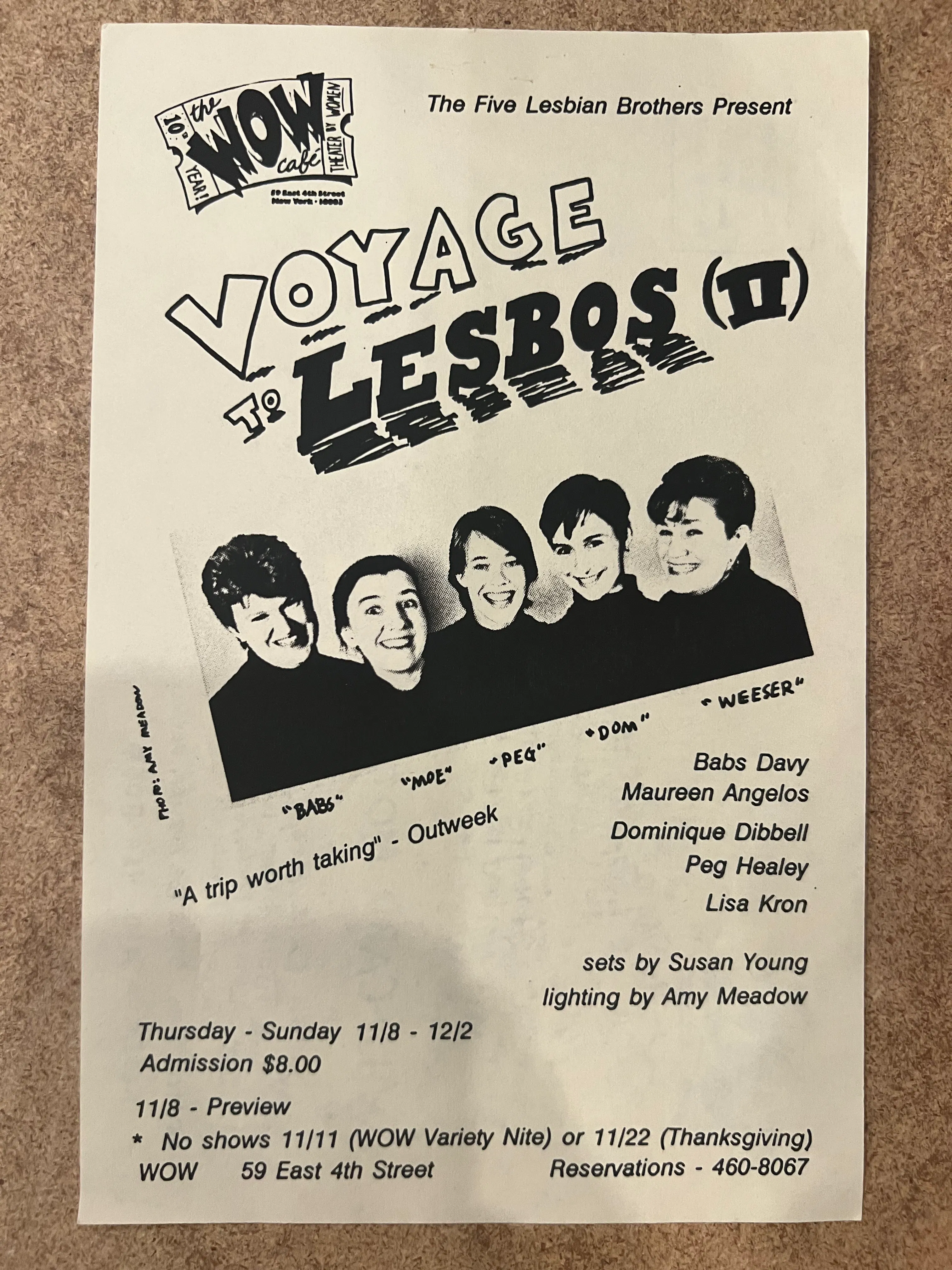
Amy Meadow, photographer. The Five Lesbian Brothers, Voyage to Lesbos (II), ca. 1992. Collection of the WOW Café Theatre
In 1989, Maureen (Moe) Angelos, Barbara (Babs) Davy, Dominique (Dom) Dibbell, Peg Healey, and Lisa Kron formed a group called the Five Lesbian Brothers. The Brothers premiered their first show, Voyage to Lesbos, at WOW Café in 1990. Like all the Brothers’ productions, it was written collectively and used satire, pop culture references, and parody songs to subvert broad cultural assumptions about women, femininity, and sexuality. Their later plays, including Brave Smiles (1992), the Obie Award-winning Secretaries (1993), and Oedipus at Palm Springs (2005), drew upon everything from historical fiction to slasher movies to Sophocles in order to irreverently and provocatively critique the ongoing marginalization of women and lesbian artists. (Dedicated theatre-goers might also be familiar with Kron's later work on the Tony Award-winning musical Fun Home, which won Best Book and Best Original Score in 2015, and was shortlisted for the Pulitzer Prize.)
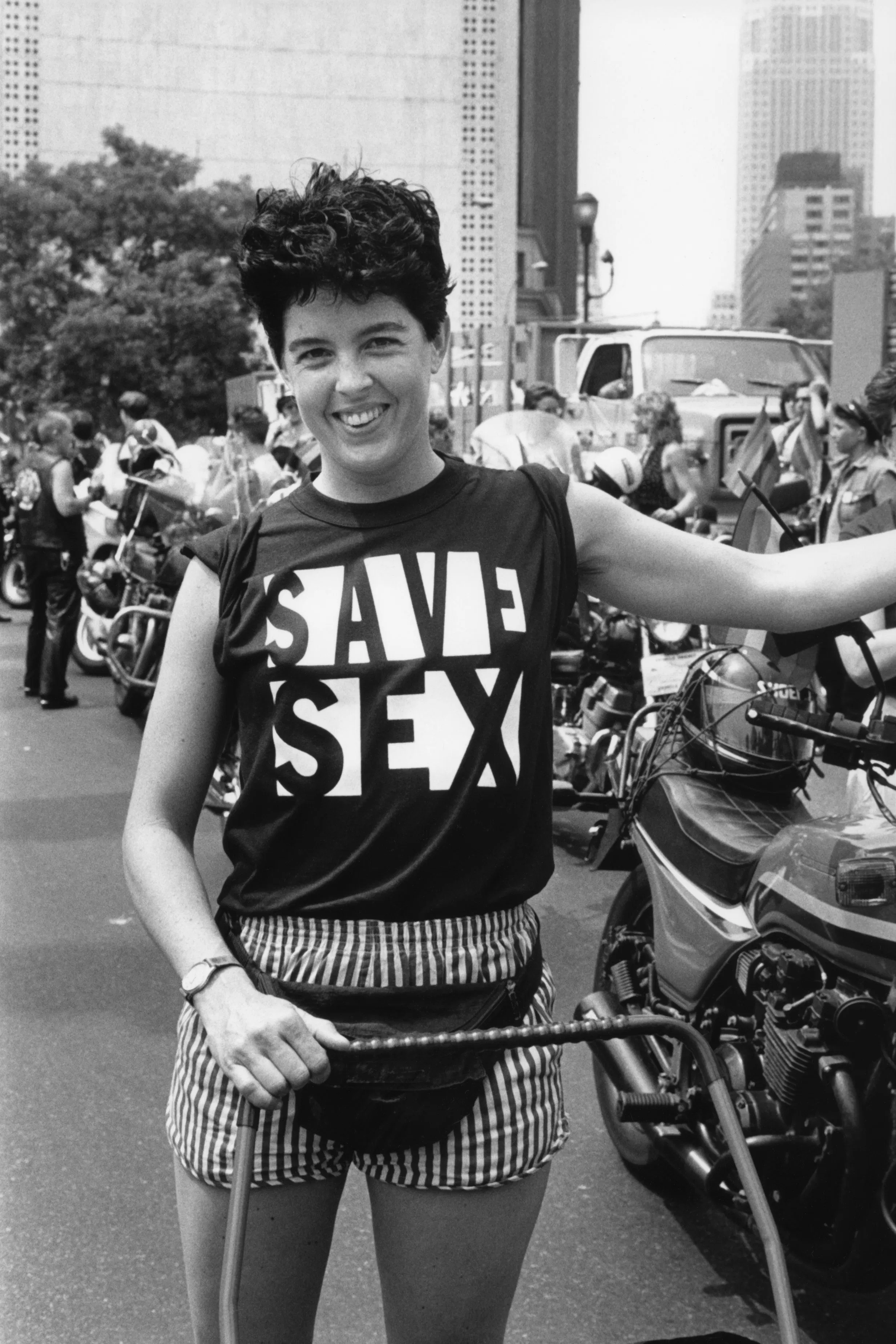
Fred McDarrah (1926–2007), photographer. Untitled (Quinn at the Annual Pride March), New York, 1989. Patricia D. Klingenstein Library, The New York Historical. Gift of the Goldman Sonnenfeldt Family
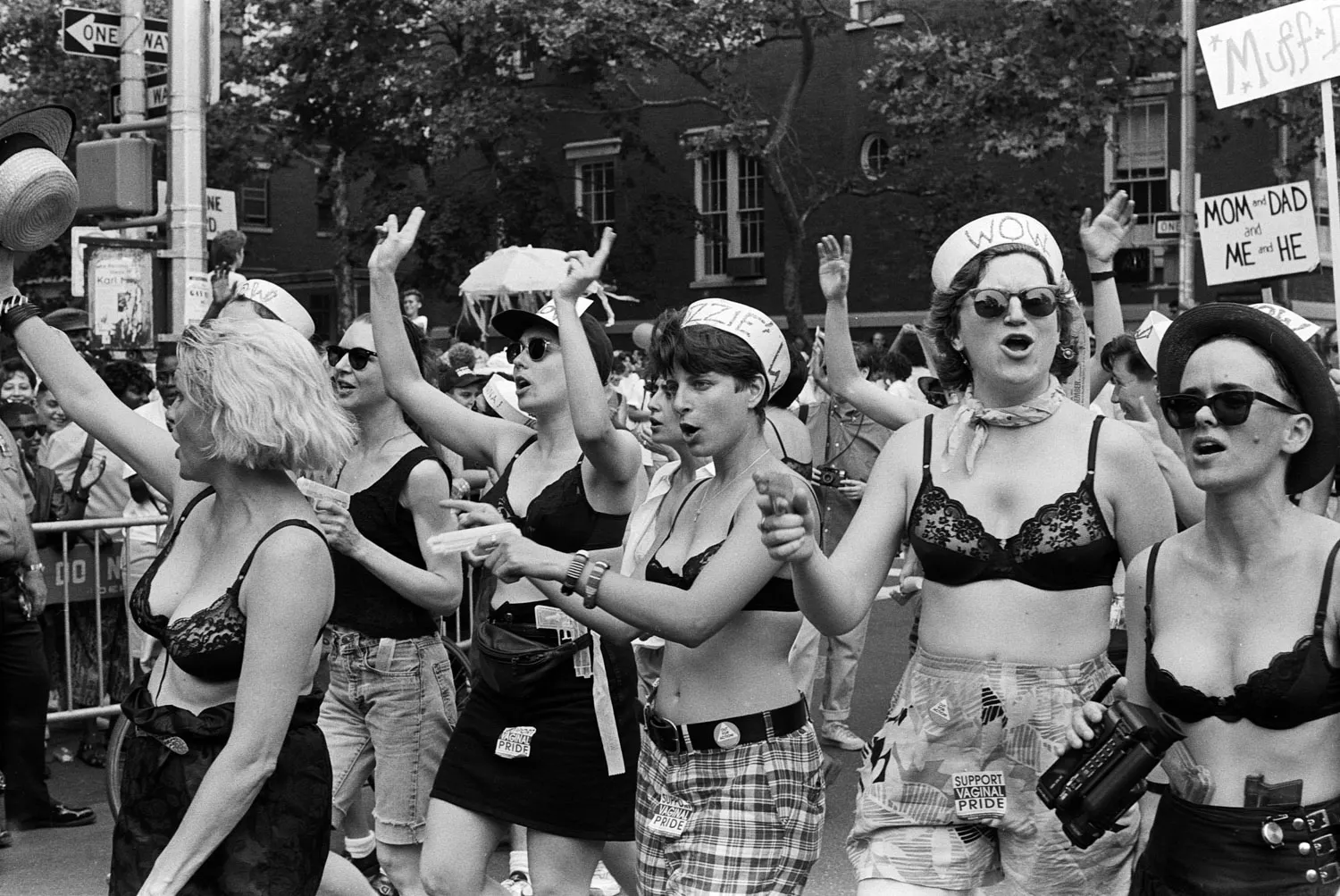
Fred McDarrah (1926–2007), photographer. Untitled (WOW Café Theatre at the Annual Pride March), New York, 1991. Patricia D. Klingenstein Library, The New York Historical. Gift of the Goldman Sonnenfeldt Family
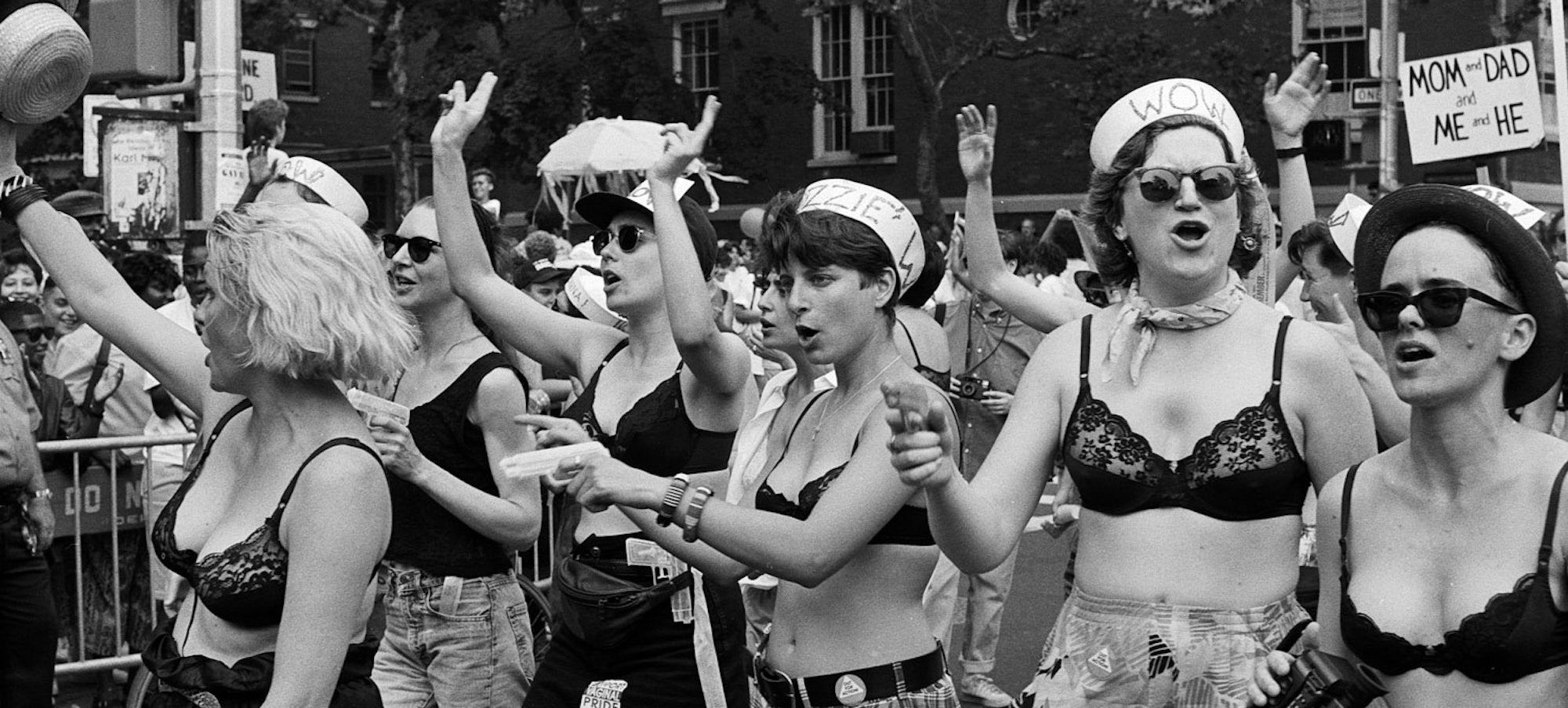
"Village Voice" photographer Fred McDarrah captured the "wayward girls" of WOW Café participating in several annual Pride Marches. In 1989, he photographed Sharon Quinn, a WOW performer who also marched with ACT UP. The contingent pictured in 1991 includes, from left to right, WOW co-founder Lois Weaver, stage manager Diana Binder, playwright Claire Olivia Moed, and performers Efat Aziz, Nancy Swartz, Babs Davy, Lisa Kron, and Betsy Crenshaw.
The perennial New York problem of paying rent prompted WOW's move to its current home on East Fourth Street in 1984. In 2005, a collaboration with other art organizations (including La MaMa) led the city to sell WOW its space for $1, as part of its first Cultural District. Though it seems remarkable—in this day and age? In this economy?—WOW still operates as a collective run by consensus, open to women, non-binary, transfeminine, transmasculine, and gender non-conforming people.
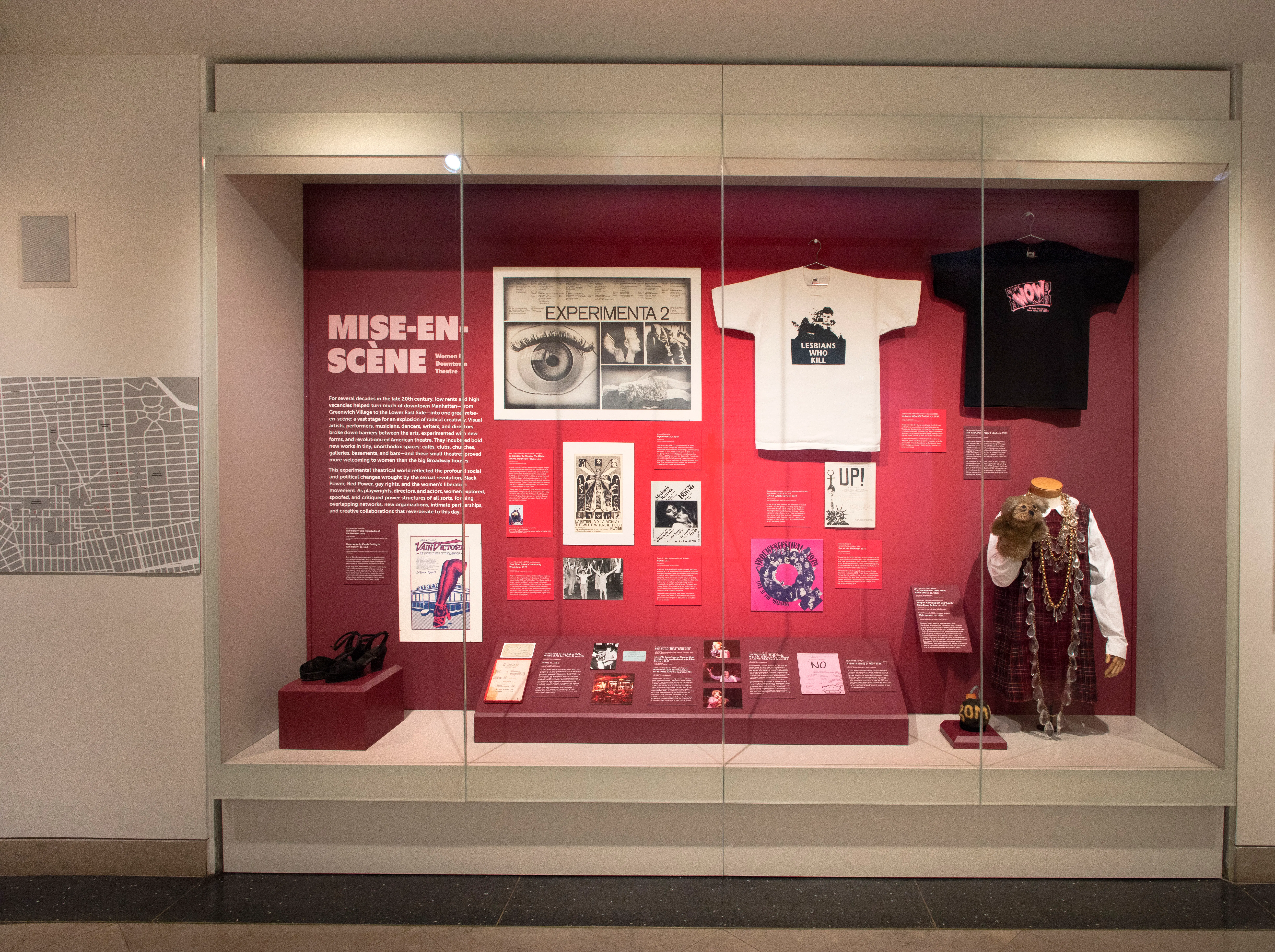
Photo by Glenn Castellano
You can see these objects, and many others, on display in our fourth floor installation, Women Making Theatre in New York City, on view until October 30, 2026.
Written by Jeanne Gutierrez, Manager of Scholarly Initiatives, Jean Margo Reid Center for Women’s History
Keep Reading
- Women at the CenterAugust 3, 2026
A Revolutionary Chocolate Maker: The Business Records of Rebecca Gomez
How did Rebecca Gomez, a Jewish widow and businesswoman, help finance the first home of the New York Stock Exchange? - Women at the CenterJuly 27, 2026
Star-Crossed Lovers of the Revolution: The Letters of Eliza Shipton and Aquila Giles
Was it possible to fall in love across ideological lines during the Revolutionary War? - Women at the CenterJuly 20, 2026
The Things She Carried: Discussing the Power of Purses with Author Kathleen B. Casey
Historian and author Kathleen B. Casey discusses purses as adaptable toolkits that lead multidimensional lives of their own. - Women at the CenterJune 22, 2026
From "Lady Romeo" to the Five Lesbian Brothers: Queer Women in NYC Theatre History, Part 1
The Center for Women's History is taking a look back over the history of LGBTQ+ women in New York City theatre—which is a longer lineage than you might imagine. Part 1 of this series examines the careers of two stars who appeared onstage in the 1800s.