“Whether American women love or hate their bags (and there is ample evidence of both sentiments and everything in between), they are not simply inert receptacles," writes Kathleen B. Casey, author of the recent book The Things She Carried: A Cultural History of the Purse in America. "Instead, they are items of apparel—adaptable toolkits—that lead multidimensional lives of their own.”

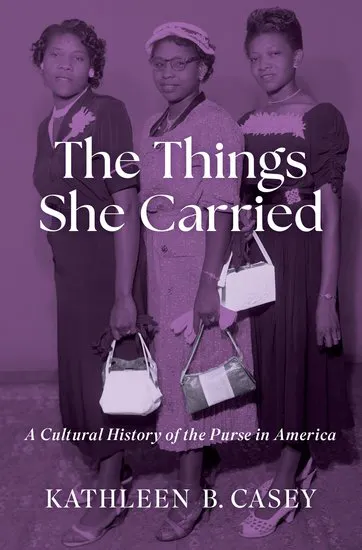
First photo: Kathleen B. Casey (photo by Terri Bright); second: Courtesy Oxford University Press
Using an approach that combines museum collections and paper-based archives, Dr. Casey, the director of the Women’s, Gender, and Sexuality Studies program and professor of history at South Carolina's Furman University, considers how purses, handbags, pocketbooks, and their ilk relate to race, class, labor, gender presentation, and more. Her work tracks the ways in which different people have used purses to control their public presentation, their privacy, and their safety—even as others have attempted to surveil and police the purse as a means of exerting power. From enslaved women who concealed sacks under their skirts to create small but powerful private spaces away from the prying eyes of slaveholders, to the activists who deployed purses as political tools during the Civil Rights movement and the drag queens, trans women, and gender nonconforming people who used their purses to defend themselves during the Compton's Cafeteria uprising in 1966 and the Stonewall uprising in 1969, Dr. Casey's investigation makes it clear that purses fulfill both physical and emotional needs for the people who carry them.
Dr. Casey was kind enough to respond to our questions about her archival research, what she discovered while writing the book, and the symbolism of the purse.
Given that your book has a material object as the focus, how did you balance your research between print archives and museums? How did you tie all the different sources that you used—from portraits to advertisements to photojournalism—together?
This was one of the great challenges (and rewards) of writing this book. First, I had to learn to find purses at museums that were not known for their purse collections. I went to museums and libraries that had disconnected and somewhat random purses, like the New York State Museum in Albany and your very own New York Historical. But I also went all the way to the (now closed) Tassen Museum of Bags in the Netherlands to work with bags too. Once I arrived, I began “reading” these purses as texts. I learned to take note of seemingly tiny details, like the materials, stitching, fastening mechanisms, feet of the purse, number of interior and exterior pockets, and the parts in which they were most worn. If I was lucky, sometimes these purses even had objects inside them, like a hairnet or a key or a rosary. I felt a bit like an archaeologist on those days.
But as a historian, I also needed to place these objects in their original critical contexts and I often used more traditional primary sources to do that. This required what one dress historian calls “twinning of texts,” a process in which you read material objects and contrast them with sources like illustrations, photographs, advertisements, and sales records. I also looked at diaries, memoirs, trial transcripts, sheet music, and novels that featured purses, so I was searching for objects, words, and images all at the same time. What I most enjoyed was conducting oral histories where I asked women about their purses. Women involved in protesting during the long civil rights movement told me about the purses they carried to sit-ins and what they placed inside them to help prepare for prison sentences. I even wrote about bags I have personally carried. In the end, I put a fresh lens on key episodes in American history by synthesizing a variety of sources to make the purse a central character.
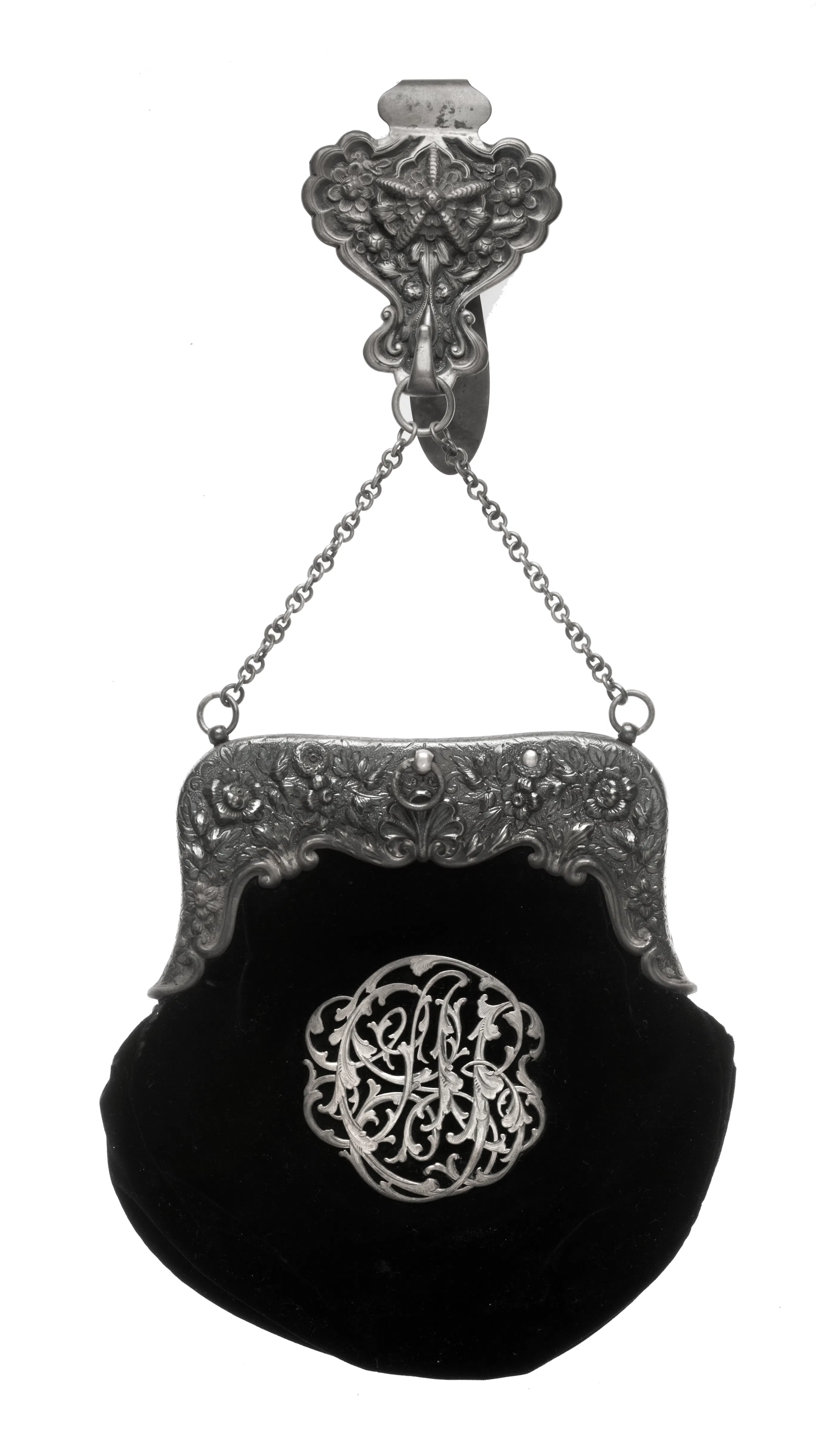
Tiffany & Co. (founded 1837), maker. Chatelaine purse owned by Cornelia Augusta Beekman 1849–1917), 1870–1900. New York. Velvet, silver, leather. The New York Historical, Permanent loan from the Beekman Family Association, 1950.102ab.
Ornamented reticules such as this were an expected part of elite women's dress in the 19th century, but privacy was a privilege that not every woman could access.
A key theme throughout your book is the connection between privacy and power, which is largely (though not entirely) determined by race, class, and gender. How did you settle on using the purse as a means of exploring this link?
As a social and cultural historian interested in how power plays out through gender, race and sexuality, I have always been interested in these themes. But the specific argument for the book actually came to me midway through the process. I wrote two sample chapters about how immigrant women factory workers used their purses in the 1910s and how Black women in the civil rights movement used purses to arm themselves and desegregate space. I realized that purses played unexpectedly important and hidden roles for both groups of women. However, it wasn’t until I began writing more chapters about other people and periods that I started to realize what purses enabled people—especially marginalized people—to feel, do, and have access to things that they otherwise couldn’t.
Although you've found many examples of purses being used as instruments of power, you've also found plenty of counter-examples showing how that power was contested, as when employers (tragically including the owners of the Triangle Shirtwaist Factory) claimed the power to examine the contents of their employees' purses. Can you talk a little more about the push-and-pull power dynamic that surrounded purses, and how it has changed over the years?
As a historian and feminist, I’m often thinking about ways in which women resisted and subverted oppression across the 19th and 20th centuries. And yet I couldn’t ignore the ways in which purses could also make women, racial minorities, and LGBTQ people vulnerable to surveillance, harassment, and even violence. You can’t have an object as powerful and disruptive as the purse was without simultaneously considering how it could be used as a tool of oppression as well. Unfortunately, the pendulum swung both ways.
Purses are so adaptable and dynamic that they don’t do just one thing or function the same way for all people across generations. But during periods when women did not even legally own their bodies or their wages, purses were often the one sovereign space that they could count on controlling. They help women carry and keep close items which reveal their innermost secrets and insecurities, yet they could also be snatched away, misplaced, or invaded at a moment’s notice. I think purses are generally less powerful political tools today than they have been in the past, when other rights were so restricted, but it’s important to recognize that both possibilities exist across time and space.
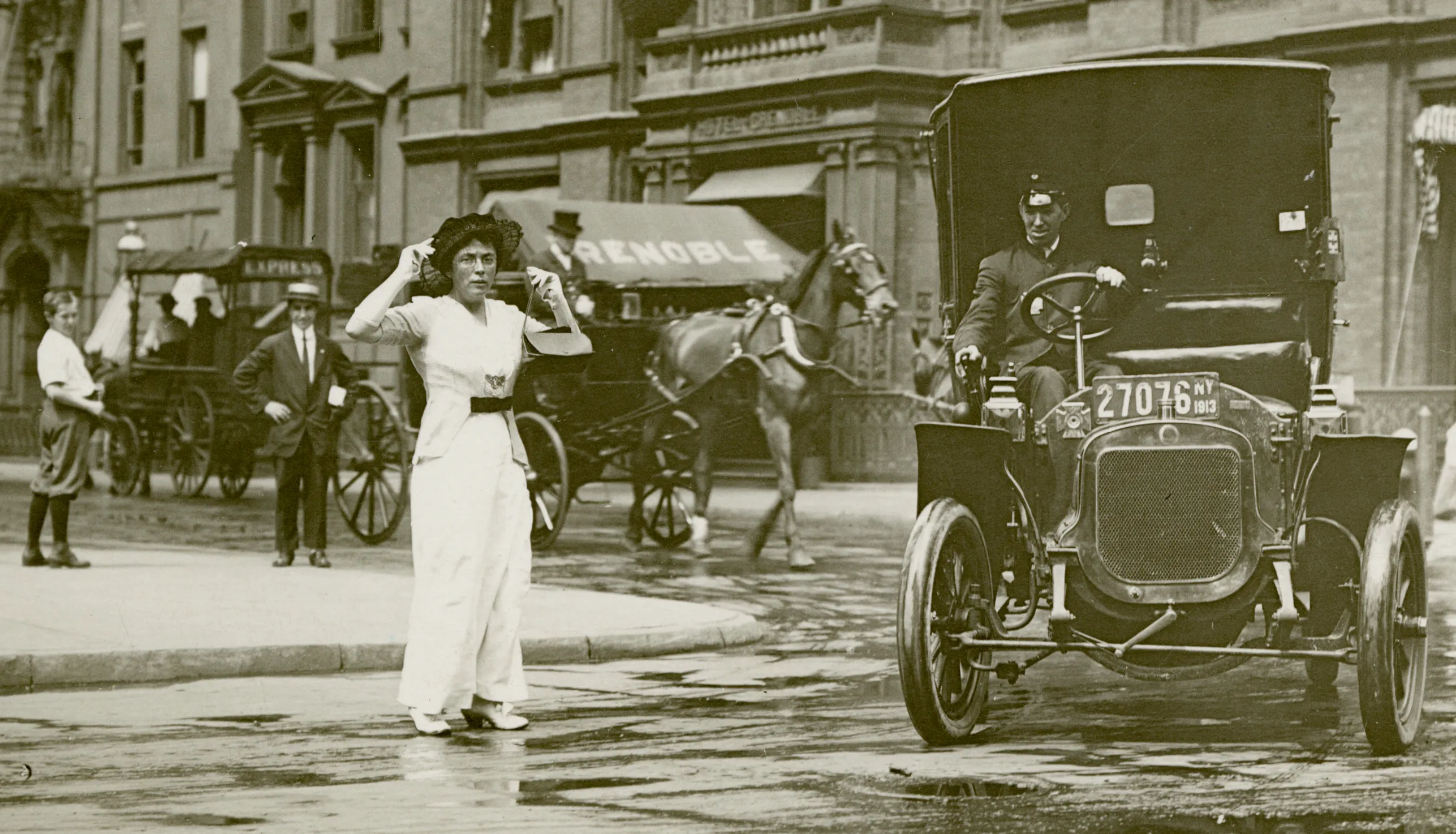
Jessie Tarbox Beals (1870–1942), photographer. Beals at work, ca. 1910. Patricia D. Klingenstein Library, The New York Historical.
Beals, one of the first women photojournalists, was a tireless entrepreneur and self-promoter. She took many photographs of women at work—including several portraits of herself with her camera equipment—alongside doctors, advertisers, perfumers, columnists, and a judge. In doing so, she helped create a visual language of female professionalism.
Your book demonstrates that, over time, purses became proxies for women's bodies, an association that strengthened over the 1920s and was fully in place by the 1930s. Could you talk a little more about why that happened? What else was going on in American women's lives at the time that facilitated this process?
I think the 1920s and 1930s were particularly interesting and dynamic decades in American history. World War I had just ended and the influenza epidemic ushered in an obsession with cleanliness. For the first time, the majority of Americans live in an urban setting and magazines and newspapers with national circulation rapidly grow. While white women had finally earned the right to vote, the Great Depression required everyone to scrimp and save, and gender norms often constrict in times of economic crisis. Women also had to be extra careful about trying to prevent pregnancy, since they didn’t have enough money to feed the children they already had, so they’re carrying diaphragms and douches around in their purses. However, it’s also a time period in which women begin to face increasing pressure to wear perfectly applied make up, be perfumed, maintain a thin body through diet, and be able to manage the smells and sounds of their bodies while working outside the home. It’s when purse-sized personal products aimed at beauty and bodily maintenance hit the market hard. By 1925, such ads outpace advertising for every other type of product besides food. All of these dynamics help cement the link between women’s bags and bodies.
Purses also have symbolic value, and the women you write about were often very cognizant of that—particularly the women activists of the civil rights movement. Do you have a favorite story about how women used their purses to make public statements?
Absolutely! Although my book focuses primarily on ordinary women who are not famous, one of my favorite stories I discovered in this research was a story about Rosa Parks. Most people are familiar with the story of Parks’ famous arrest on December 1, 1955, for refusing to give up her bus seat to a white person in Montgomery, Alabama. But she had already confronted the same bus driver, James Blake, 12 years earlier in 1943. On that first occasion, she entered the bus in the front, paid her fare, and refused to disembark and reenter at the back of the bus as was custom for Black riders at the time. After paying her fare, Blake attempted to drag her off the bus, but she simultaneously “dropped” her purse into the white section. She bent down to grab her purse and shimmied into a seat reserved for white patrons. She then stared at Blake and told him he better not hit her and he didn’t. She quite literally used her purse to carve out a space in which she was not otherwise welcome. This is not something a Black man would have been able to do. When she boarded the bus and faced the same man in 1955, he wanted to avoid a confrontation. That time, he immediately pulled the bus over and called the police.
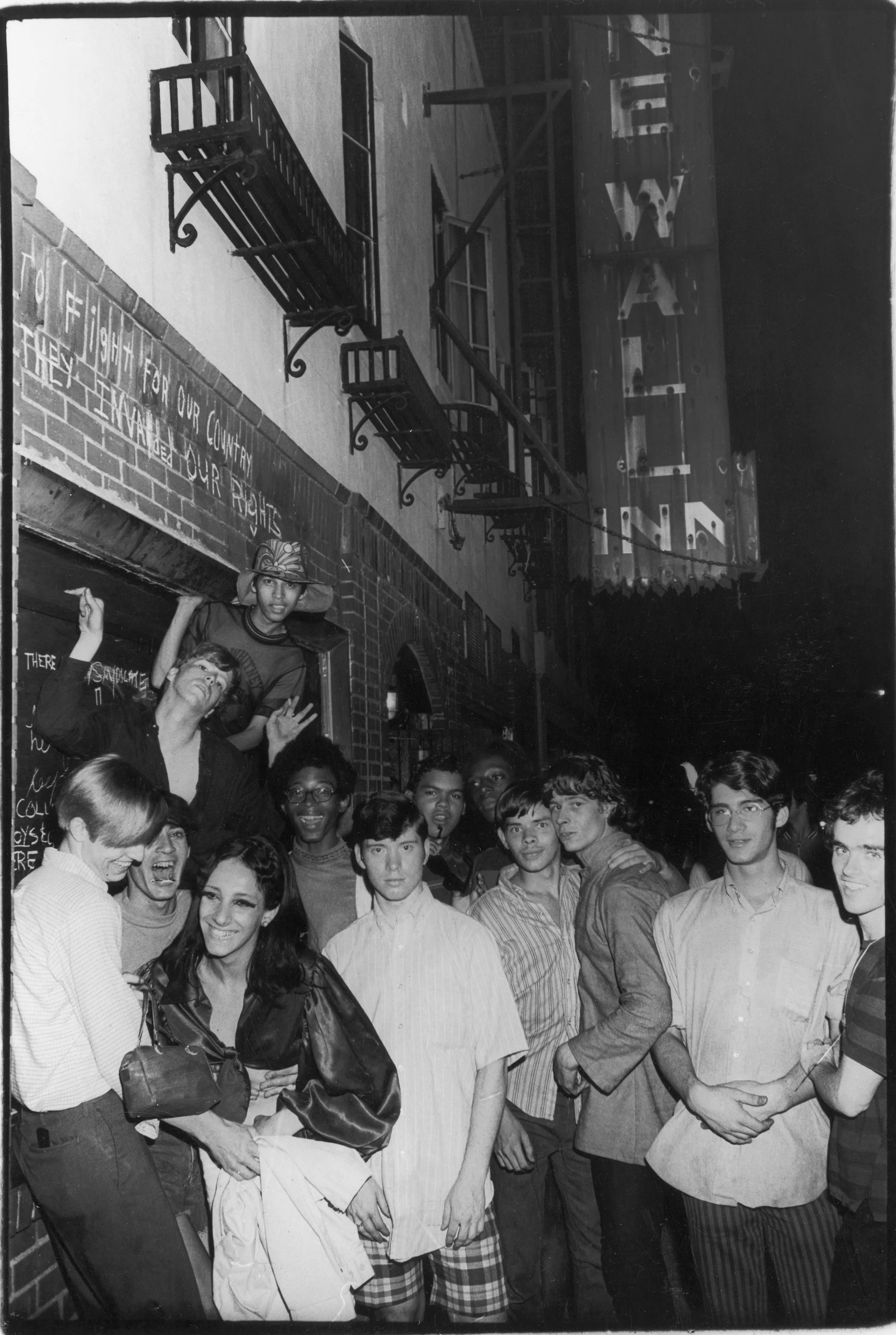
Fred McDarrah (1926–2007), photographer. Untitled (Youths at Stonewall Uprising), New York, New York, June 28, 1969. Patricia D. Klingenstein Library, The New York Historical, Gift of the Goldman Sonnenfeldt Family.
McDarrah's images from the Stonewall uprising capture the central role played by young "street queens," some of whom carried purses like the one that can be seen at the lower left.
Finally, I'd like to ask a question about the relationship between handbags, gender, and sexuality, which seems to be evolving rapidly. As you discuss in your chapter on queer communities, in the latter half of the 20th century the presence or absence of a purse was considered indicative of one's sexuality as well as one's gender, citing two cases in 1978 wherein a man carrying a purse and a group of women not carrying purses were denied entry to the United States on the grounds of "sexual deviance." Yet in 2017, Grammy-winning musician and designer Pharrell Williams became the first man to front a Chanel handbag campaign, and now, it seems, an increasing number of ascendant male stars carry them. What do you think it means that luxury handbags are now a flex for men?
This is such a timely question. People who don’t adhere to conventional gendered dress norms can too easily become victims of harassment and even violence in America. In the last chapter of the book, I talk about Willie Houston, who was essentially murdered for holding his fiancée’s purse while standing next to his friend in a Nashville men’s restroom in 2001. But you’re right that this is happening more lately, though I think only certain men of privilege can get away with this. Australian actor Jacob Elordi has gotten a lot of attention for his handbag collection. More recently, soccer star Erling Haaland has made headlines for his designer bag collection, which apparently includes $500,000 worth of rare luxury bags. But it’s worth noting that Haaland is Norwegian, not American, and the idea that bags are feminized objects that indicate your sexuality is largely an American one. I think it’s more permissible, even trendy, for European men to carry handbags than American men. Haaland’s towering stature at 6 foot 5 inches tall and prowess as a world class athlete certainly doesn’t hurt either. (Interestingly, Elordi is also 6’5). Even in the age of the manosphere, these men can afford to make this flex with little damage to their masculinity because they are hypermasculine in other ways.
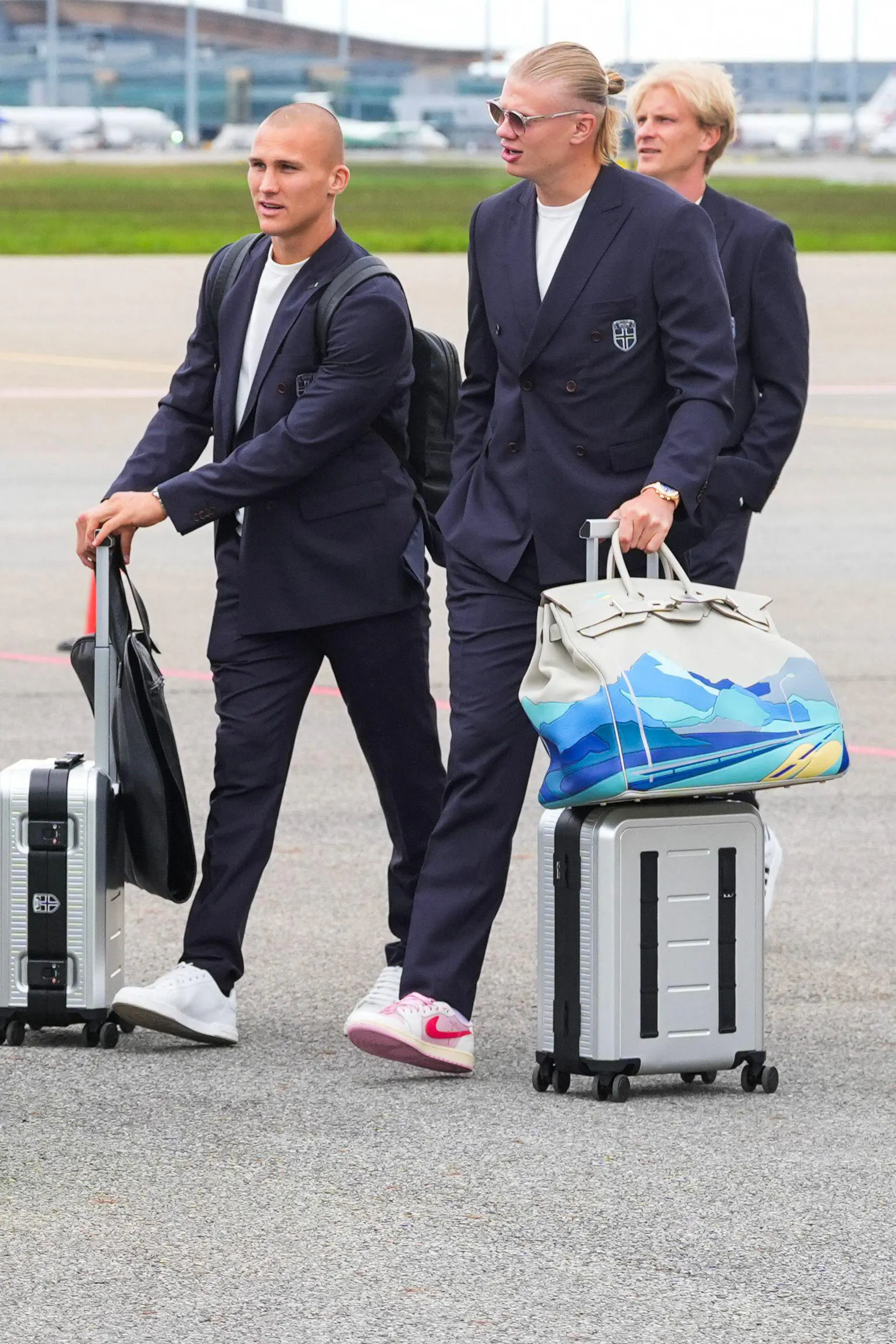
Erling Haaland and the Norwegian football team traveling to the World Cup, June 2, 2026. (Alamy)
Haaland is pictured here with a Hermès Endless Road Haut à Courroies 50, a limited-edition piece that regularly sells for above $50,000.
Written by Jeanne Gutierrez, Manager of Scholarly Initiatives, and Tessa Bangs, Mellon Foundation Postdoctoral Fellow in Women's History and Public History at the Jean Margo Reid Center for Women’s History
Keep Reading
- Women at the CenterSeptember 1, 2026
The 11th Annual Diane and Adam E. Max Conference on Women's History
The 11th Annual Diane and Adam E. Max Conference on Women's History used the semiquincentennial of the signing of the Declaration of Independence to explore the legacy of the Revolution today. - Women at the CenterAugust 31, 2026
The 1876 Women’s Exhibition
What role did women play in commemorating the 100th anniversary of American Independence? - Women at the CenterAugust 3, 2026
A Revolutionary Chocolate Maker: The Business Records of Rebecca Gomez
How did Rebecca Gomez, a Jewish widow and businesswoman, help finance the first home of the New York Stock Exchange? - Women at the CenterJuly 27, 2026
Star-Crossed Lovers of the Revolution: The Letters of Eliza Shipton and Aquila Giles
Was it possible to fall in love across ideological lines during the Revolutionary War?