You asked, and our curators answered! For #AskaMuseumDay last month, we gathered the questions our social media followers just had to know the answers to.
From decisions on what to exhibit in our galleries to advice for aspiring curators, the team at The New York Historical had plenty to share:
@johniten: What does a typical day as a curator look like?
Anne Lessy, Assistant Curator of History Exhibitions and Academic Engagement
One thing I love about being a curator is that every day is different. Part of being a curator at The New York Historical is presenting and interpreting research and scholarship on U.S. history. Some mornings I may conduct research in the archives, at our Patricia D. Klingenstein Library or another archive, such as the Schomburg Center or the Tamiment Library, looking at documents like Paul Robeson’s Freedom newspapers. I try to keep up with recent scholarly works; right now, I’m reading Born in Flames: The Business of Arson and the Remaking of the American City by Bench Ansfield and Menace to Empire: Anticolonial Solidarities and the Transpacific Origins of the US Security State by Moon-Ho Jung.
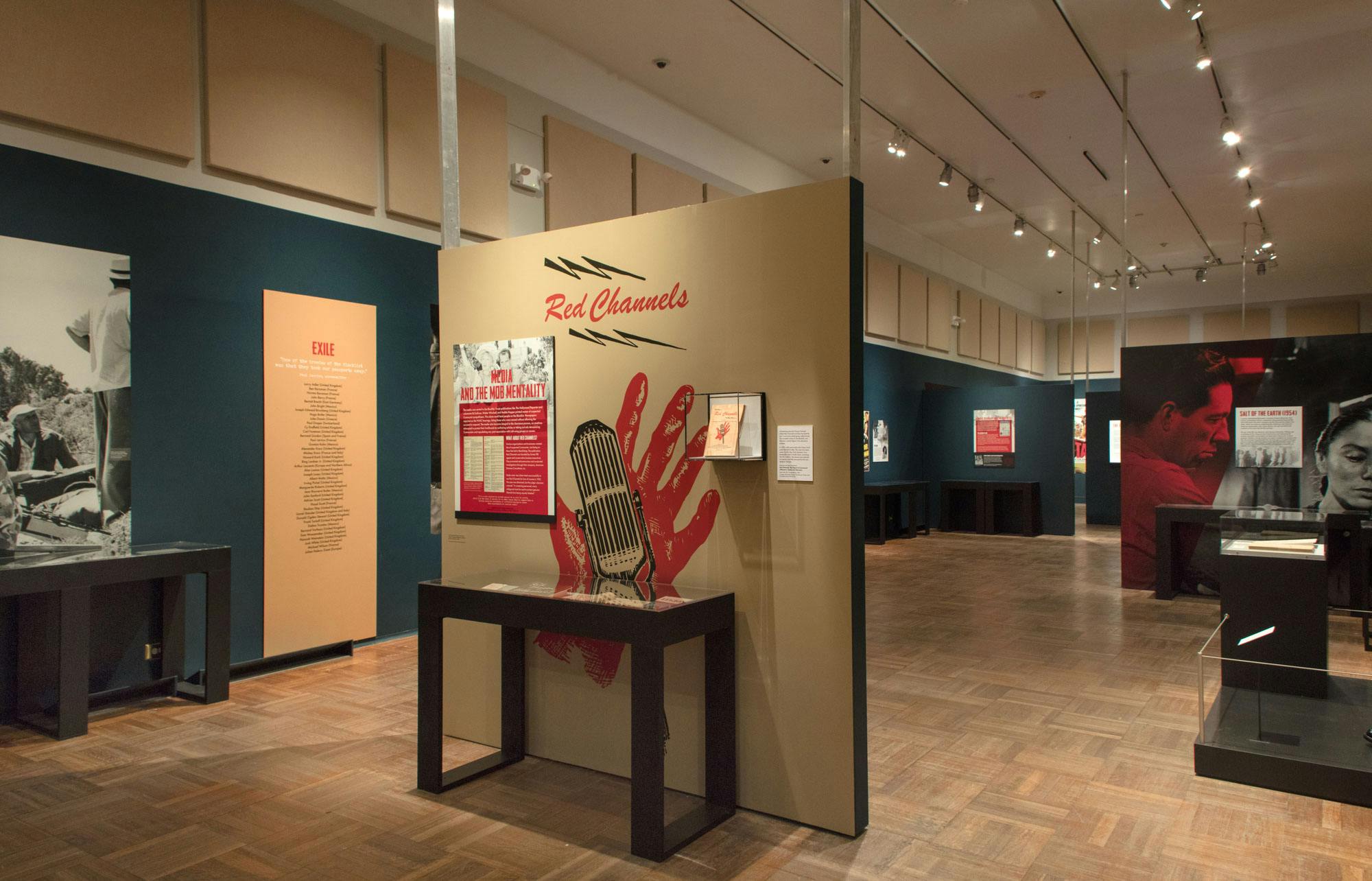
Inside the exhibition Blacklisted: An American Story
Another key part of my job is envisioning, producing, and promoting our exhibitions in different ways. On a given day, I may meet with my talented colleagues in Design about how an upcoming exhibition or installation will take shape in our galleries, from how objects will be sequenced, to wall text design or color scheme. I might speak with our conservators about how to safely display items from our collection, or record a social media video to highlight objects in a current show. In the evening, I may lead a special tour or introduce a film related to an exhibition I curated. Just recently, we screened Roman Holiday and The Postman Always Rings Twice, both of which are related to our exhibition Blacklisted: An American Story.
@historyunlockednikki: What is one of your favorite pieces in the collection?
Emily Pazar, Assistant Curator of Decorative Arts and Material Culture
One of my favorite objects in the collection is this Subway Controller (1922.103). It’s a wonderful combination of beauty, function, and history and is one of thousands of amazing works in our collection that speak to transit and infrastructure.
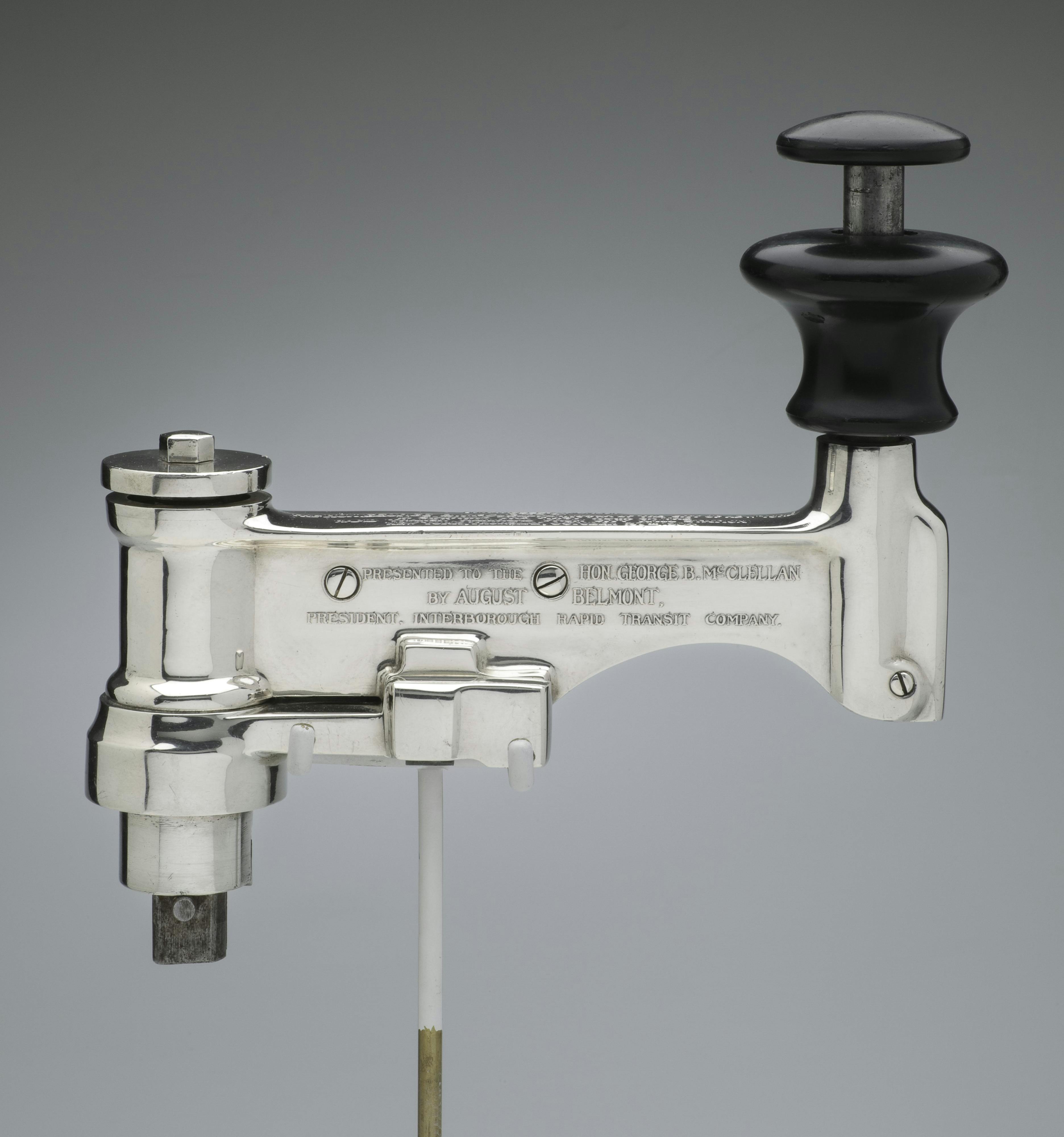
New York City mayor George B. McClellan used this sterling silver subway controller to start the city's first subway train on its maiden voyage on October 27, 1904.
It’s a utilitarian form, meant to control a train, but created for presentation and made with steel and luxury materials—silver and ebony. August Belmont, president of the Interborough Rapid Transit Company, commissioned this work from Tiffany & Co., which had to employ considerable technical expertise to produce a controller that could be fitted to function on a subway train.
Belmont presented the controller to Mayor George B. McClellan, Jr. on October 27, 1904 at the celebration of the opening of New York City’s first subway system. McClellan’s job that afternoon was to drive the inaugural train from City Hall to a stop at 42nd Street. However, after becoming enthralled with the speed of the trip, he blew past the stop and finally handed over control to a conductor at 103rd Street.
McClellan himself donated the piece to The New York Historical, along with several ceremonial trowels. It’s easy to imagine grasping this beautiful controller and rocketing uptown, impervious to the plan. It’s on view in Objects Tell Stories on the 4th floor. Make sure to check it out on your next visit!
@prestonpuglife: How do you decide on what to show?
Wendy Nālani E. Ikemoto, Vice President & Chief Curator
Many factors drive our display choices! Are there new acquisitions to feature or upcoming anniversaries to commemorate? For exhibitions, what objects tell the story?
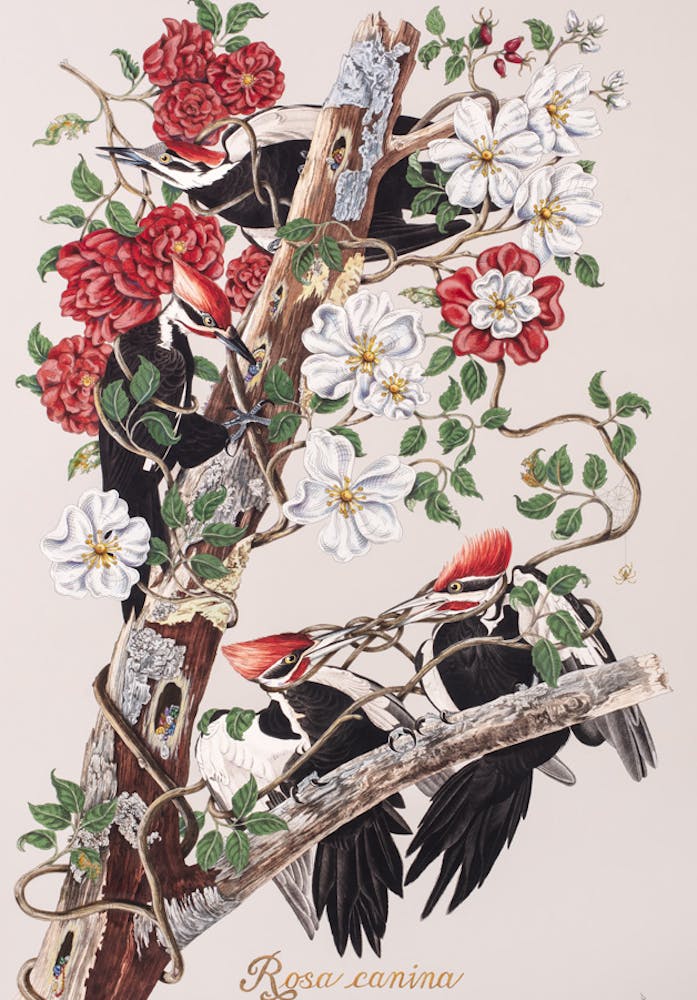
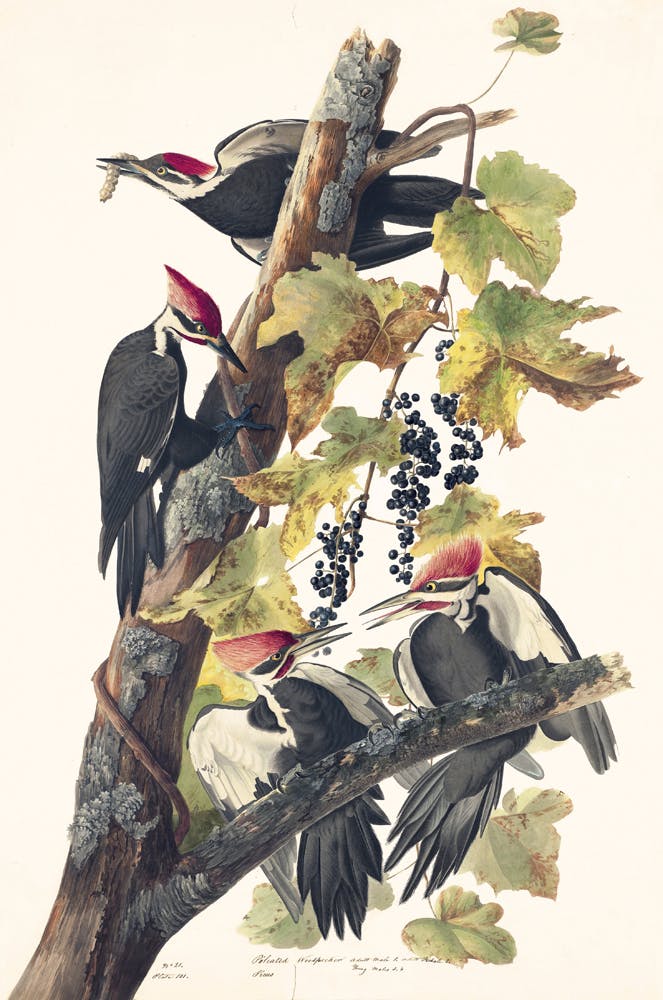
(First image) Penelope Gottlieb, Rosa canina, 2021. Purchased through the generosity of Nancy Newcomb and John Hargraves (2022.1); (Second image) John James Audubon, Pileated Woodpecker (Dryocopus pileatus), Study for Havell pl. 111, ca. 1824-1829. Purchased for the Society by public subscription from Mrs. John J. Audubon (1863.17.111)
Last year, we opened the Nancy Newcomb New Acquisitions Niche. The debut installation showcased Penelope Gottlieb’s Rosa canina, which invades John James Audubon’s 19th-century Pileated Woodpecker (also in our collections) with rosa canina, or dog rose, to call attention to the present-day ecological crisis. Anthony Cudahy’s Sunil and LJ Roberts’ Theodore (Ted) Kerr at the ACT UP 25th Anniversary Protest on Wall Street followed for Pride Month. Currently, the niche features James Harrington’s The Conductor. Next month, we will install a new painting by Randee Spruce (Seneca) of a Haudenousaunee Sing.
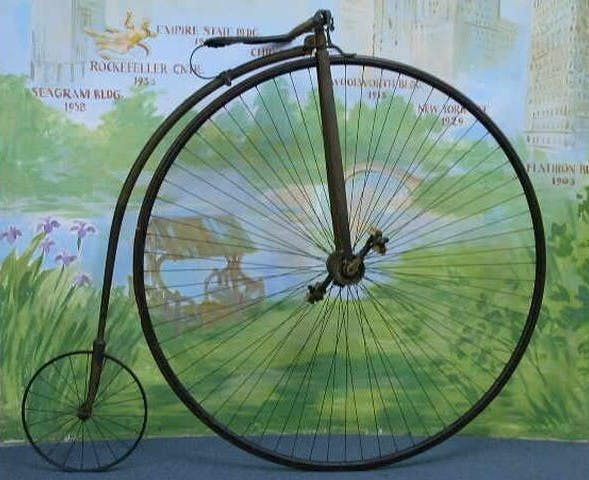
High wheel bicycle, 1883. Gift of Winslow Tracy Williams (1926.31ab)
When I curated Lost New York—an exhibition about the places and pastimes that once defined this city—I knew that I wanted to feature landmark “losses” like the old Penn Station alongside objects likely unfamiliar to visitors: a speedy 1883 high wheel bicycle comprised of one giant wheel followed by a small one, for example, and a toy model and prints of the bathing houses that used to dot the Hudson and East Rivers.
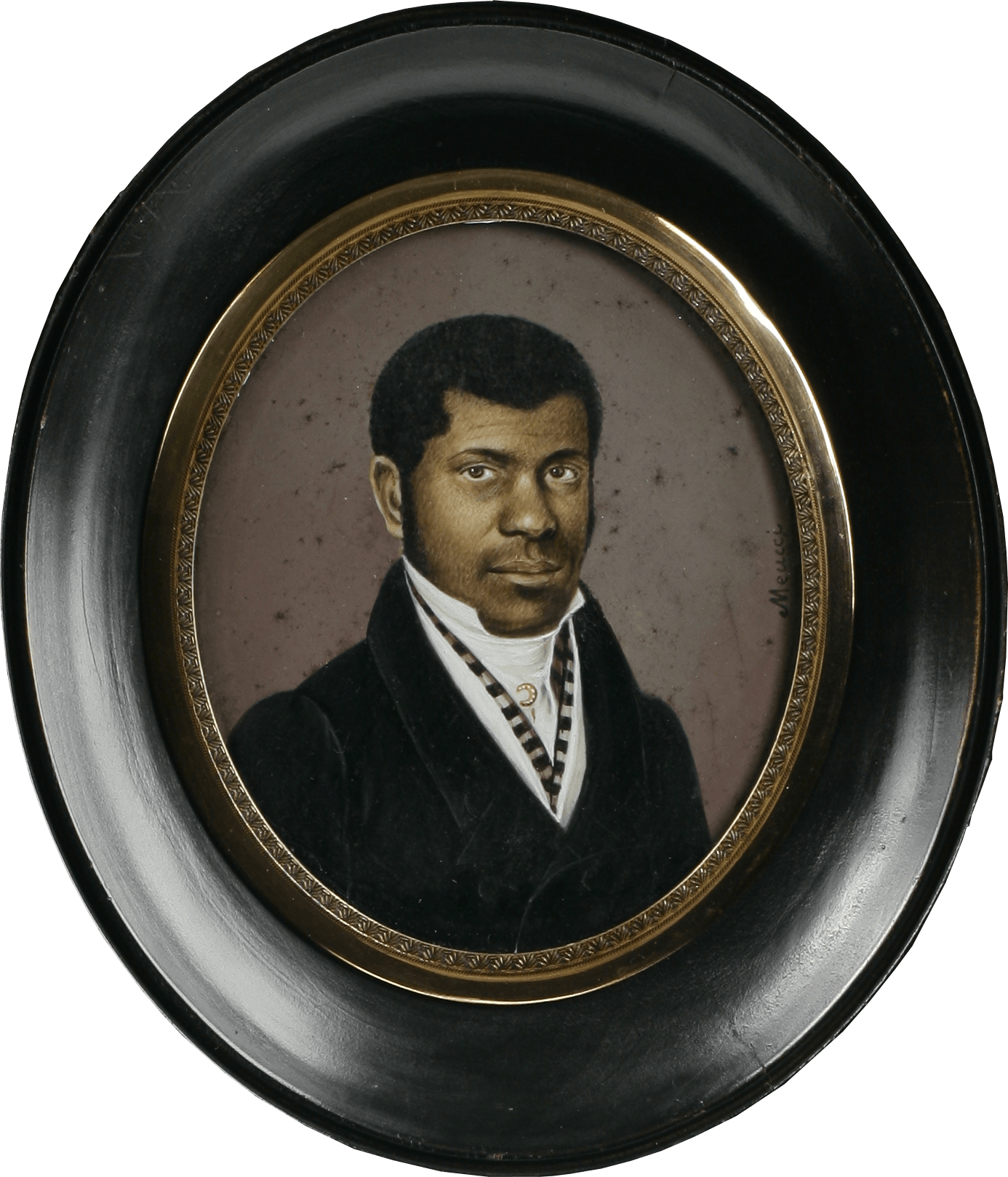
In Democracy Matters, opening for the nation’s semiquincentennial in 2026, we will feature works that show how the concept of democracy has stretched and contracted through key moments in US history. Examples include our New York printing of the Declaration of Independence and our Declaration of Dependence (a 1776 petition signed by 547 New York Loyalists); a print by Luiseño artist Fritz Scholder featuring a Native man holding US flag upside down to signal protest; and a rare painted portrait of Dred Scott, whose unsuccessful lawsuit for freedom led to the 1857 Supreme Court ruling declaring that no person of African ancestry could claim citizenship in the United States.
@abigail_prakarsa: What is your favorite time period to curate?
Allison Robinson, Associate Curator of History Exhibitions
I love my job and I’ve had the joy of curating shows about topics from the early 1800s all the way up to the present day. Every time, I learn something new, showcase objects with moving stories, and work with my incredibly talented colleagues to share these histories with the public.
My favorite time period to research and curate is the 20th century. The 1900s brought so many changes to American society. This period always captures my imagination in unexpected ways. The technological advancements, cultural achievements, political movements, and social gatherings across the country never fail to fascinate me.
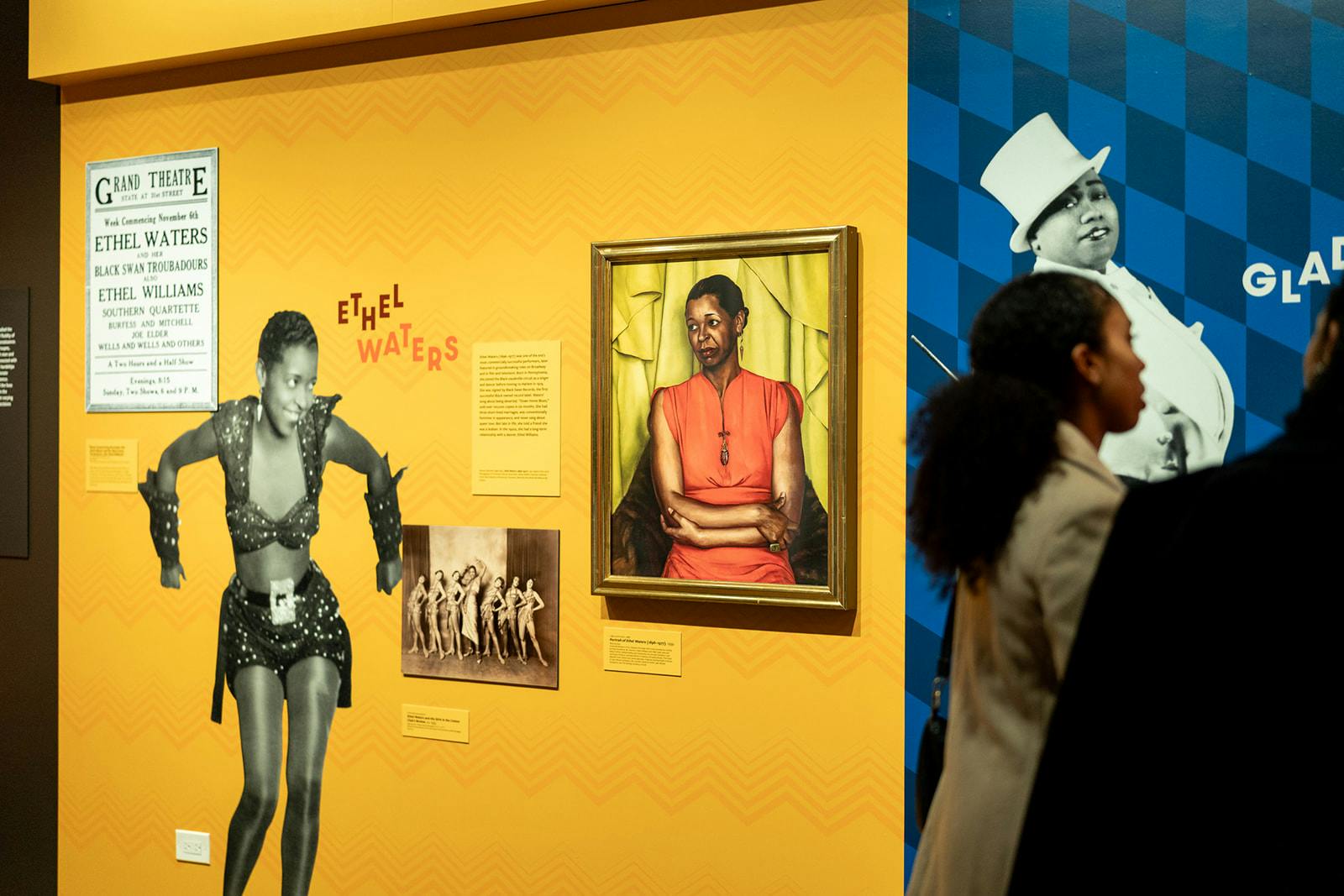
Inside The Gay Harlem Renaissance
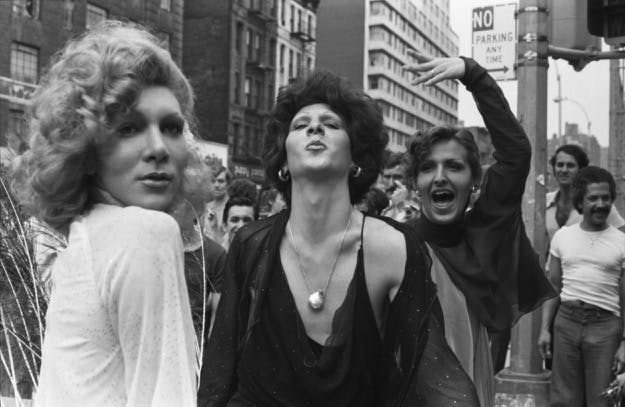
This means I’m thrilled that two exhibitions I am working on are both about the 20th century. The Gay Harlem Renaissance is currently on view through March 8, 2026. This exhibition invites guests to explore the richness of Black LGBTQ+ life in Harlem during the 1920s and 1930s. Many of the writers, artists, musicians, and drag performers who contributed works to the Harlem Renaissance were LGBTQ+ and they built lives in the neighborhood during this period. It has been such a joy to immerse myself in this subject for years.
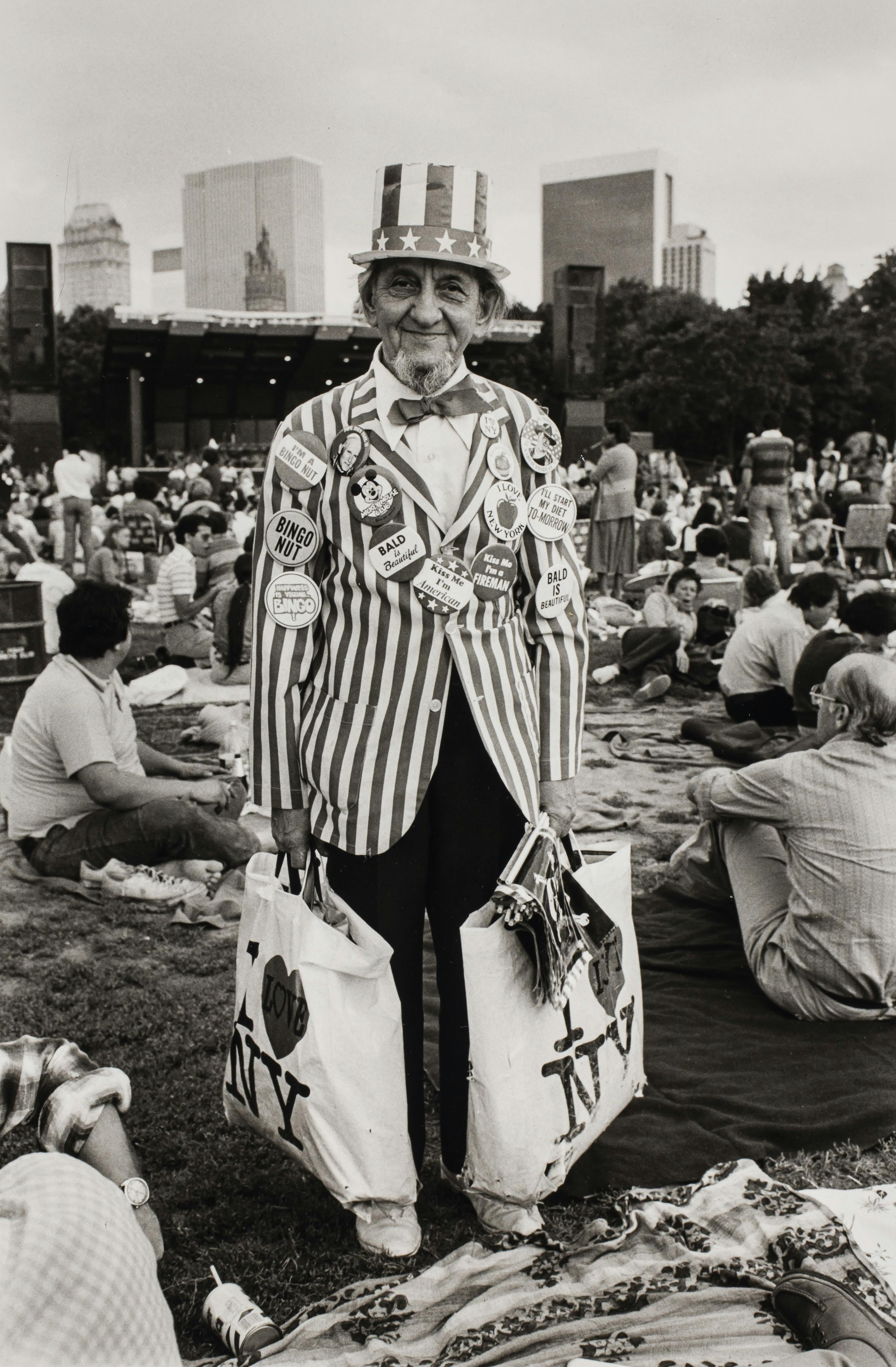
Kenneth Siegel (1949-1994), photographer, [Uncle Sam holding I heart NY tote bags], ca. 1977-1980. Gelatin silver print. Patricia D. Klingenstein Library, The New York Historical
In 2027, I will have a second show opening, about punk, disco, and hip hop in New York City during the time of the city’s bicentennial called You Should Be Dancing: New York, 1976. Stay tuned for that one—it opens in October 2027!
@priyahtalreja: What inspired The New York Sari?
Anna K. Danziger Halperin, PhD, Director, Center for Women's History
Salonee Bhaman, Mellon Foundation Postdoctoral Fellow in Women's History and Public History
The initial idea for an exhibition centering the sari was sparked by conversations among our president and CEO, Louise Mirrer, NYC Council Member Shekar Krishnan, and journalist S. Mitra Kalita about the importance of the South Asian community to New York City’s cultural fabric. Stories of grandmothers’ and mothers’ traditional attire emerged in their conversations, as they discussed how individuals who wear and create the draped length of cotton or silk have straddled tradition, culture, and modernity in their work, art, and lives.
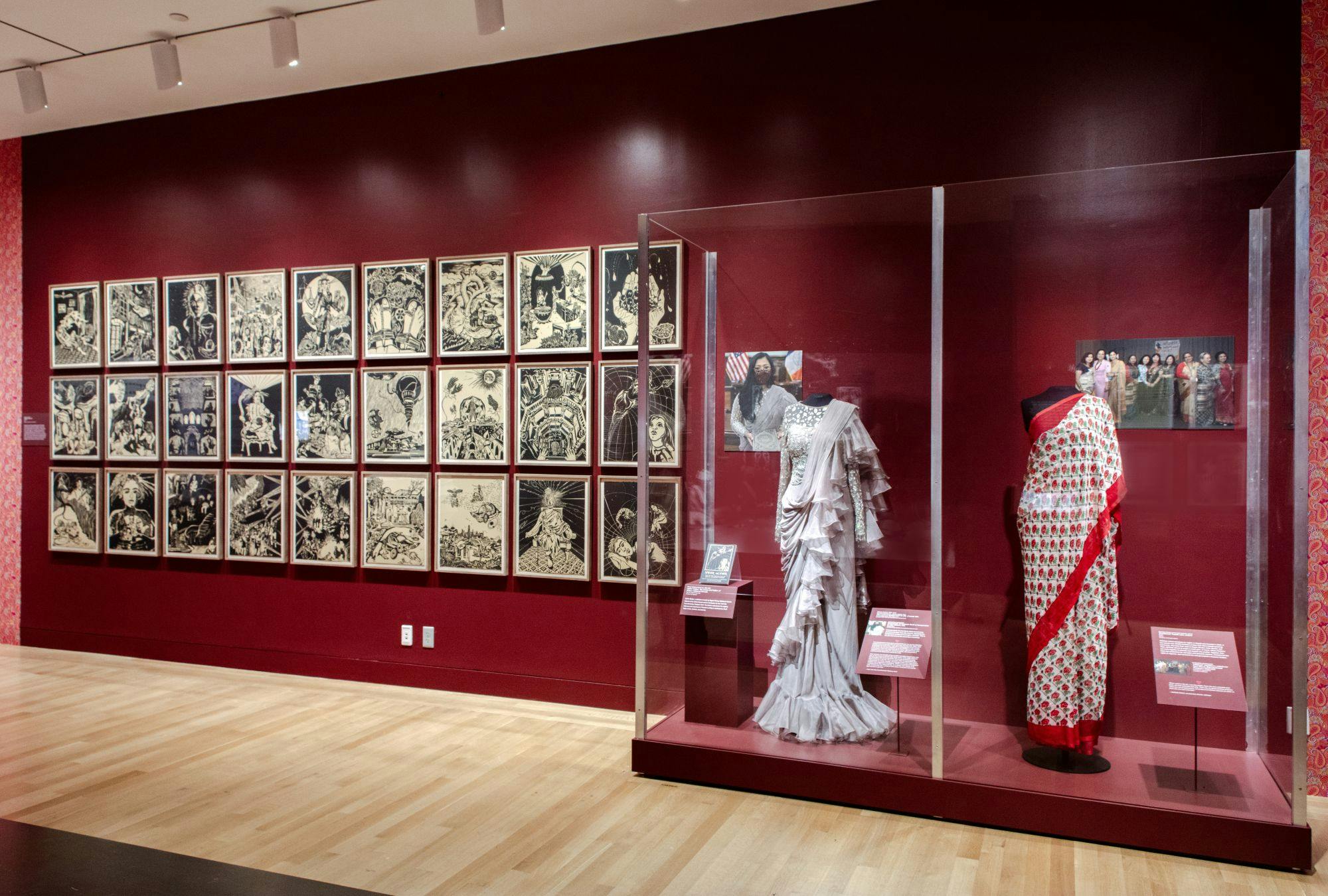
Inside the exhibition The New York Sari
At the Center for Women’s History, we’re always eager to dive into untold and lesser-known stories about women’s lives and legacies so we were excited for the opportunity to explore the sari as both a material object and a cultural symbol shaped by migration, gender, and personal expression. In our historical research, community outreach, oral history interviews, we asked: How did the sari come to New York? Who wears the sari in the city, what does it mean to those who wear it? And, how have those answers changed over time? The exhibition explores the multiplicity of stories that this beautiful garment can tell.
@natalie_christyn: What inspired you to pursue this work? Any advice for aspiring curators?
Rebecca Klassen, Curator of Material Culture and Decorative Arts
Foremost, I love objects and the multiple modes of engagement that they offer. They can be points of aesthetic contemplation, conduits for emotions, and aids to storytelling. They can help us understand individuals, cultures, and events of the past. We can use them as evidence in the history of technology and our relationship to materials, and we can "read" them to understand the techniques used to make them. Truly, the avenues are endless.
I was very fortunate as a young person to belong to a family that believed in museums as places of inspiration and learning. A steady diet of museums of all types—from art to natural history to science to history—instilled in me an awareness of museums as keepers and interpreters of the past that are engaged in vital conversations in the present. I was also lucky to have relatives who did things like historic reenactments and antique dealing. To them, curiosity and awe around old objects was as natural as breath itself.
Despite my persistent dream to work in the field, my path was very long, often unclear, and marked by periods of intense precarity. So, my advice for aspiring curators is: Don't give up.
Be guided by what moves your spirit. Read, look, listen. Do passion projects. Link into creative collaboratives producing work you admire. Not only can they be spaces for you to hone necessary skills like writing and project management, they can give you a sense of community and an awareness of your internal power.
Keep Reading
- Behind the ScenesSeptember 28, 2026
The Great American Novel Revisited
Americans have always looked to certain literary masterpieces for a sense of who we are. - Behind the ScenesJune 29, 2026
Our Birthday Wishes for America
What's your wish for America's future? - Behind the ScenesJune 27, 2025
GAY PRIDE in '75: Fred McDarrah's Photographs of the 1975 Pride March
To celebrate the arrival of the historic Fred W. McDarrah Archive at The New York Historical, we are excited to share some of the stories behind McDarrah’s iconic photos of the 1975 Pride March in honor of its fiftieth anniversary. - Behind the ScenesApril 16, 2025
The Mission of Abraham Lincoln