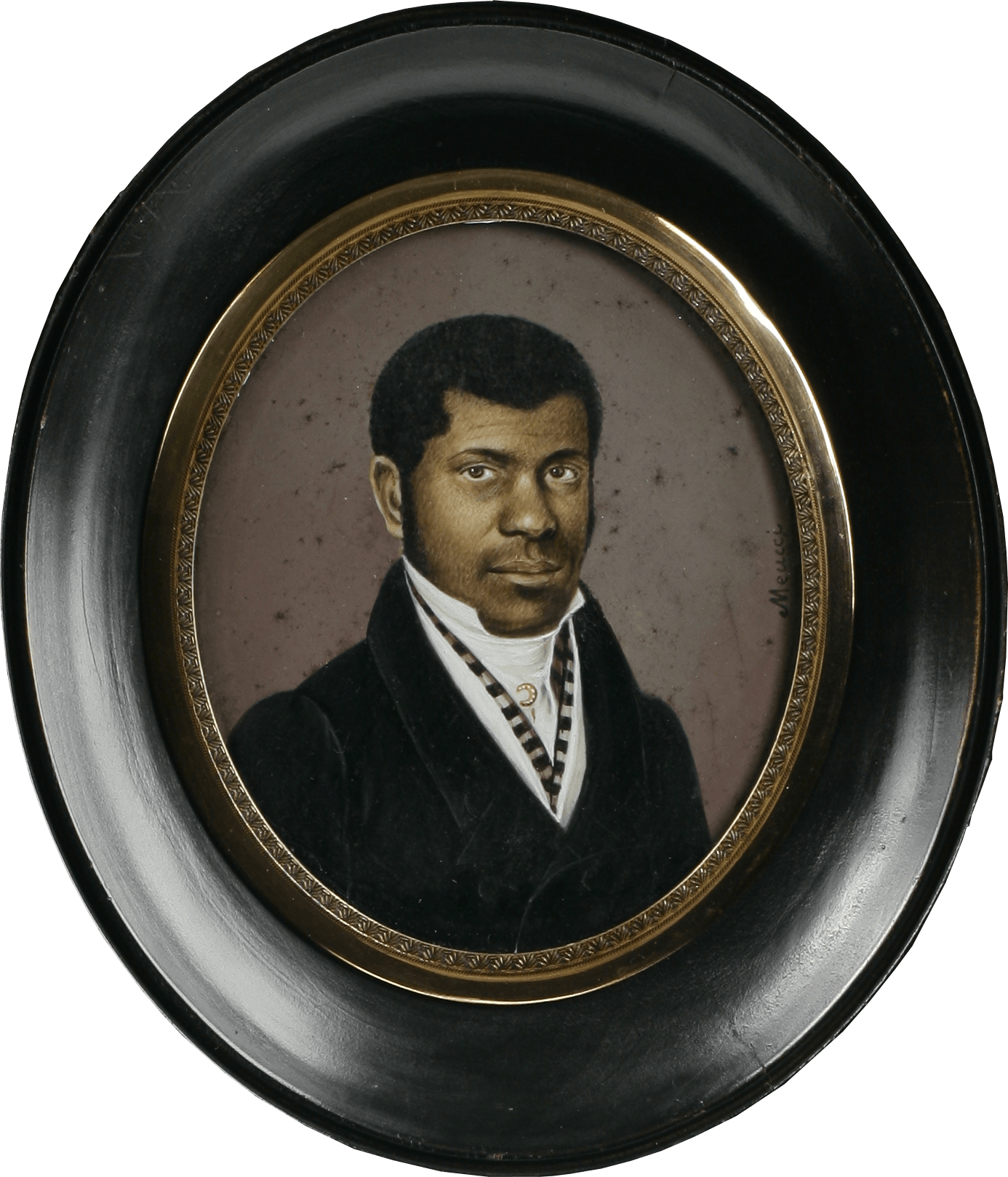
Ahead of the semiquincentennial, the Center for Women’s History is preparing to open our exhibit Revolutionary Women, which will trace the lives of women in Revolutionary New York. This series of blog posts focuses on the women whose contributions to the Revolution became something larger than life. How and why did their lives become myths, symbols, and legends? What do we lose by transforming them in this way, and how can we recover the lives behind the myths?
A story of a woman hanging a black petticoat on a line to signal spies to meet. A numeric code in a spy dictionary for “lady.” A letter between spies referencing a “355” who would help outwit the British. These are the sparse details that gave rise to centuries of debate. Was there a woman who was part of, or helped, General George Washington’s Culper Spy Ring during the Revolutionary War? If so, who was she, and what role did she really play?
While the myth of Molly Pitcher is complicated by an overabundance of potential real-life women who may have borne the name, the myth of the female Culper spy is complicated by the opposite: a dearth of information that has led many scholars to argue that the myths have no—or little—basis in reality. The identities of the Culper Spy Ring participants have been the subject of intense historical analysis, and legend and letters alike suggest that Anna Strong, a Long Island woman, may have been a member or collaborator of the ring. Her story will be featured in the Center for Women’s History’s Revolutionary Women exhibition, opening May 29.
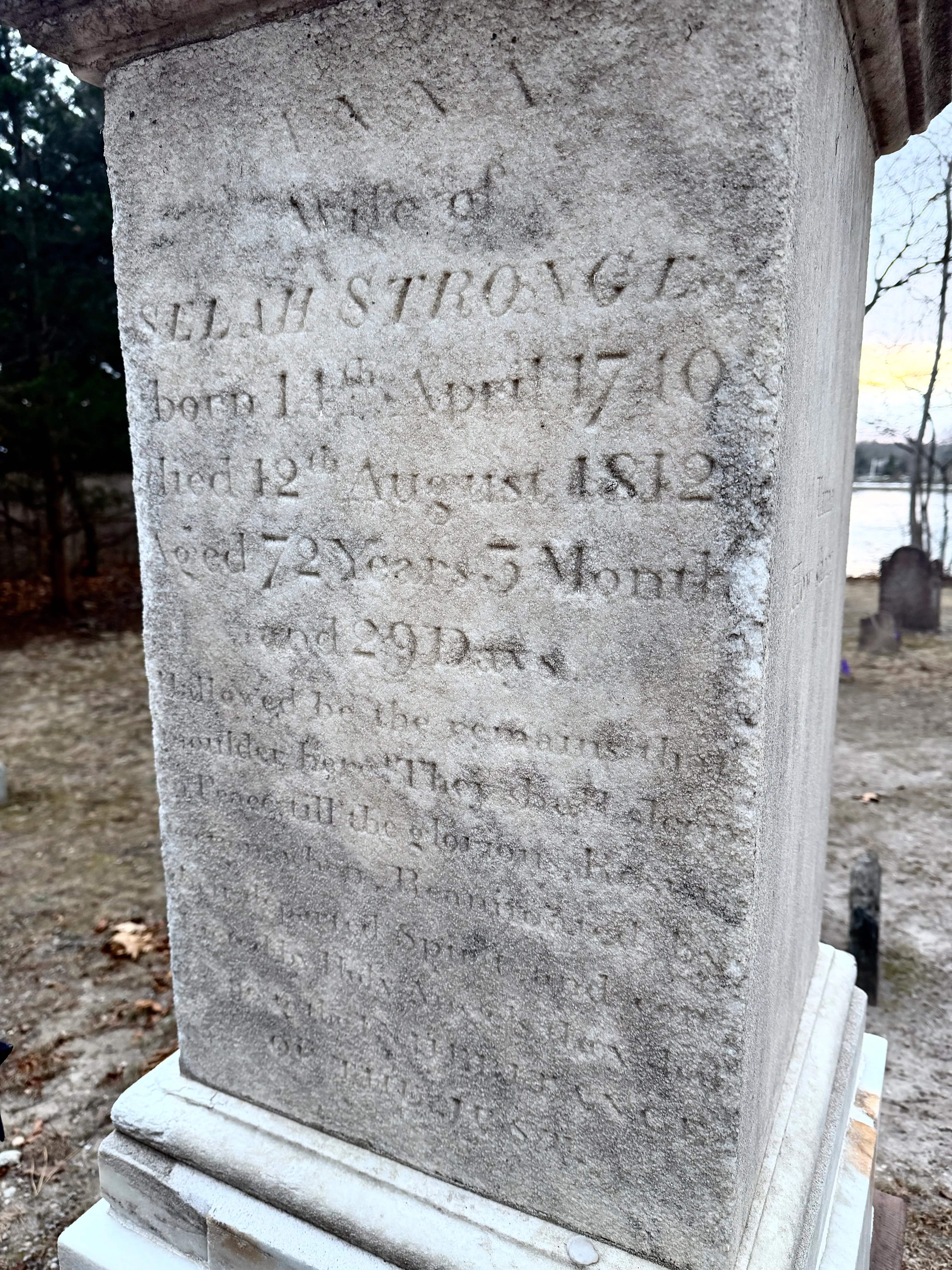
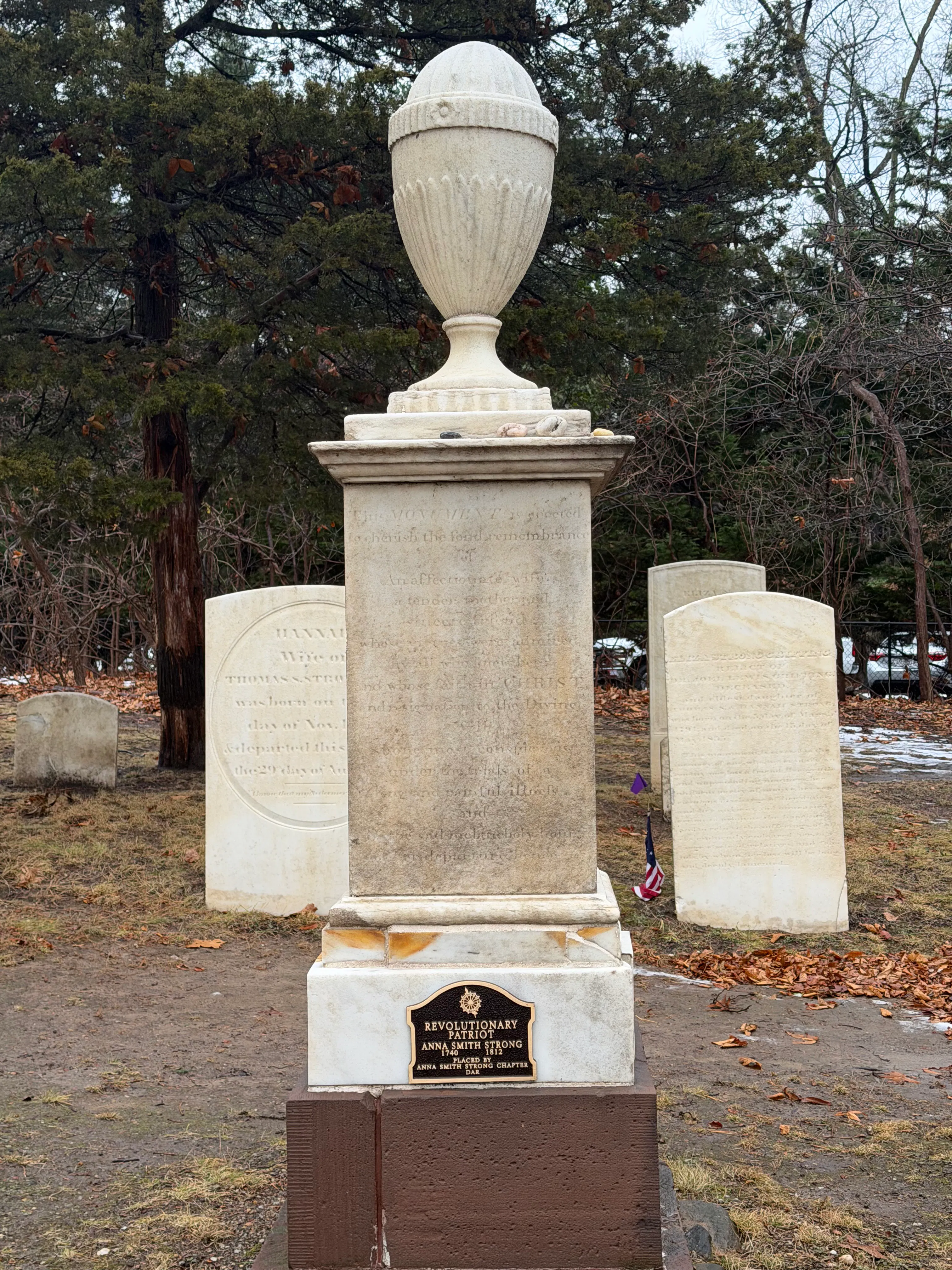
Gravestone of Anna Strong, St. George's Manor Cemetery, Setauket, New York. Photos by Jeanne Gutierrez
The Culper Spy Ring was formed after a series of early attempts to set up Patriot systems of intelligence, including Nathan Hale’s legendary missions and execution. General George Washington wanted to establish more permanent points of contact within British territory and so, after several iterations of spymasters and groups, formed the Culper Spy Ring. Its first members were Caleb Brewster, Benjamin Tallmadge, and Abraham Woodhull, all of whom had grown up in Setauket, New York, and knew each other before the war. As Culper historian Alexander Rose suggests in his book Washington’s Spies (Random House, 2006), the ring’s success was in part because they had this built-in trust. They continued to work only with those they knew personally.
The ring developed systems to get letters with information to Washington as quickly as possible. They brought more spies and collaborators into the fold who could serve as couriers and information-gatherers. So, too, they developed increasingly secure systems for encoding information. Famously, this included a spy dictionary of numeric codes that could hide sensitive information in letters—including codes for cities, countries, months, and the spies’ names. They also used forms of invisible ink to disguise their letters. These former civilians turned amateur spies created an intricate system of intelligence that managed to keep information secure and assist in several key missions.
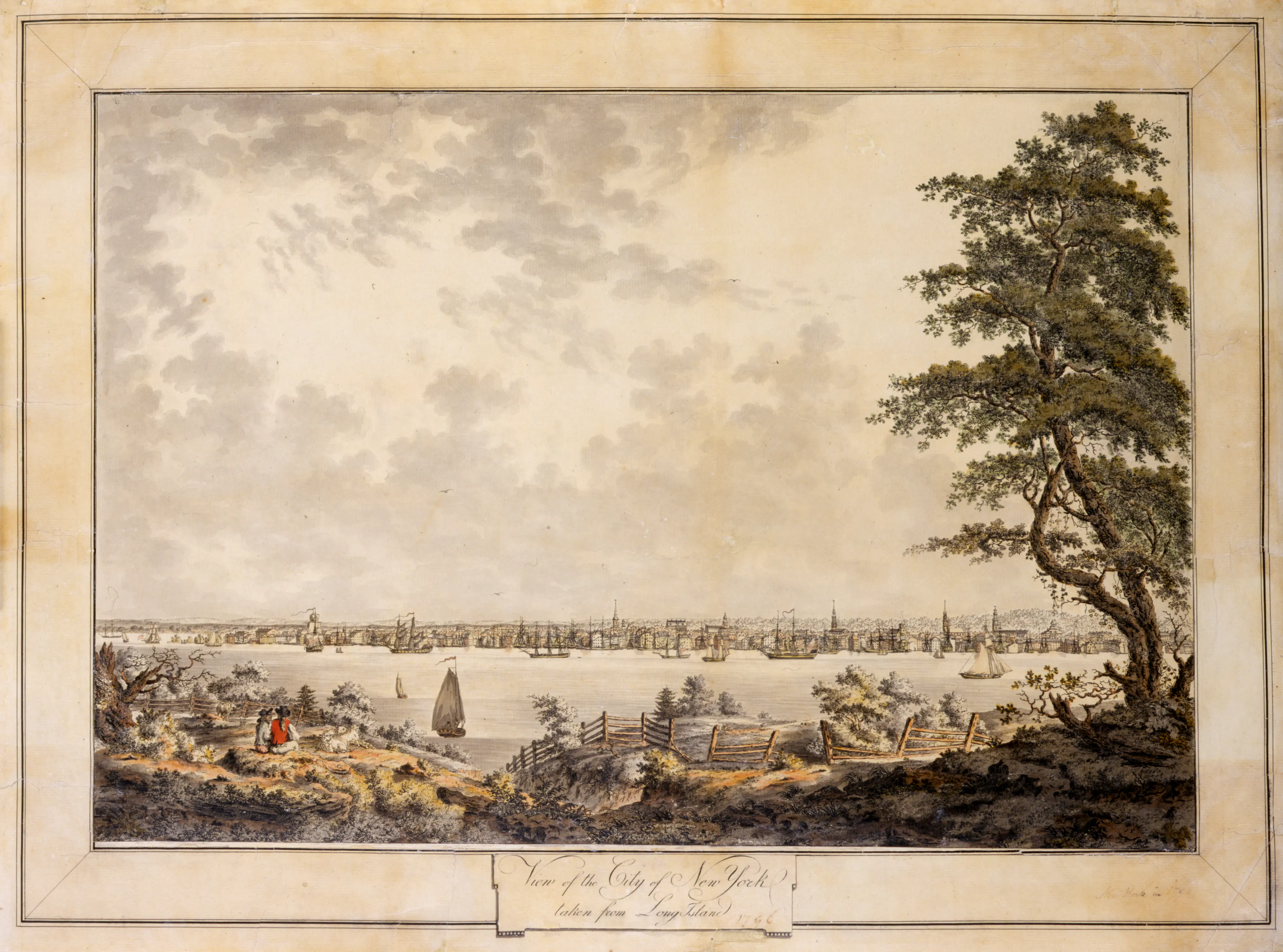
Charles-Balthazar-Julien Fevret de Saint-Mémin, etcher. View of the City of New York taken from Long Island, 1796. Patricia D. Klingenstein Library, The New York Historical, PPAC.2020.1.7.
According to legend, Anna Strong was one of the ring’s collaborators. Famously, she used her clothesline to signal Woodhull to meet with Brewster, who would come to Long Island from Connecticut. A black petticoat meant Brewster had arrived; the number of handkerchiefs signaled where they would meet. This story has become rooted in the historical record—appearing on the NSA and Mount Vernon websites and in countless scholarly works—largely as a result of a series of books that reported this legend as truth. Still, as several historians argue, Strong’s involvement remains only a theory, as plausible as it might be. The historical record simply does not have enough information (at least not yet!) to prove that Strong was a regular collaborator in the ring.
The clearest evidence for Strong’s involvement is in letters between the Culper spies. The one that has gathered the most intrigue is a letter from Woodhull to Tallmadge claiming that, through the assistance of 355, he will “outwit them all,” referring to the British. In the spy ring’s dictionary, 355 is code for “lady.” Rose concludes that this was likely Anna Strong, since she was Woodhull’s neighbor. Though the British were searching solitary men at checkpoints, Strong’s presence alongside Woodhull might have been enough to dissuade their search, he argues.
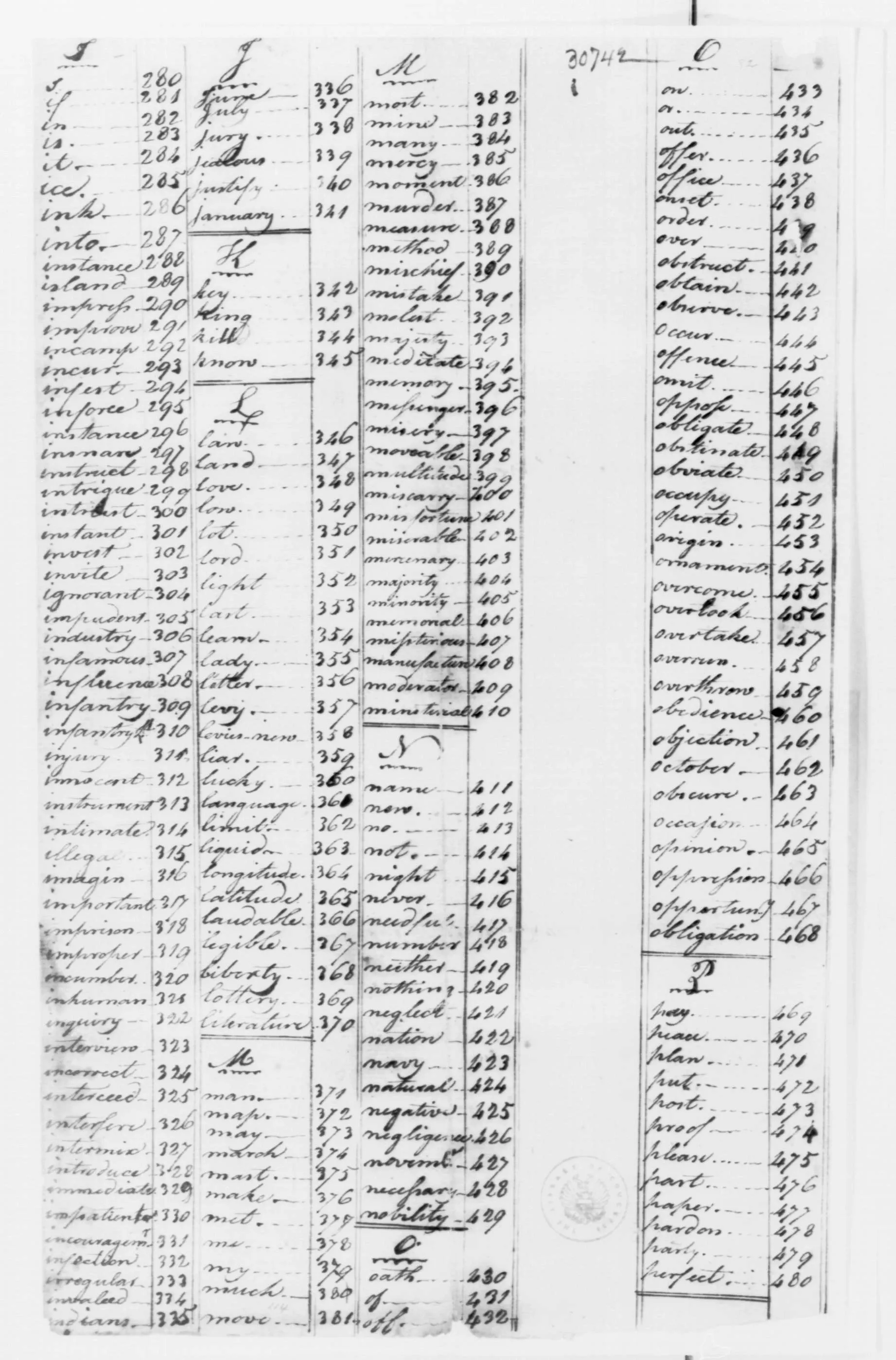
Library of Congress. George Washington Papers, Series 4, General Correspondence: Talmadge Codes. 1783.
Strong’s involvement is also referenced in a few other letters. In one key moment, Woodhull found a British lieutenant on Long Island, but wrote that he chose not to kidnap him to avoid suspicion. Rose notes that this event happened close to the Strongs’ house, so Woodhull may have wanted to avoid casting suspicion on the area or on Strong herself. In another, a double agent who was working as a spy for both the British and the Americans sent a letter to the British explaining that “private dispatches are frequently sent … by the way of Setalket [sic], where a certain Brewster received them at, or near, a certain woman’s.” This aligns neatly with the clothesline legend. Finally, Woodhull’s final invoice to Washington included £4 of a total £500 to S.S., which Rose believes stood for Selah Strong as a proxy for Anna.
On the other hand, another historian, Mark Sternberg, made a strong case for Selah’s involvement by looking at pension records for Brewster’s whaleboat crew. One application references Selah as having provided “assistance and information” to the crew as necessary, and that Selah would communicate whether or not it was safe for Brewster to stay there by shaking his head as he passed the shore. The mapping of this information onto the Anna Strong myth suggests that the Strongs may have worked together to communicate to Brewster—after all, multiple methods often make for better intelligence security—or that, over the years, Selah’s involvement was transferred to the story about Anna and her laundry line.
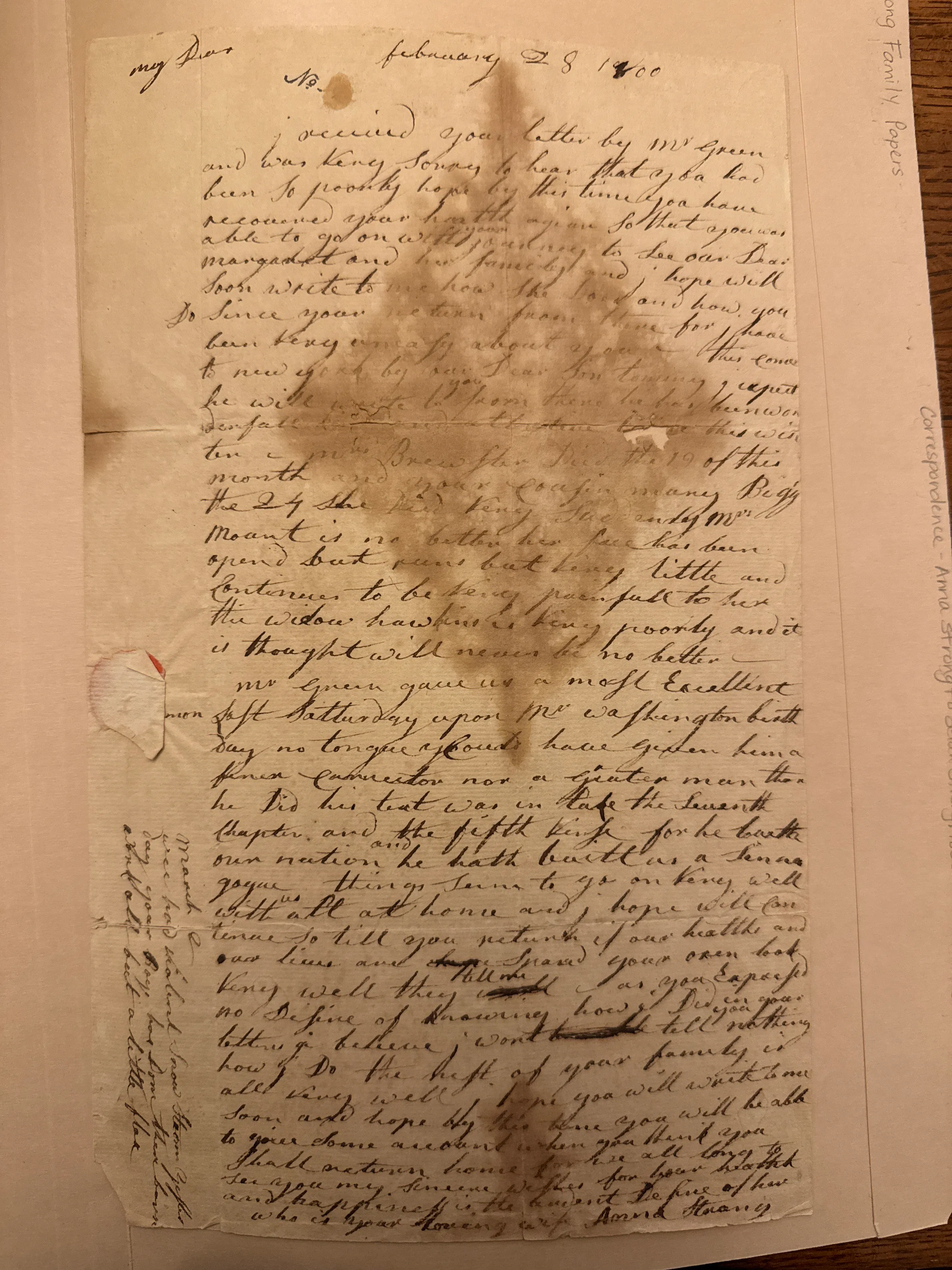
Anna Strong to Selah Strong, February 28, 1800. Strong Family Papers, Patricia D. Klingenstein Library, The New York Historical.
Ultimately, the evidence suggests that the Strongs were likely involved in the Culper activities, though it’s hard to say to what extent. So why did the story of Anna and “Agent 355” take root in popular culture? The myth has become the center of TV shows, movies, and books, becoming larger than life. Turn, a TV show about the Culper ring that premiered in 2014, expanded Strong’s involvement and placed her in a love affair with Woodhull; The 355, a 2022 film, imagined a fictional group of women spies who named themselves “the 355” after Agent 355. The myth is compelling, as is the story of the attempt to uncover the real 355: secret codes, hidden stories, mysteries to be solved. So, too, the idea of a female spy working with the assumptions about her gender—posing as a wife, using laundry as code—to avoid suspicion is fascinating.
When women and their stories are so often left out of the historical record, it is all too easy to take these small glimpses of their involvement and magnify them into myth and legend. This is in part warranted: after all, a female spy would have wanted to keep her involvement secret, both because of her gender and because of the importance of security in her work. Strong very well might have been a key member of the ring, even more so than this evidence or legend suggests.
Still, it is as important to focus on real women’s lives as it is to imagine what has been lost to history and mythmaking. Visit our upcoming exhibit, Revolutionary Women, to see Strong’s story alongside those of many other real-life women who spied, fought, assisted, and resisted in the Revolutionary War. Even as their stories have become myths and legends, the historical record reminds us again and again that women were crucial to the work of the Revolution. It is the work of historians now to uncover the real stories behind the myths.
Written by Avery Baumel, Columbia University American Studies Intern, Jean Margo Reid Center for Women’s History
Keep Reading
- Women at the CenterSeptember 1, 2026
The 11th Annual Diane and Adam E. Max Conference on Women's History
The 11th Annual Diane and Adam E. Max Conference on Women's History used the semiquincentennial of the signing of the Declaration of Independence to explore the legacy of the Revolution today. - Women at the CenterAugust 31, 2026
The 1876 Women’s Exhibition
What role did women play in commemorating the 100th anniversary of American Independence? - Women at the CenterAugust 3, 2026
A Revolutionary Chocolate Maker: The Business Records of Rebecca Gomez
How did Rebecca Gomez, a Jewish widow and businesswoman, help finance the first home of the New York Stock Exchange? - Women at the CenterJuly 27, 2026
Star-Crossed Lovers of the Revolution: The Letters of Eliza Shipton and Aquila Giles
Was it possible to fall in love across ideological lines during the Revolutionary War?