Captain Joanne Murphy arrived in Vietnam to take command of the Women’s Army Corps (WAC) Detachment at Long Binh in 1968. As her orders stipulated, she reported for duty in her dress uniform. Murphy found the outfit to be completely impractical for working in the tropical conditions. She soon switched to her “green cords” duty uniform, as several of her colleagues did. The green cords were more comfortable, but the skirt, hose, and pumps were restrictive and not conducive to working in a field environment. The hot, humid weather necessitated washing their uniforms after every wearing, and the lightweight materials fell apart at the creases after about a month of wear. Like most of the other WACs before her or serving with her, she eventually went against military regulations and requisitioned men’s fatigues from the supply sergeant.
Captain Murphy made the switch not a moment too soon. On January 31, 1968, while she was paying the women in her battalion, the Viet Cong attacked Saigon and Long Binh as part of the Tet Offensive. “A deafening explosion went off at the ammo dump. Glass, gravel and dust were flying,” she reported in a letter to Colonel Elizabeth Hoisington, WAC Director. Any of the WACs who still wore the duty uniform exposed their undergarments to view as they ran, in pumps and restrictive clothing, to the bunkers for cover. After that event, these WACs wore men’s fatigues almost universally. Professor Christine Cook and former member of the Center for Women's History's Early Career Workshop uncovers how this shift in women's military uniforms was part of a larger evolution in the Women's Army Corps during the 1960s: deployment to Vietnam forever changed the future of the US Army.
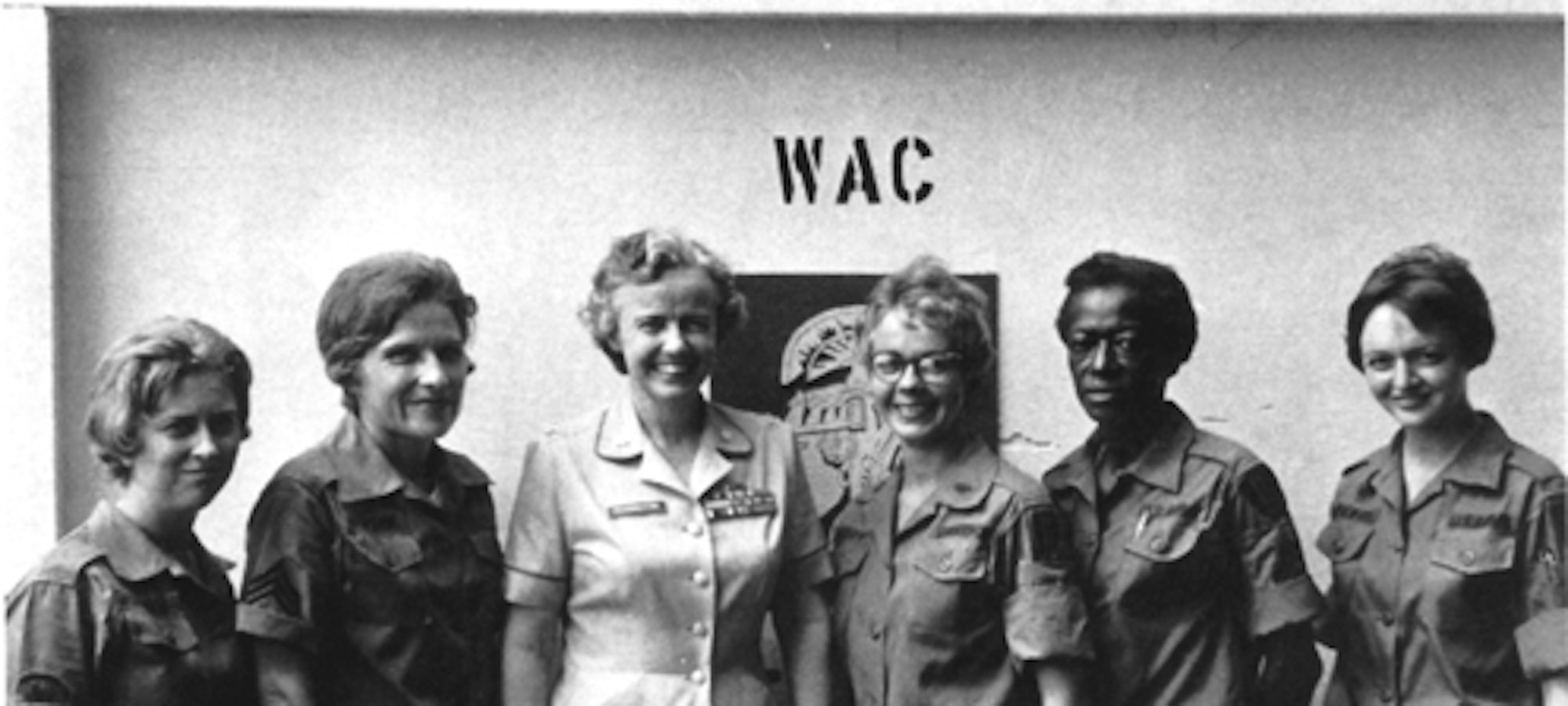
WACs wearing men's fatigues stand with Colonel Elizabeth Hoisington, WAC Director, 1963. Photo courtesy of the US Army Women’s Museum.
After World War II, Vietnam began to fight for independence from French colonialism. When France lost its bid to remain in control of the region, the US stepped in to stabilize the situation. Starting in 1957, the US sent consultants and funding to the South Vietnamese government with the stated goal of developing a more viable government and to counter the revolutionary forces who wanted the Communist North Vietnamese government to take over.
WAC involvement in Vietnam was initially small, but increased over time. In 1962, the South Vietnamese requested consultants to train female soldiers. The Republic of Vietnam created a Women’s Armed Forces Corps, and the US consultants reasoned that since the WAC had served its Army for nearly 20 years, having female-to-female training made sense. The WAC first emerged during World War II, becoming a permanent part of the US Army in 1948. Over time, the WAC become the primary source for the Army’s secretarial and administrative services, freeing up male soldiers for combat who otherwise would have been clerks. US consultants assumed the South Vietnamese women’s units would provide primarily secretarial services as well. The first WAC advisor arrived shortly thereafter. This was the first WAC assignment to a combat zone, although with only one WAC deploying at a time, their presence on the future battlefield went nearly unnoticed, at least for the first few years.
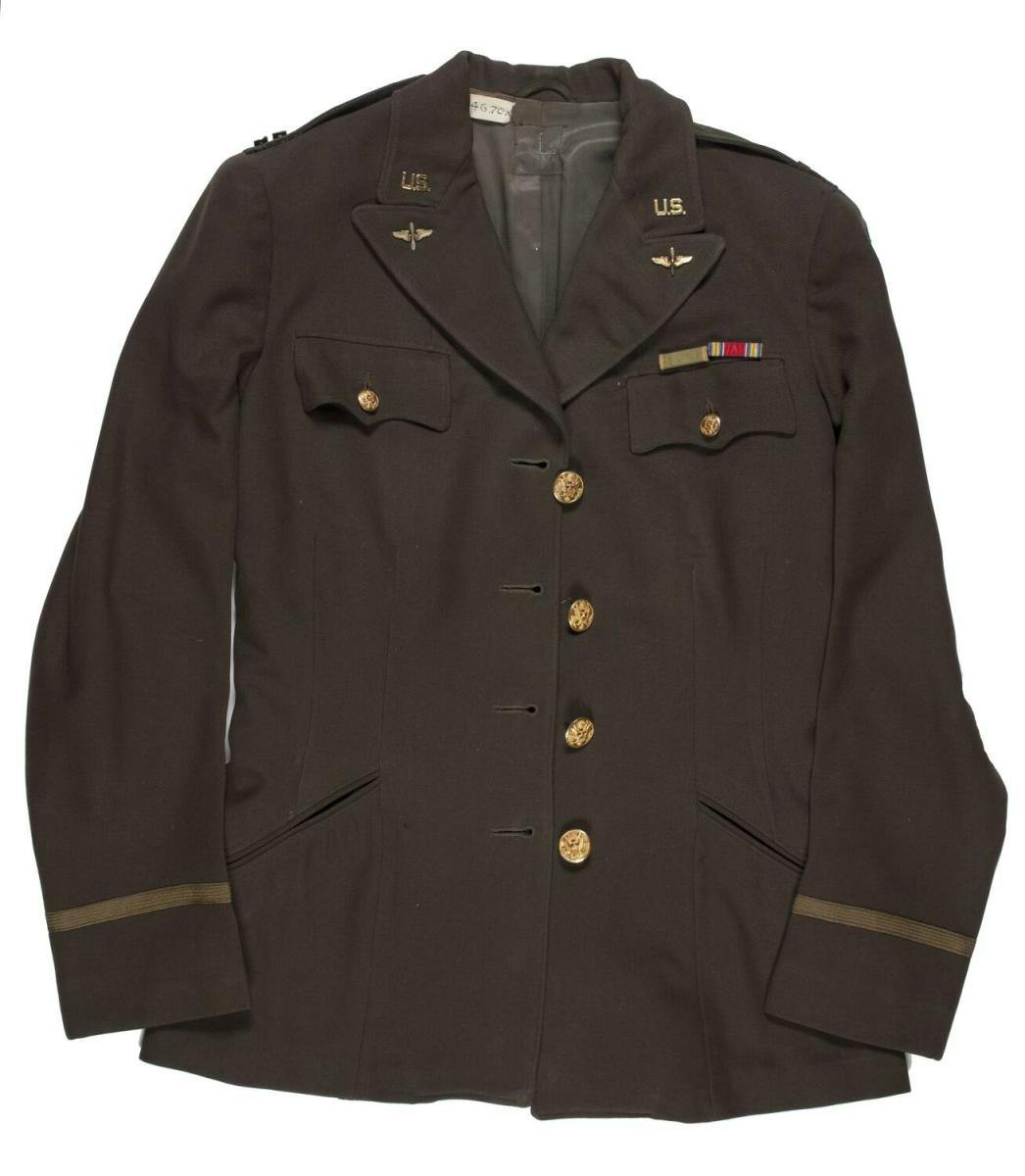
Woman's coat for members of the Women's Army Corps during World War II, 1943-1946, Wool, silk, metal, New-York Historical Society, Gift of Captain Louise Riederer, 1946.70a
By 1964, general officers thought an increase of WACs would help them limit the number of draft calls for positions they considered administratively essential but inappropriate for men, who they believed should be available for combat roles. These administrative duties included secretarial services such as stenography, typing, records keeping, and protocol. This increase in women on the battlefield was unprecedented for WAC, which had officially been relegated only for areas that were not in active combat. General William Westmoreland, the commander in charge of the Vietnam operation who made all manpower decisions in the war zone, approved a second slot for a WAC consultant. Now there were two WAC advisors who served one-year tours to train the Vietnamese women’s army. These WACs received minimal hazardous duty pay and no combat pay, even though they were in an area where male soldiers received the extra pay for being in a combat zone.
Standards for WAC training by this time were inadequate for deployment to a war zone. During World War II, WACs received training for living in austere conditions and had weapons familiarization training even though they did not carry weapons. Post-war, however, cultural and societal norms developed that made military senior leaders think women would not want to do their jobs in field conditions, nor would they be strong enough to carry and shoot weapons. By the 1960s, WAC training evolved to include neither field training nor weapons training. Therefore, WACs in Vietnam were at a disadvantage because they had never trained outside of an office environment and were ill-prepared for working in a combat zone. They deployed to Vietnam without weapons, even for self-defense.
Captain Tran Van Huong (right), of the Vietnamese Women's Army Corps, welcomes the first two American WACS to be sent to Vietnam; the two WACS are Major Kathleen Wilkes of Cobbstown, GA; and SFC Betty Adams of Wooside, NY. By summertime, 725 American women representing every branch of the armed services, including WAC, would be serving the US fighting men in Vietnam. (Photo by Bettmann Archive/Getty Images)
In 1965, Westmoreland requested 15 WAC stenographers and a WAC to act as his personal secretary. The deployment of stenographers was successful at freeing up men for combat operations, and the WACs were able to adapt to the environment in Vietnam. So in 1966, one of the US Army commanders requested an additional WAC detachment of 50 clerk typists and administrative assistants. This was the first time since World War II ended that more than a few women other than nurses were in a combat zone. The WAC Director used these continued requests from Vietnam to persuade the Pentagon to increase WAC recruitment, which had until this point been capped at a maximum of two percent of the entire military force.
It was far from clear that WACs would want to volunteer to go to a war zone, since it was likely to be a dangerous assignment. Fortunately, enough women volunteered to provide clerical assistance in a war zone. Some women looked forward to it with a sense of adventure. A woman who entered the WAC in 1966 believed there were more women who wanted to do a one-year tour in-country than were assignments to fill.
Not every male soldier was sanguine about the WACs’ appearance on the battlefield. Some men worried women would not perform well in the combat zone. Others were concerned that women might be put in supervisory positions over men. Yet others worried male soldiers would misconstrue what the WACs were there for, and might think they were there for men’s entertainment. This was not an unfounded fear, as the WAC Detachment’s first sergeant, Marion Crawford pointed out soon after their arrival on base, “The main route or shortcut to everywhere all of a sudden went right past the WAC detachment.” The biggest worry, however, was that women were a security issue, since WACs did not carry weapons and could not defend themselves in an attack. Therefore, the WACs had to stay in only one area considered to be safe.
Despite men’s fears about the WACs’ ability to weather conditions in Vietnam, the WAC Detachment commander reported that her troops adapted well and took the dangers in stride. In a letter to Colonel Hoisington, she said, “We had another exciting evening on 18 February when the [Viet Cong] again hit our ammo dump, two very spectacular explosions, and much more dramatic than the one on pay day. The first blast at about 0100 hours, actually bounced some women out of their beds.... I marvel at the calm of the women.” The detachment proved that WACs could adapt to conditions in a war zone.
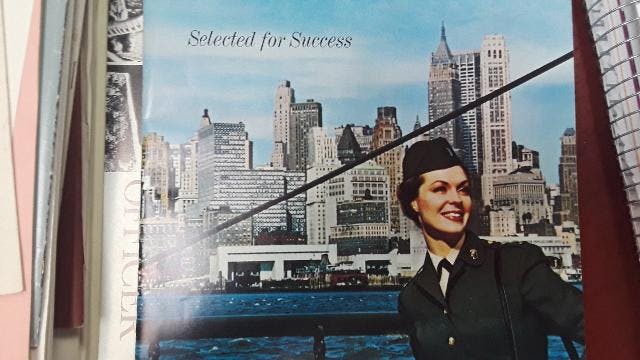
Recruiting brochure encouraging women to enlist as officers, no date. Photograph courtesy of the Women's Army and Historical Museum and Archives.
In all, about 1,000 WACs served in Vietnam during the decade-plus of conflict there. Senior leaders found WACs’ contributions to the war effort to be invaluable, and the women found their work to be fulfilling. The role of the WAC in Vietnam proved a major factor in developing an expanded role for women in the larger military. Despite being ill-prepared for service in a war zone, WACs proved they could perform their missions to standard even with bullets flying. While their jobs were primarily administrative in nature, several WACs performed other duties that proved to military senior leaders that they could be successful in non-administrative areas. As an added advantage, women volunteered their services in Vietnam and clearly wanted to serve, during a time when increased numbers of men tried to defer service and avoid the draft. By the end of the Vietnam War, Army leaders looked to women to fill their ranks as men continued to leave, which set the stage for increased recruitment of women in the military, and eventual integration of the WAC into the wider Army.
Christine Cook, military historian, United States Army War College
Keep Reading
- Women at the CenterMarch 13, 2026
The Conjuring of America: An Interview with Author Lindsey Stewart
With all eyes on Ryan Coogler's Sinners at the 98th Academy Awards, we spoke with philosopher Lindsey Stewart about her recent book on mojos, mermaids, medicine, and Black women's magic. - Women at the CenterFebruary 28, 2026
Tell Her Story: An Interview with Author LaShawn Harris
New York City would never be the same after the death of Eleanor Bumpurs in 1984. In her new book, author LaShawn Harris examines why. - Women at the CenterFebruary 4, 2026
Queer Olympians and Gay Games
Awaiting the start of the 2026 Winter Olympics? Learn more about LGBTQ+ Olympic history and the organization of the Gay Games. - Women at the CenterDecember 22, 2025
Child's Play
What can the playthings of the past tell us about how children understand "women's work"?