Absolute Equality
“The real trouble with us was never our system or form of Government, or the principles underlying it; but the peculiar composition of our people, the relations existing between them and the compromising spirit which controlled the ruling power of the country. We have for a long time hesitated to adopt, and may yet refuse to adopt, and carry out, the only principle which can solve that difficulty and give peace, strength and security to the Republic, and that is the principle of absolute equality.”
For Frederick Douglass, absolute equality meant equal rights that were specific, concrete, inclusive, and protected by law. When he began his “Composite Nation” tour, the federal government was already making great leaps in that direction. The Thirteenth Amendment ended slavery, and the Fourteenth Amendment granted citizenship and equality under the law to African Americans. The Fifteenth Amendment, which made it illegal to prevent someone from voting based on their race, would soon be ratified, despite strong white resistance, particularly in the South.
State and federal laws had already enfranchised many Black men. But Douglass and others fought to include full Black male suffrage in the U.S. Constitution. These efforts succeeded on February 3, 1870, when Iowa voted to ratify the Fifteenth Amendment. Douglass was euphoric.
But legal protection did not bring social equality. During Douglass’ lecture stop in Ottumwa, Iowa, a local hotel refused to serve him because of his race. Many townspeople were outraged by his mistreatment. But Douglass understood that the absolute equality he dreamed about had to be fought for every day at every level, from constitutional amendments to life’s most routine encounters.
Absolute equality means that all people are treated equally regardless of their race, religion, or gender.
Black women joined the fight for absolute equality but struggled to get their specific issues acknowledged by either Black men or white suffragists.
White resistance jeopardized the idea of absolute equality at federal, state, and local levels.
What did Frederick Douglass mean when he asked the nation to embrace “absolute equality” for all its citizens?
How did gender complicate the quest to achieve absolute equality for Black women?
What hurdles prevented the United States from achieving absolute equality for all its citizens in the Reconstruction era?
- Life Story: Frances Ellen Watkins Harper
The story of a Black woman activist who drew attention to the intersectional struggles facing Black women in the Reconstruction era.
Topics: Abolition, free Black communities, Civil War, Reconstruction, Civil Rights, Black history, racism, segregation, poetry, women’s suffrage, intersectionality, activism, motherhood, education
- Resource: Philadelphia Streetcar Desegregation
Sources that demonstrate that the struggle for absolute equality began long before the end of the Civil War.
Topics: Antebellum, Civil War, Reconstruction, racism, segregation, free Black communities, activism, petitions
- Resource: White Resistance
An election broadside that shows how widespread white resistance to absolute equality was during the Reconstruction era.
Topics: Reconstruction, Democratic Party, Ohio, Civil Rights, white supremacy
Life Story: Frances Ellen Watkins Harper
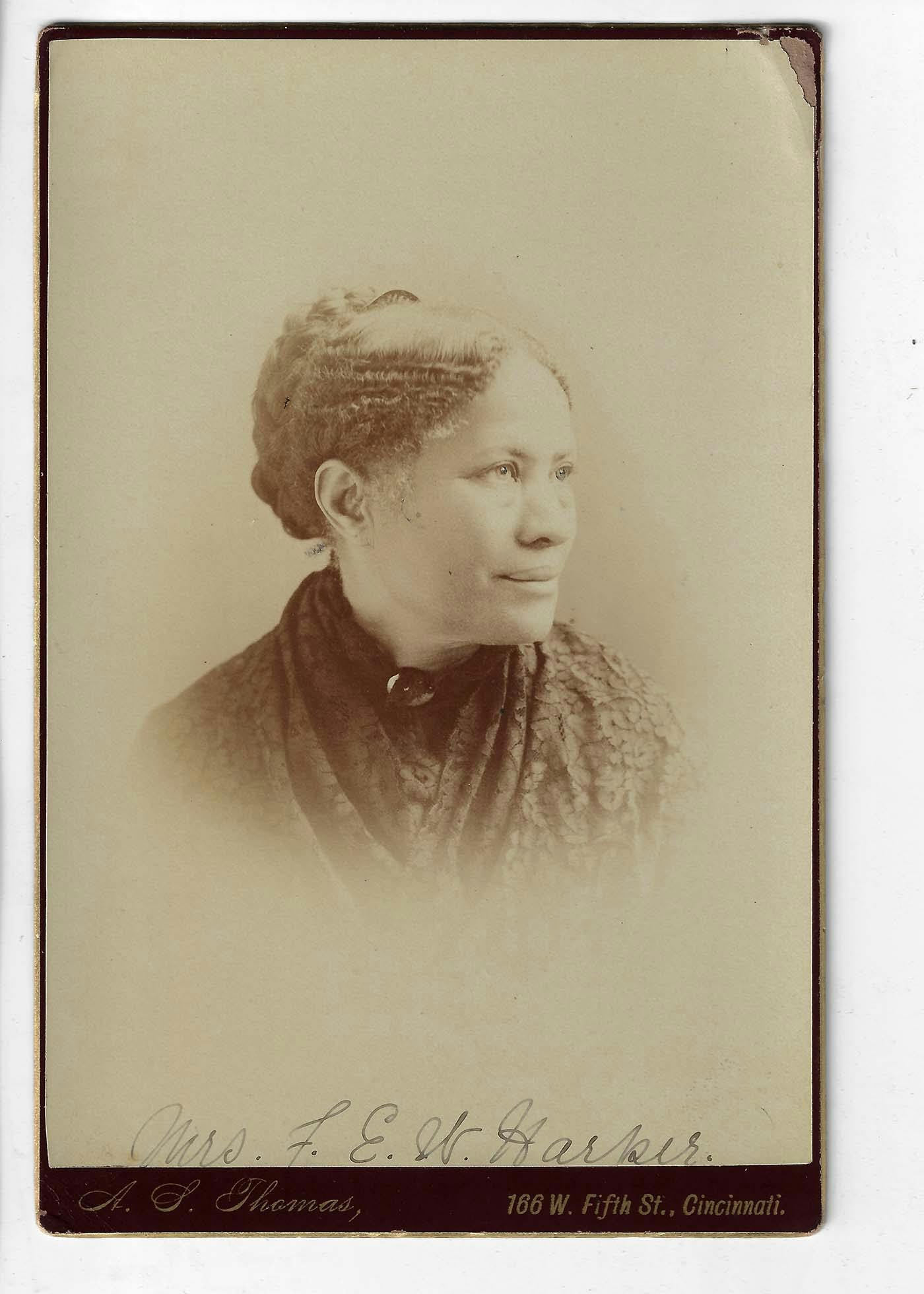
Frances Ellen Watkins Harper carte de visite, 1885. Courtesy of Woman’s Christian Temperance Union Archives, Frances Willard House Museum and Archives.
Frances Ellen Watkins Harper (1825–1911)
Fighting for Racial and Gender Equality
Frances Ellen Watkins Harper was born on September 24, 1825, in Baltimore, Maryland. Her mother was a free Black woman, so Watkins Harper was born free in accordance with the law. Her parents passed away when she was only three years old. Watkins Harper was then taken in by her Aunt Henrietta and her Uncle Rev. William J. Watkins, Sr.
Rev. Watkins was the minister of the Sharp Street African Methodist Church and an outspoken abolitionist who wanted Black Americans to have equal rights and opportunities. He ran a school called the Watkins Academy for Negro Youth to provide educational opportunities for young free Black people. Watkins Harper attended the school until she was 13 years old. Many of her ideas about abolition and equal rights were formed there. She also developed a lifelong passion for writing.
Watkins Harper’s aunt and uncle gave her a strong educational foundation, but they had eight other children to support. At the age of 13, Watkins Harper left school to begin working as a domestic servant. One of the families she worked for owned a bookshop. She spent her free time reading books and practicing her writing. She was only 14 years old when her first articles were published in abolitionist journals. Watkins Harper published her first book of poetry, Forest Leaves, or Autumn Leaves, in 1845.
In 1850, Watkins Harper moved to Columbus, Ohio, to teach domestic science at Union Seminary, a college for Black students. While living in Ohio, Watkins Harper published her second book, Poems on Miscellaneous Subjects. This book was a success and went on to be reprinted several times. It established Watkins Harper as an important figure in the abolition and equal rights movements. In 1853, she joined the American Anti-Slavery Society and traveled the country (Composite Nation on Tour) to give talks about abolition. This was extremely dangerous work. Watkins Harper also committed acts of civil disobedience to draw attention to her cause. In 1858, she refused to give up her seat on a segregated streetcar in Pennsylvania.
In 1860, Watkins Harper married Fenton Harper and took on the care of his three children. A few years later, she gave birth to a daughter they named Mary Frances Harper. Tragedy struck in 1864 when Fenton died. At the time, Mary was still a baby, and Fenton did not leave behind enough money to support Watkins Harper and their children. Watkins Harper asked Fenton’s relatives to take in his children from his first marriage. She returned to the East Coast with Mary where she began the process of rebuilding her life.
For the rest of her life, Watkins Harper balanced the demands of being a single mother and an activist. When slavery was abolished at the end of the Civil War, she dedicated herself to three causes: equal rights for Black Americans, women’s suffrage, and temperance. In 1866, she delivered a landmark speech titled “All Bound Up Together” at the National Women’s Rights Convention. She talked about dealing with oppression as both a Black person and as a woman throughout her life. She asked Black male activists and white women activists to work together to achieve equality for everyone. Her speech was so powerful that the audience immediately voted to form a group dedicated to the joint causes of Black suffrage and women’s suffrage.
The pledge of unity did not last long. When Congress revealed that the Fifteenth Amendment (Composite Nation on Tour) would only grant voting rights to Black men, leading white women activists spoke out against it. Watkins Harper supported the Fifteenth Amendment because she believed that suffrage for Black men would be the first step towards suffrage for all women. The debate over the amendment created a deep divide in the women’s suffrage movement, and Black women were forced into the margins. Watkins Harper co-founded the National Association for Colored Women in 1896 to create a space where Black women could meet and address the issues of the day without having to cede the floor to Black men or white women.
Meanwhile, Watkins Harper supported her daughter’s burgeoning career. Mary attended the National School of Elocution and Oratory in Philadelphia, where she learned to be a captivating public speaker. By the late 1880s, Mary was touring the country performing poetry and literature. Watkins Harper was so proud of her daughter that she featured Mary’s portrait in her 1895 book of poetry, Atlanta Offering.
Like others (Composite Nation on Tour) who started their careers as part of the abolitionist movement, Watkins Harper continued to lecture and write in support of her chosen causes until the end of her life. She passed away on February 22, 1911, at the age of 85.
Click here for a video of this life story.
- abolition
The movement to end the institution of slavery in the United States.
- abolitionist
A person who supported the movement to end slavery in the United States.
- American Anti-Slavery Society
A leading abolitionist group founded by William Lloyd Garrison and Arthur Tappan.
- civil disobedience
Refusing to follow unfair rules or laws as a form of protest.
- domestic science
The study of household skills like cooking and sewing.
- domestic servant
A person hired to do household tasks.
- elocution
The skill of speaking clearly and expressively.
- Fifteenth Amendment
The amendment that outlawed denying someone the right to vote based on their race.
- minister
A person who leads religious ceremonies.
- National Association for Colored Women
A group formed in 1896 to promote Black causes and activism.
- oratory
Persuasive public speaking.
- segregated
Separated by race.
- suffrage
Voting rights.
- temperance
The movement to outlaw selling and drinking alcohol.
How did Frances Ellen Watkins Harper’s race and gender shape her life?
Why did Frances Ellen Watkins Harper become an activist? What causes did she support, and why?
What does Frances Ellen Watkins Harper’s life teach us about the opportunities and limitations surrounding Frederick Douglass’ dream of “absolute equality”?
After reading this life story, show students the reenactment of “All Bound Up Together”. Ask the students to write a reflection paper on what events in Frances Ellen Watkins Harper’s life led her to the conclusions in her speech.
Compare and contrast the life stories of Frederick Douglass (Composite Nation on Tour) and Frances Ellen Watkins Harper. What are the similarities? What are the differences? How did the differences impact their lives and activism?
Frederick Douglass’ “Composite Nation” (Composite Nation on Tour) was first delivered just three years after “All Bound Up Together”. Invite students to read both speeches as well as the life stories of both figures, and then write a dialogue between the two activists on the subject of absolute equality.
Use the following resources to provide students with the historical context for Frances Ellen Watkins Harper’s life and career: Salem Female Anti-slavery Society, Fighting Segregation, Life Story: The Grimké Sisters, Life Story: Harriet Robinson Scott, The Reconstruction Amendments (Composite Nation on Tour), Philadelphia Streetcar Desegregation, White Resistance, Backlash Against Black Workers, Claiming Political Power, Plessy v. Ferguson (Hope), Black Women’s Clubs, and Life Story: Josephine St. Pierre Ruffin.
For more resources on Black women’s activism in the 19th Century, see Women & the American Story: A Nation Divided and Industry and Empire.
For more resources about the rise of Jim Crow in the United States, see Black Citizenship in the Age of Jim Crow.
Resource: Philadelphia Streetcar Desegregation
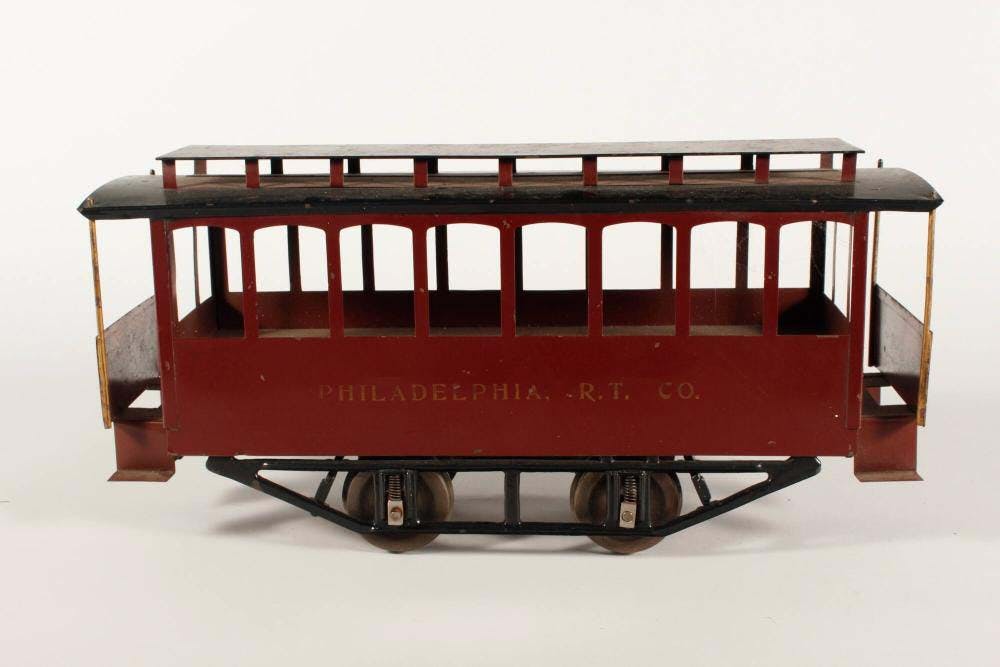
Streetcar, 1916-1945. New-York Historical Society, Jerni Collection, acquired with generous support from Bloomberg Philanthropies, Richard Gilder, and an anonymous donor.
To the Board of Managers of the various City Passenger Cars,
The Colored Citizens of Philadelphia suffer very serious inconvenience and hardship daily, by being excluded from riding in the City Passenger Cars. In New York City, and in all the principal Northern Cities, except Philadelphia, they ride; even in New Orleans, (although subject to some proscription) they ride in the cars; why then should they be excluded in Philadelphia, in a city standing so preeminently high for its Benevolence, Liberality, Love of Freedom, and Christianity as the City of Brotherly Love.
The Black citizens of Philadelphia struggle daily because they are not allowed to ride public streetcars. Black people can ride public street cars in every other Northern city. They can even ride public streetcars in New Orleans, although there are some restrictions. So why are Black people barred from riding streetcars in Philadelphia? Aren’t we the city of brotherly love?
Colored people pay more taxes here than is paid by the same class in any other Northern City. The Members of the “Social and Statistical Association,” although numbering less than fifty members, pay annually about Five Thousand Dollars into the Tax Collector’s Office.
Black people pay higher taxes in Philadelphia than in any other Northern city. For example, the 50 members of the Social and Statistical Association pay about $5,000 in taxes per year.
Therefore, the undersigned respectfully petition that the various Boards of the City Passenger Cars rescind the rules indiscriminately excluding colored persons from the inside of the Cars.
For this reason, we sign this petition to ask the people who run Philadelphia’s public streetcars to cancel the unfair rules that bar Black people from riding them.
Transcription of “Petition for the Colored People of Philadelphia to Ride in the Cars,” 1862. Historical Society of Pennsylvania.
To the Board of Managers of the various City Passenger Cars,
The Colored Citizens of Philadelphia suffer very serious inconvenience and hardship daily, by being excluded from riding in the City Passenger Cars. In New York City, and in all the principal Northern Cities, except Philadelphia, they ride; even in New Orleans, (although subject to some proscription) they ride in the cars; why then should they be excluded in Philadelphia, in a city standing so preeminently high for its Benevolence, Liberality, Love of Freedom, and Christianity as the City of Brotherly Love.
Colored people pay more taxes here than is paid by the same class in any other Northern City. The Members of the “Social and Statistical Association,” although numbering less than fifty members, pay annually about Five Thousand Dollars into the Tax Collector’s Office.
Therefore, the undersigned respectfully petition that the various Boards of the City Passenger Cars rescind the rules indiscriminately excluding colored persons from the inside of the Cars.
Transcription of “Petition for the Colored People of Philadelphia to Ride in the Cars,” 1862. Historical Society of Pennsylvania.
Even in so-called free states, Black Americans faced many discriminatory laws and social rules that made them unequal to white Americans. For example, the public streetcars in Philadelphia and other cities were reserved for white riders only. Black activists like Frederick Douglass (Composite Nation on Tour) and Frances Ellen Watkins Harper understood that Black Americans would never achieve full equality if these oppressive laws and systems continued.
Black abolitionist William Still organized a campaign to desegregate Philadelphia streetcars during the Civil War. He circulated a petition to white Philadelphians to prove that it was not only Black people who supported desegregation. The petition was signed by more than 360 people but it failed. Finally, in 1867, amid the sweeping changes of Reconstruction, the city changed the rules and allowed Black Philadelphians to use the streetcars.
- Reconstruction
The years between 1865 and 1877 when the U.S. government actively sought to reincorporate the former Confederacy back into the United States and passed legislation to guarantee the economic, political, and social rights of Black Americans.
- streetcars
Public transportation vehicles roughly the size of a bus. In the 1850s, horses pulled streetcars.
In this example, what method did William Still use to try to end Philadelphia streetcar segregation?
How does this petition justify the call for ending streetcar segregation? Do you think these arguments are persuasive?
Why did Black activists think streetcar segregation was a pressing issue even at the height of the Civil War?
How does streetcar desegregation fit into the broader fight for “absolute equality”?
Ask students to make a poster that summarizes the points made in this petition.
Compare and contrast this petition with the methods used to desegregate streetcars in New York City. Which method was more effective? Why? What do these two stories reveal about Black activism in the 19th century?
After examining these sources, ask students to read Frederick Douglass’ “Composite Nation” (Composite Nation on Tour) speech. How does the fight against streetcar segregation fit into Frederick’s idea of “absolute equality?” What do you think Frederick Douglass would add to this petition?
For more resources on the history of slavery, the Civil War, and Reconstruction, see Women & the American Story: A Nation Divided.
For more resources about how Black activists asserted their equality in the face of racist laws and customs, see Black Citizenship in the Age of Jim Crow and Women & the American Story: Industry and Empire.
Resource: White Resistance
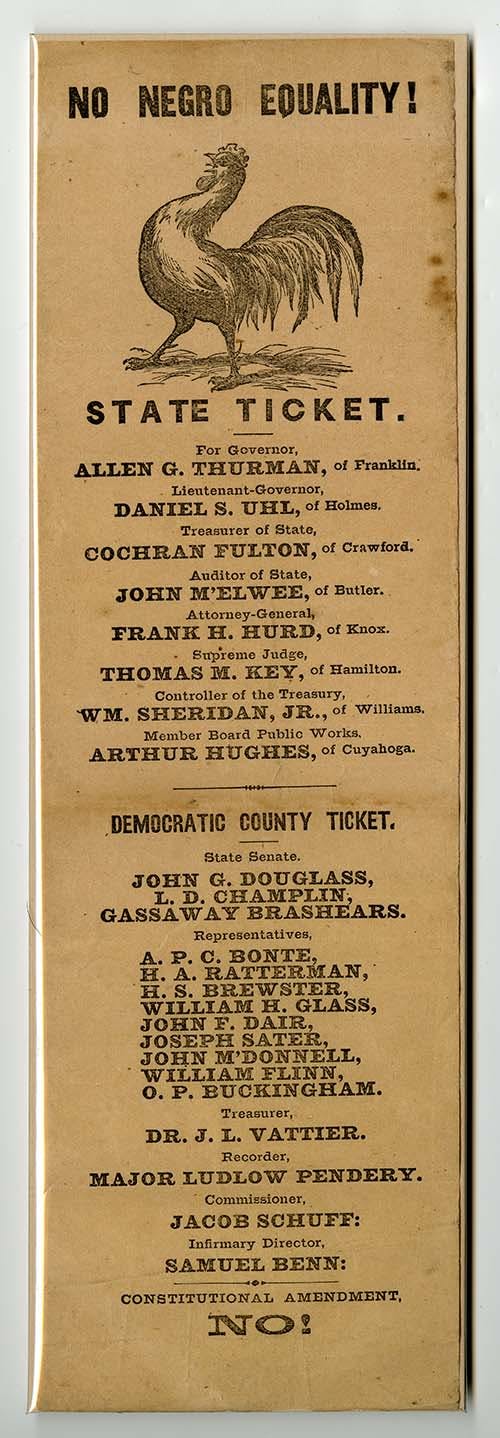
Ballot –No Negro Equality, 1867. Division of Political History, National Museum of American History, Smithsonian Institution.
Many white Americans supported the abolition of slavery. But the idea of Black Americans achieving full equality with white Americans was much less popular. This was especially true in the South and other places where Black men would make up the majority of voters. Resistance to Black rights took many forms. White politicians ran on the promise that they would preserve and enforce segregationist laws and practices. White businessmen and landowners created policies that prevented Black people from owning property and accumulating wealth. And violent white vigilante groups like the Ku Klux Klan terrorized Southern Black communities to discourage Black Americans from exercising their new rights.
This broadside was printed by the Ohio Democratic Party during the 1867 election after the Fourteenth Amendment (Composite Nation on Tour) was passed but before it was ratified. Ohio was one of 17 states that had whites-only voting laws. This broadside was created to signal that the Ohio Democratic Party would do everything in its power to make sure that Black people were not granted the right to vote.
- abolition
End.
- moral
About ideas of right and wrong.
- segregationist
Supporting the policy of separating people by race.
- vigilante
A person or group of people who take it upon themselves to enforce rules or laws because they think the government is not doing enough.
- broadside
A piece of paper printed on one side; often used as a flyer or poster.
- Democratic Party
The political party that opposed equal rights for Black Americans.
Why do you think the Ohio Democratic Party chose the slogan “No Negro Equality” for their platform in 1867?
How do you think the men listed on this broadside felt about Frederick Douglass’ idea of “absolute equality?”
How does this document complicate the narrative of “free” and “slave” states during the Civil War and Reconstruction?
After examining this document, ask students to read any of the following and then write a short essay describing one tactic Black Americans used to fight against blatantly racist policies and practices in the Reconstruction era: Frederick Douglass, “Composite Nation”, Speaking Tour Map and Advertisement (Composite Nation on Tour); Frances Ellen Watkins Harper, Philadelphia Streetcar Desegregation, Fighting Segregation, Salem Female Anti-slavery Society, Life Story: Harriet Robinson Scott, Claiming Political Power, Hiram Revels (Black Citizenship in the Age of Jim Crow), Life Story: Lucy Parsons, Black Women’s Clubs, Life Story: Josephine St. Pierre Ruffin, Fighting Jim Crow, Exodusters, and Life Story: Mary Ellen Pleasant.
Invite students to read either “Composite Nation” (Composite Nation on Tour) or watch “All Bound Up Together” and then create a campaign slogan or poster to counteract this one.
Teach this document together with the life story of Andrew Johnson (in Black Citizenship in the Age of Jim Crow) and Ella Gertrude Clanton Thomas for an expanded lesson on how white citizens and politicians actively undermined efforts to establish equality for Black Americans in the aftermath of the Civil War.
For more resources on the history of slavery, the Civil War, and Reconstruction, see Women & the American Story: A Nation Divided.


