Oval Office Tapes
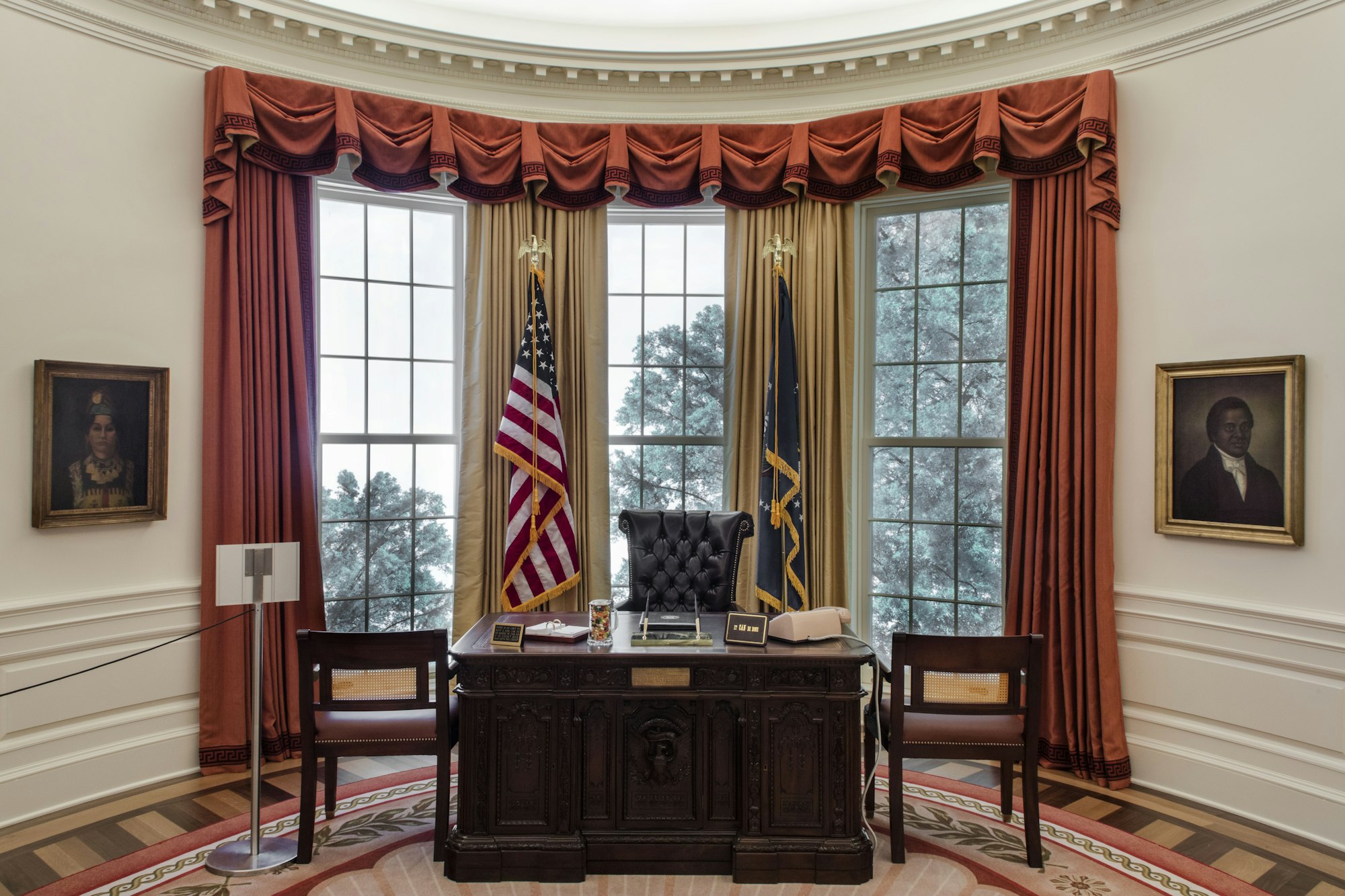
Presidents from Franklin Roosevelt to Richard Nixon secretly taped their meetings and phone calls in the Oval Office. Listen below for some recordings of historic moments.
Recordings courtesy of the University of Virginia Miller Center. To hear other selections, visit millercenter.org.
John F. Kennedy, October 22, 1962
President Kennedy confers with former President Eisenhower about the discovery of Russian nuclear missiles in Cuba, within range of U.S. shores.
Transcript:
Kennedy: General, what about if the Soviet Union—Khrushchev—announces tomorrow, which I think he will, that if we attack Cuba that it’s going to be nuclear war? And what’s your judgment as to the chances they’ll fire these things off if we invade Cuba?
Eisenhower: Oh, I don’t believe that they will
K: You don’t think they will?
E: No.
K: In other words, you would take that risk if the situation seemed desirable.
E: Well, as a matter of fact, what can you do?
K: Yeah.
E: Something may make these people shoot them off. I just don’t believe this well
K: Yeah, right.
E: In any event, of course, I’ll say this: I’d want to keep my own people very alert.
K: Yeah, Well, we’ll hang on tight.
E: Yes, sir.
K: Thanks a lot General.
E: All right. Thank you.
John F. Kennedy, November 4, 1963
President Kennedy records his thoughts about the deaths of South Vietnamese President Ngo Dinh Diem and Diem’s brother Nhu in a US-supported coup.
Transcript:
Kennedy: Monday, November 4, 1963. Over the weekend the coup in Saigon took place. It culminated three months of conversation about a coup, conversation which divided the government here and in Saigon. I feel that we must bear a good deal of responsibility for it, beginning with our cable of early August in which we suggested the coup. I should not have given my consent to it without a roundtable conference at which McNamara and Taylor could have presented their views. I was shocked by the death of Diem and Nhu. The way he was killed made it particularly abhorrent. The question now is whether the generals can stay together and build a stable government or whether public opinion in Saigon—the intellectuals, students, ec., will turn on the government as repressive and undemocratic in the not too distant future.
Lyndon B. Johnson, November 25, 1963
President Johnson talks with Martin Luther King, Jr. about key civil rights legislation.
Transcript:
LBJ: A good many people told me that they heard about your statement. I guess it was on TV, wasn’t it?
MLK: Yes, that’s right…
LBJ: I been locked up in this office and I haven’t seen it. But I want to tell you how grateful I am and how worthy I’m going to try to be of all your hopes.
MLK: Well, thank you very much I’m so happy to hear that, and I knew that you had just that great spirit and you know you have our support and backing…because we know what a difficult period this is.
LBJ: It’s just an impossible period. We got a budget coming up—and we got a civil rights bill that hasn’t even passed the house.
LBJ: We just got to let up – not let up on any of them and keep going … I’m going to ask the Congress Wednesday to just stay there until we pass them all. They won’t do it. But we’ll just keep them there next year until they do, and we just won’t give up an inch.
MLK: Uh-huh. Well this is mighty fine. I think one of the great tributes that we can pay in memory of President Kennedy is to try to enact some of the great progressive policies that he sought to initiate.
LBJ: Well I’m going to support them all, and you can count on that. And I’m going to do my best to get other men to do likewise, and I’ll have to have you-alls help.
MLK: Well, you know you have it, and just feel free to call on us for anything.
LBJ: Thank you so much, Martin.
MLK: All right. Give my—
LBJ: Call me when you’re—
MLK: —regards to the family.
LBJ: I sure will. And call me when you’re down here next time.
MLK: I certainly will do that.
Richard M. Nixon, June 13, 1971
President Nixon learns from Chief of Staff Alexander Haig that The New York Times is publishing a secret report—the Pentagon Papers—about the Vietnam War.
Transcript:
Nixon: Hello
White House Operator: General Haig, sir. Ready
N: Hello.
Haig: Yes, Sir.
N: Hi, Al, How—what about the casualties this week? You got the figure yet?
H: No, sir, but I think it’s going to be quite low.
N: Mm-hmm.
N: When do you get that, do you—will you know?
H: We don’t get it officially until Monday afternoon
N: Right, well, Monday afternoon officially? Well let’s wait until then. Fine. OK. Nothing else of interest in the world today?
H: Yes, sir, very significant, this goddamn New York Times expose of the most highly classified documents of the war.
N: Oh, that. I see.
N: I didn’t read the story, but you mean that was leaked out of the Pentagon?
H: Sir, the whole study that was done for McNamara and then carried on after McNamara let by Clifford and the peaceniks over there. This is a devastating security breach of the greatest magnitude of anything I’ve ever seen.
N: Did we know this was coming out?
H: No, we did not, sir.
N: Now, I’d just start right at the top and fire some people. I mean, whatever department it came out of, I’d fire the top guy.
H: Yes, sir. Well, I’m sure it came from Defense, and I’m sure it was stolen at the time of the turnover of the administration.
N: Oh, it’s two years old, then.
H: It’s a tough attack on Kennedy. It shows that the genesis of the war really occurred during the ’61 period. …
H: And it’s brutal on President Johnson. They’re going to end up in a massive gut fight in the Democratic Party on this thing.